
1-805-484-2992
Quotes - Engineering - Sales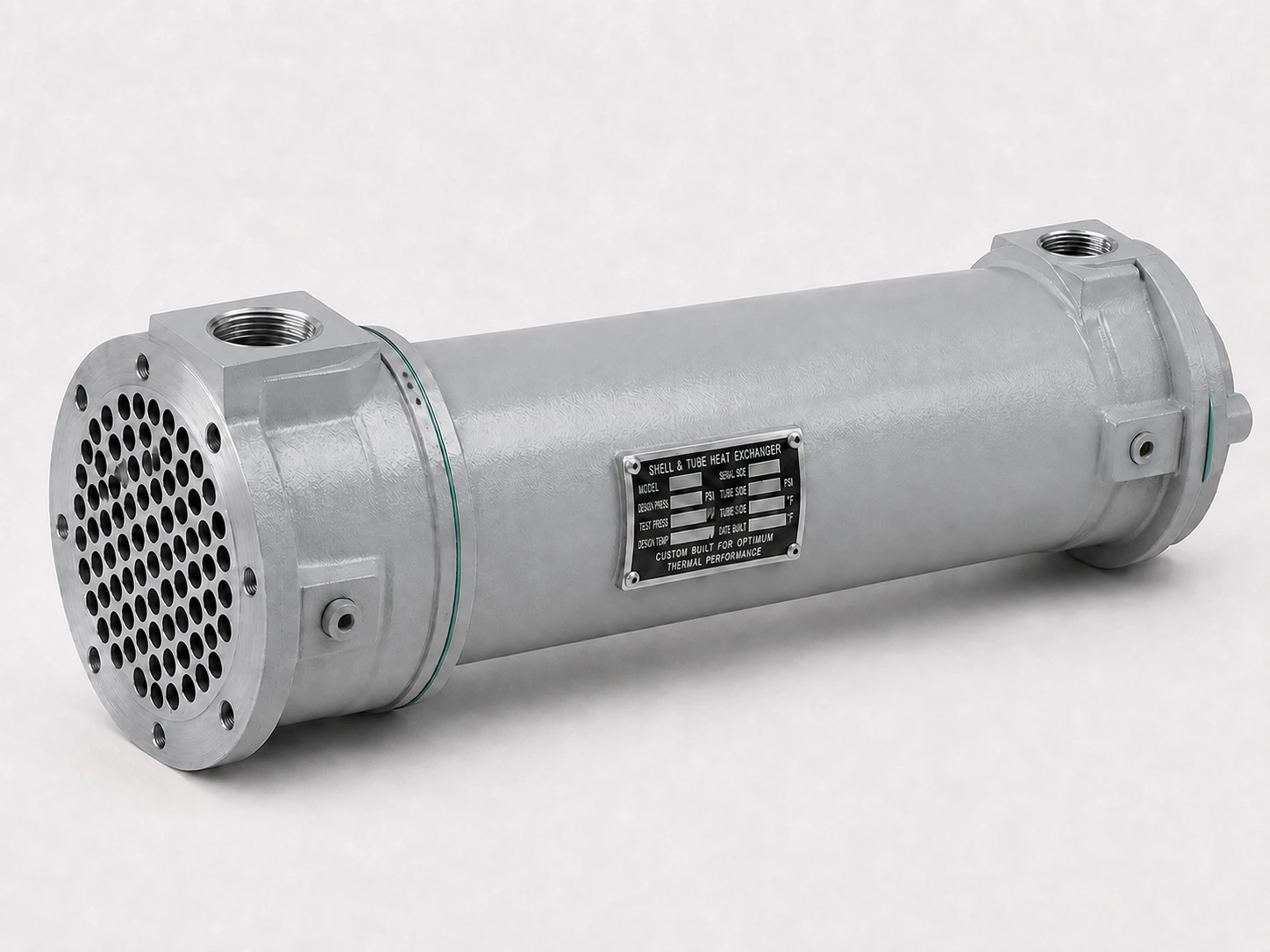
CHXS Series
| PRODUCT | TYPE | STYLE | RATING |
|---|---|---|---|
| Heat Exchanger | Shell & Tube | Compact / Steel Shell | 300 PSI / 300°F |
Specifications
Configuration & Size
Shell Diameter:
2" to 8"
Shell Length:
8" to 96"
Tubes:
Copper
Passes:
1, 2 and 4 Pass
Brand:
Bell & Gossett
Materials
- Bonnets: Cast Iron
- Shell: Steel
- Tubes: Copper
- Tubesheet: Brass
CHXS Series Compact Heat Exchangers
The Compact Range in Steel
The CHXS covers the same compact size band as the CHX with a steel shell in place of brass. Cast iron bonnets, brass tubesheets and copper tubes are carried over, as is the 300 PSI shell rating that distinguishes the compact range from the larger SU and WU units.
Steel or brass is a fluid decision, not a pressure decision. Both shells carry the same rating. What differs is corrosion behaviour and cost. Steel suits treated closed-loop water, condensate and general industrial service; brass is preferred where the shell-side fluid would attack steel or where dezincification is not a concern.
Longer shells than the CHX. The catalogued CHXS range extends to 96 inch shell lengths against the CHX's 72, which gives more surface within the same diameter band. On a duty that needs area rather than pressure capability, that extra length is often the deciding factor.
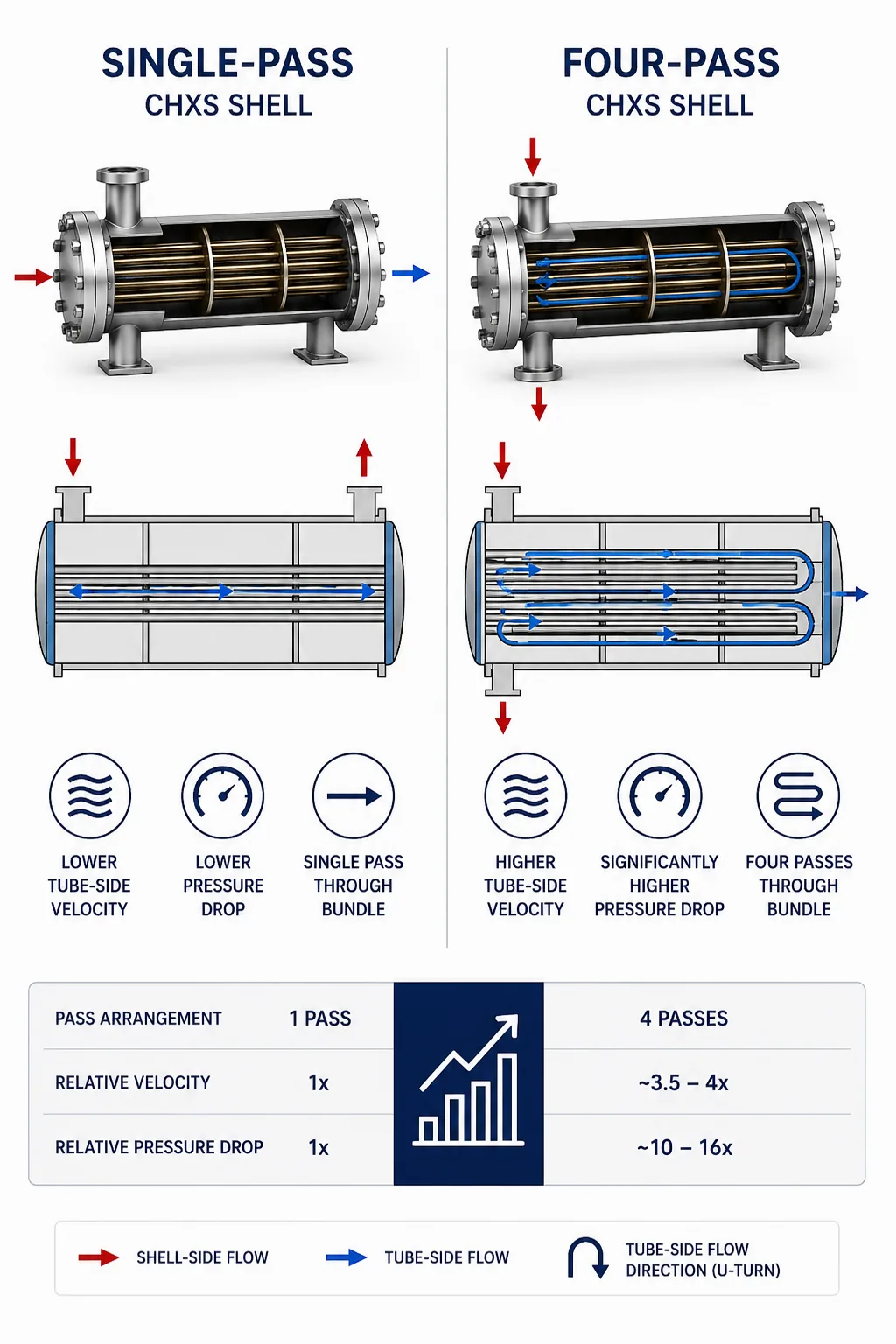
Single pass has a real role here. On the smallest shells there is limited flow to distribute, and forcing it through four passes buys velocity at a pressure drop cost that a small pump may not have. The 1-pass arrangements in the range exist for exactly that case.
Identifying a unit. The 5-160 catalogue range covers the CHXS, alongside legacy designations such as CHXS536-4L. Both forms encode diameter, length and the pass and connection arrangement, and either is enough for us to confirm what you have.
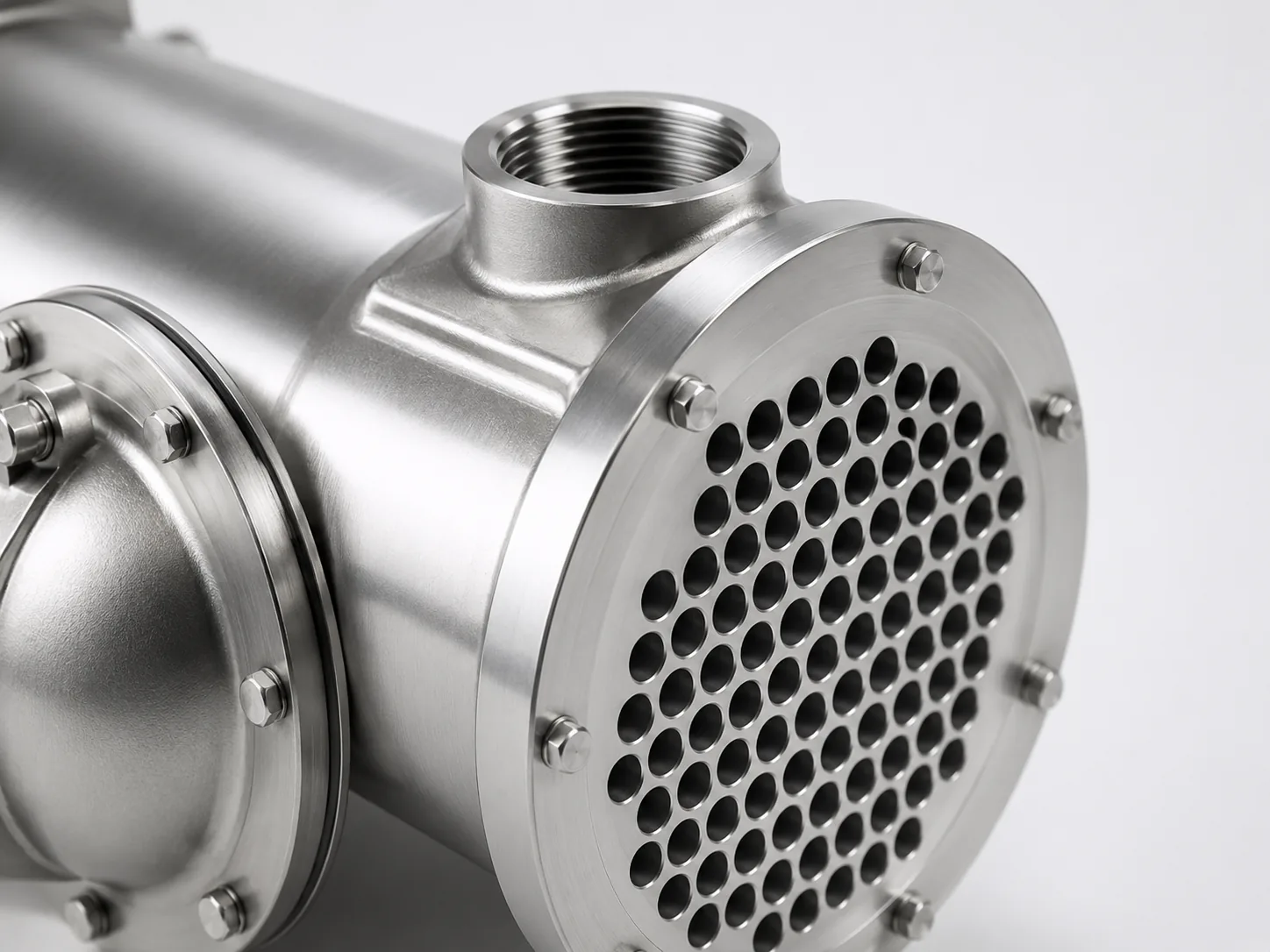
Steel shell construction at the same 300 PSI rating, with shell lengths to 96 inches.
Request a QuoteCHXS Series Applications




Why Single Pass Exists in This Range
Passes are how tube-side velocity is bought. A four-pass arrangement sends the flow through a quarter of the tubes at a time, so velocity is roughly four times what a single pass would give, and velocity is what keeps flow turbulent and the tube-side coefficient useful. On most water duty that trade is worth making, which is why two and four pass arrangements are the norm.
On the smallest shells it stops being worth making. There is only so much flow to distribute, and forcing it through four passes buys velocity at a pressure drop cost the pump in a small loop may simply not have. Pressure drop rises with roughly the square of velocity while the thermal benefit rises far more slowly, so the optimum arrives sooner than people expect.
That is why the compact range offers 1, 2 and 4 pass rather than following the larger ranges up to six. Tell us the flow you actually have and the head the pump can deliver, and the pass arrangement follows from those two numbers rather than from a default. Call and talk it through with an engineer: 1-805-484-2992