
1-805-484-2992
Quotes - Engineering - SalesShell and Tube Heat Exchangers for Industrial Process Duty
Industrial applications differ from building duty in the fluids rather than the principles. Oil is viscous and transfers heat poorly. Compressed air carries moisture that has to be condensed out deliberately. Glycol changes properties with temperature. The Bell & Gossett ranges answer these through geometry rather than exotic materials: larger shells and longer tube runs on the OC oil cooler, single-pass air flow on the aftercoolers, and 1000°F capability on the GC gas cooler.
General process cooling is the largest and least glamorous industrial duty. Tower water or chilled water on one side, a process stream on the other, and fouling deciding how long it works. Tower water is open to atmosphere, biologically active and concentrating dissolved solids as it evaporates, so whatever the thermal calculation says, useful life is set by how well the fouling side can be cleaned.
Oil that runs above its working band thins, loses film strength, oxidises faster and attacks seals. Viscosity suppresses turbulence and thickens the boundary layer, which is why the OC range runs to larger shells and longer tube lengths than the general-purpose WU. Size against the cold end, where the oil is most viscous and the temperature difference is smallest at the same time.
Compression heats air and concentrates the moisture in it. An aftercooler drops the temperature so moisture condenses where a separator and trap can remove it. The aftercooler condenses that moisture but does not remove it, so a missing or failed separator delivers liquid water into the distribution system in slugs, which does more damage than uncooled air would have.
An engine wants its jacket water in a narrow band: hot enough to run efficiently, cool enough not to detonate or scale. A shell and tube exchanger holds that band while keeping the engine's treated coolant separate from whatever site water is available. Size on the worst credible summer site water temperature, because the engine cannot be cooled below that plus the exchanger approach.
Glycol buys freeze protection and costs performance. It is more viscous, less thermally conductive and lower in specific heat than water, and all three work against the duty at once. Set the concentration to the minimum the freeze protection genuinely requires: every point above that costs heat transfer and pumping power for the life of the system.
Pressure drop decides more selections than people expect. On oil it rises steeply with both flow and viscosity, and a unit selected on thermal duty alone can be impossible to pump through at the flow the system delivers. On compressed air every psi is compression energy already paid for, and paid for again every hour the compressor runs. State the allowable drop with the enquiry.
Industrial cooling water is frequently untreated and industrial process fluids leave deposits. On a U-tube bundle the cleanable side is the shell side, because nothing rigid passes a 180 degree bend, so the fouling fluid belongs there and the clean fluid belongs in the tubes. It is worth checking on an existing installation whose duty has changed over the years.
Both fluids named rather than described, because oil at ISO VG 46 behaves nothing like oil at VG 10. Flow rate, inlet and required outlet temperature on each side, and the allowable pressure drop on each side. The duty profile if it is not steady, and which stream fouls. Call and talk it through with an engineer: 1-805-484-2992
Industrial duty is where the fluids get difficult. Oil that will not transfer heat, compressed air full of moisture, glycol that thickens when cold, and engine jacket water that has to stay within a narrow band.
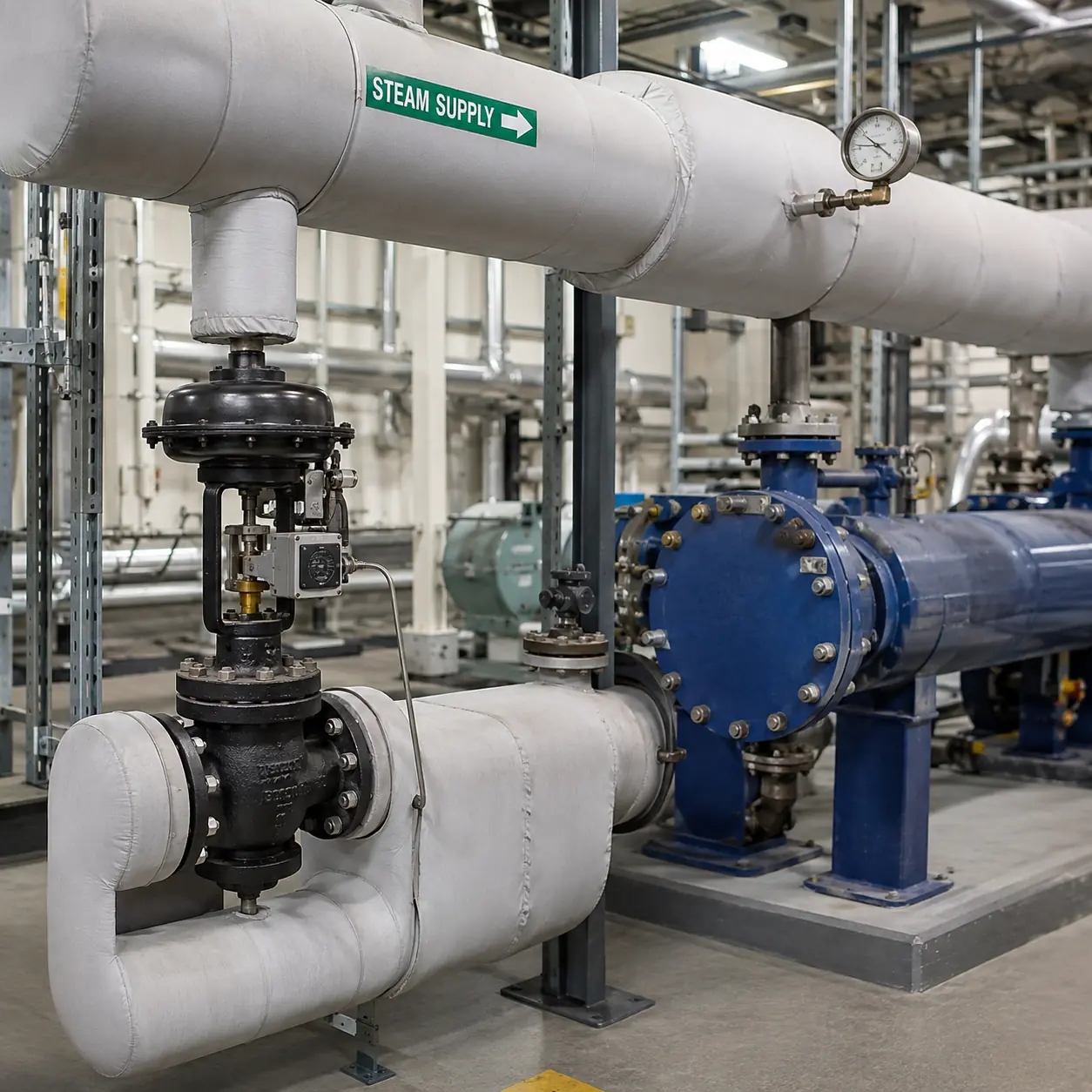
Industrial Process Cooling and Heating




Industrial Cooling and Heating Applications
Industrial duty spans general process cooling, hydraulic and lube oil circuits, compressor aftercooling, engine jacket water and glycol loops. The principles are the same as building duty; the fluids are what make them harder.
Duty Profile Matters as Much as Duty
A quench load arriving in bursts, a standby engine starting under load, or a machine that runs one shift in three all size differently from their averages. Sizing on the average produces equipment that disappoints exactly when it matters. Where the peak is short, reservoir or tank volume is usually a cheaper way to absorb it than surface area.
Related Applications
Viscosity Is the Recurring Problem
Oil, glycol and heavy process fluids all transfer heat far less readily than water, and all of them get worse as they cool. That is why the OC oil cooler range runs to larger shells and longer tube runs than the general-purpose WU: the duty needs surface because it cannot get help from the coefficient.
It also means the cold end works hardest for the least return. Relaxing the required outlet temperature slightly often shrinks the unit noticeably.
Removable Bundles Earn Their Keep Here
Industrial cooling water is frequently untreated or poorly treated, and industrial process fluids leave deposits. A bundle that withdraws for shell-side cleaning is what determines how long the exchanger stays useful.
Put the fouling fluid on the shell side, because that is the side you can reach. On a U-tube bundle nothing rigid passes the bend.
Common Applications
APPLICATION • AIR
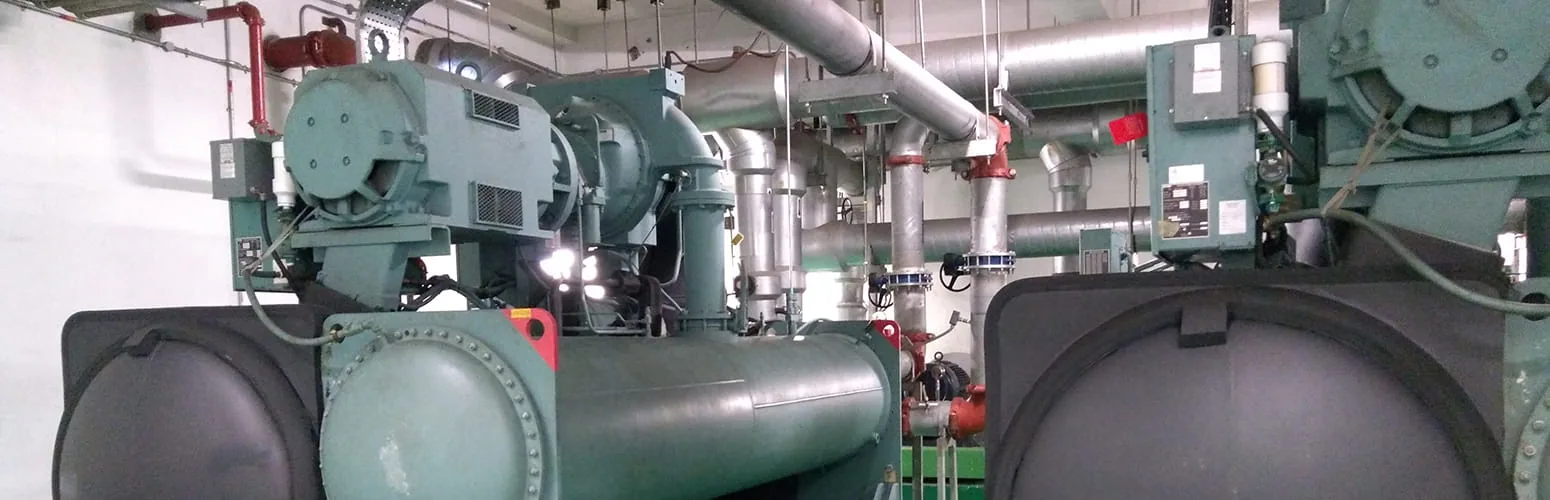
Compressor Cooling
Heat and moisture, both dealt with at the compressor.
+ Learn More