
1-805-484-2992
Quotes - Engineering - SalesDouble-Wall U-Tube Construction
Two Walls and a Vented Path Between Them
A double-wall tube is two tubes drawn together so their walls are in intimate mechanical contact. Heat passes through both. Between them runs a deliberate vented path that leads to the tube end, outside the pressure boundary of either fluid.
What that changes. If either wall develops a pinhole or a crack, the escaping fluid enters the vented space and travels to the tube end where it discharges visibly. It does not cross into the other stream. A failure that would otherwise be discovered by a water quality test becomes something you notice on a walk-round.
Where it is required. Wherever a non-potable medium heats potable water. Boiler water carries treatment chemicals; glycol carries inhibitors; steam carries whatever the boiler feed carries. Codes vary by jurisdiction and by the authority having jurisdiction, so the requirement is worth confirming rather than assuming.
What it costs. The interface between the two walls is a real thermal resistance, so a double-wall unit needs more surface than a single-wall unit for the same duty. Bell & Gossett double-wall ranges are correspondingly larger and top out at smaller maximum shell diameters than their single-wall equivalents.
Naval brass tubesheets are standard on the double-wall ranges rather than the steel or brass found on the single-wall units. That is one of the more reliable ways to distinguish a genuine DSU or DWU from a visually similar SU or WU.
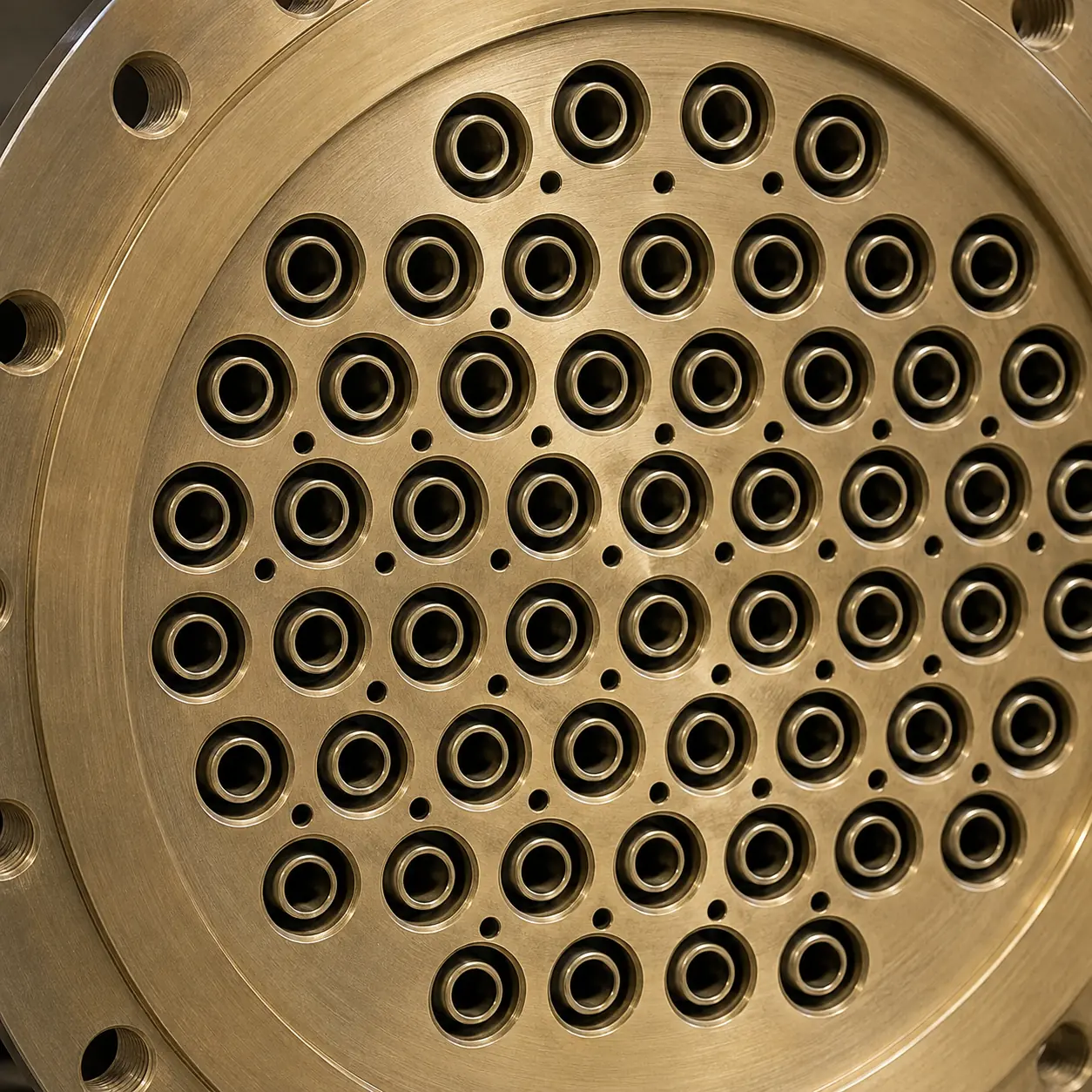
Double-Wall Configuration
Double-wall ranges cover smaller maximum shell diameters than their single-wall equivalents, because the added thermal resistance requires more surface for the same duty.
Configuration
- Tube construction: Double wall, vented
- Tubesheet: Naval Brass
- Bonnets: Cast Iron
- Bundle: Removable U-tube
Features
- Leak vents externally
- Two barriers between fluids
- Meets double-wall codes
- Removable bundle
- Higher surface for same duty
Series
- DSU steam-to-liquid
- DWU liquid-to-liquid
- DTCS steam tank heater
- DTCW water tank heater
| CONSTRUCTION | TUBE WALLS | LEAK PATH | TUBESHEET |
| Double-Wall U-Tube | Two | Vented, external | Naval Brass |
Specifying Double-Wall Construction
Decide on Consequence, Not Probability
Tube failures are uncommon. The question is not how likely one is but what happens if it occurs and nobody notices for a week. Where the answer involves drinking water, a public building or a food product, the arithmetic favours double-wall construction regardless of how reliable a single tube is.
Where the two fluids are a closed glycol loop and tower water, double-wall construction adds surface and cost for a consequence nobody would care about. The distinction is worth drawing deliberately.
It Is Not a Retrofit
Tube construction, tube count, tubesheet material and the vent arrangement all differ between single-wall and double-wall ranges. A duty that now requires double-wall protection requires a double-wall unit, not a modified single-wall one.
That also means part numbers do not cross over. A DSU is not an SU with different tubes, and ordering by dimension rather than by part number is how the wrong unit arrives.
Common FAQs
Two tubes are drawn together so the walls touch for heat transfer, with a vented path between them leading to the tube end. Fluid escaping through either wall enters that path and discharges outside the unit rather than mixing with the other fluid.
No, but it commonly is where a non-potable medium does the heating. The requirement varies by jurisdiction and by the authority having jurisdiction, so confirm locally before ordering.
Enough that the unit is physically larger. The interface between the two walls is a real thermal resistance, so more surface is required for the same duty. Catalogued double-wall ranges reflect this.
Not reliably by dimensions, which is why the part number matters. Naval brass tubesheets are a good indicator on the Bell & Gossett ranges, and the catalogue number ranges differ: 5-262 and 5-267 for double-wall against 5-260 and 5-265 for single.
Related
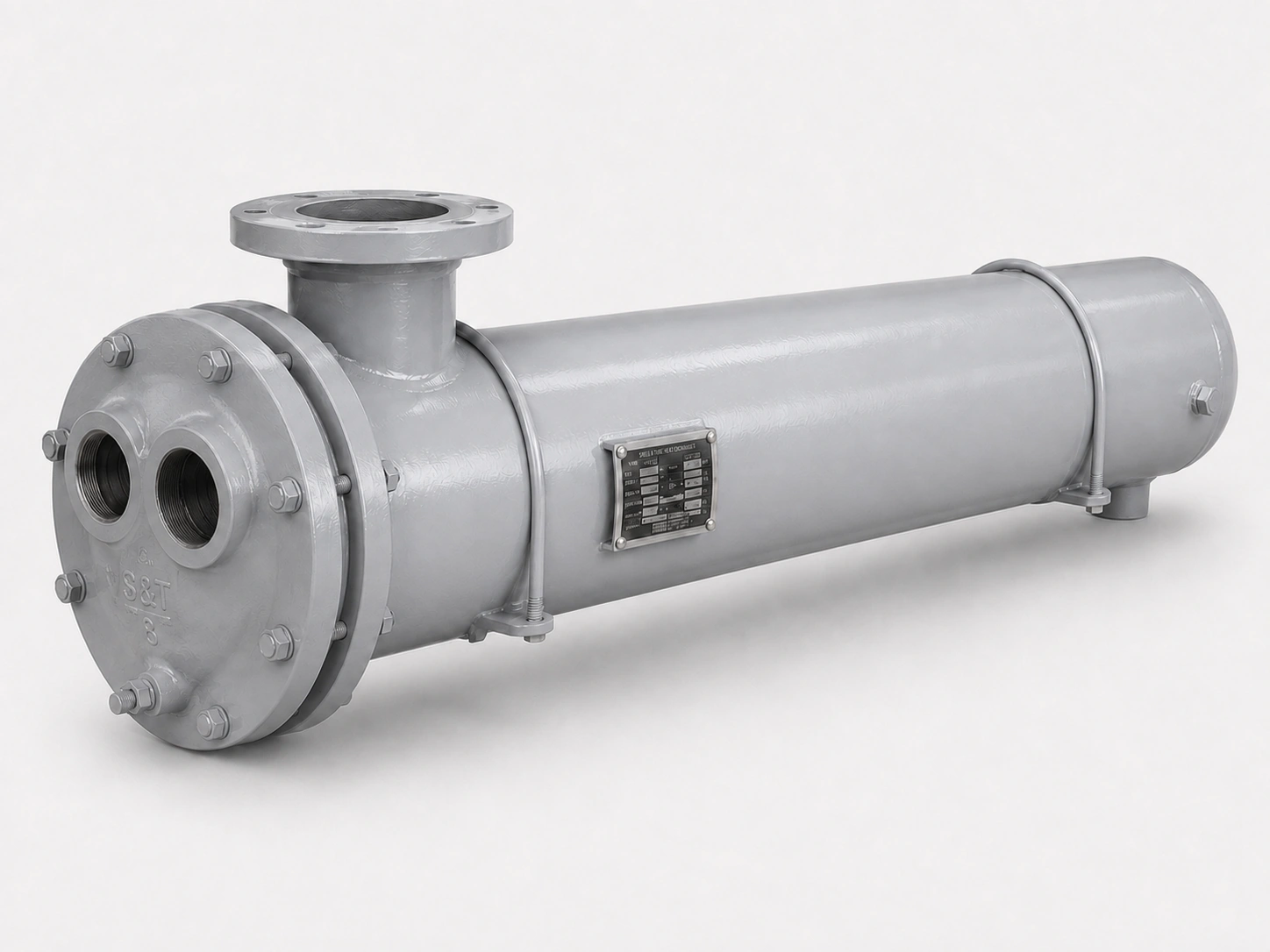
STEAM • DOUBLE WALL
DSU Series
Double-wall steam-to-liquid units for potable water heating.
+ Learn More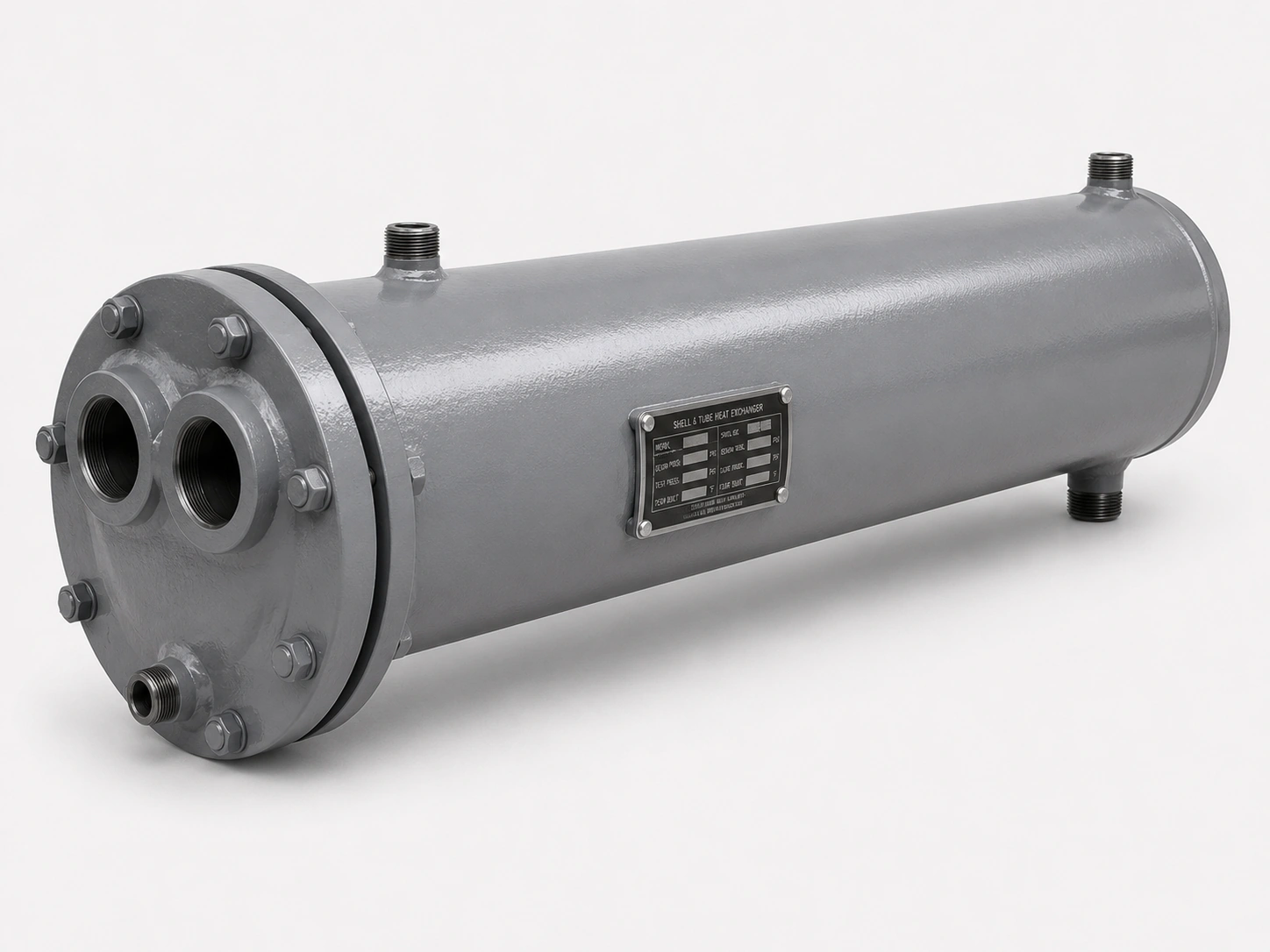
LIQUID • DOUBLE WALL
DWU Series
Double-wall liquid-to-liquid units on a pumped water circuit.
+ Learn More
APPLICATION • POTABLE
Double-Wall Protection
Where the requirement comes from and how it is met.
+ Learn More