
1-805-484-2992
Quotes - Engineering - SalesPumped Liquid on Both Sides
On steam duty the condensing coefficient is so high that the water side controls and the design is straightforward. Liquid-to-liquid is different: neither side dominates automatically, so flow rate, allowable pressure drop and fouling on both sides all feed into the selection. Five catalogued ranges cover the field, and choosing between them is mostly a matter of size, pressure and what the shell-side fluid will do to the shell.
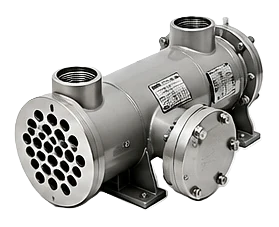
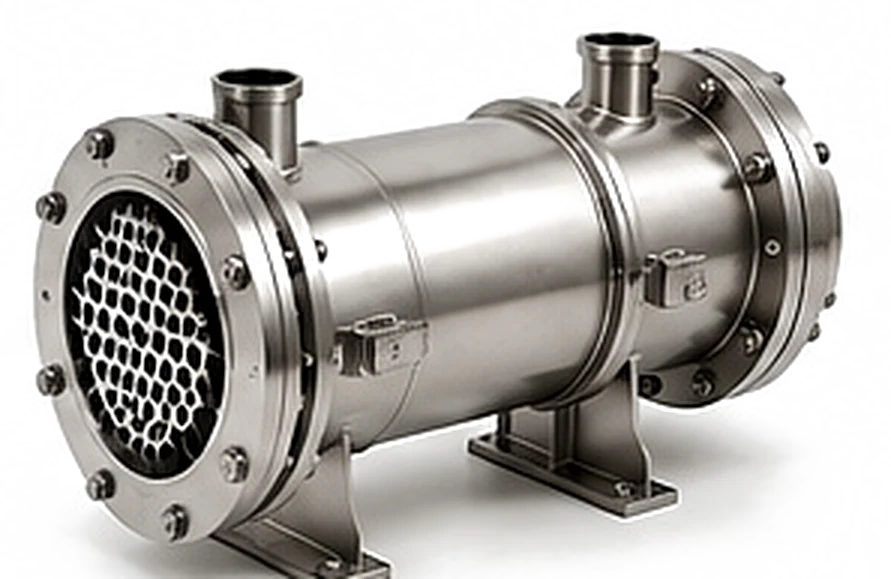
- WU Series is the general-purpose range, 529 part numbers across 4 to 30 inch shells, rated 150 PSI and 300°F, with a baffled shell for pumped flow.
- DWU Series adds double-wall tubes for potable duty, in a 4 to 12 inch shell range with naval brass tubesheets.
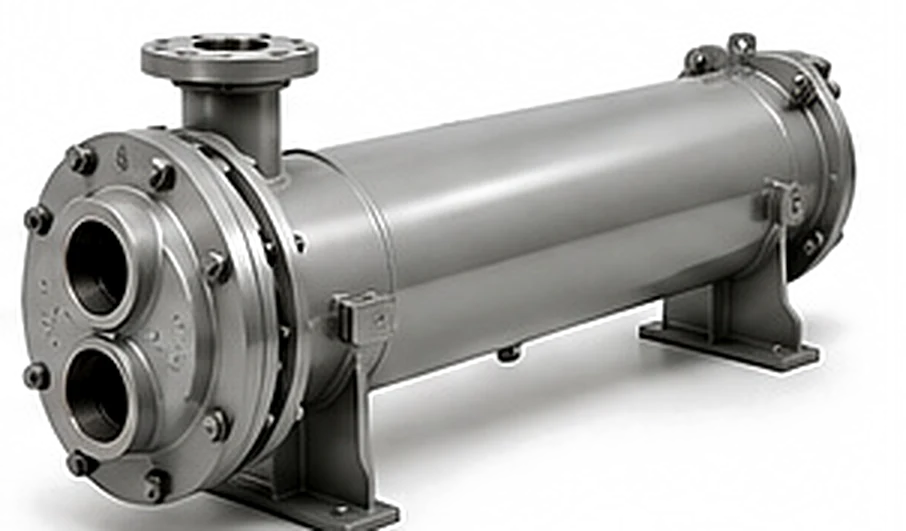
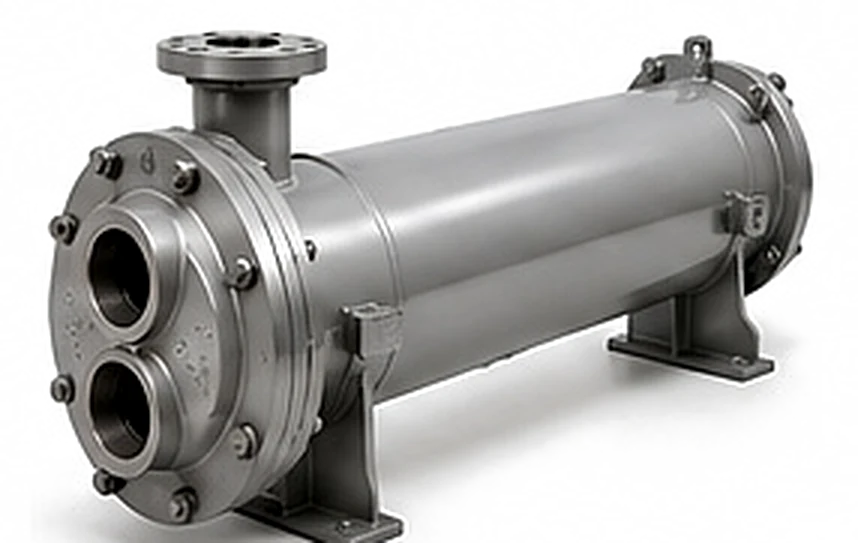
- OC Series is the oil cooler, with larger shells and longer tube runs because oil transfers heat poorly, in 1 and 2 pass arrangements.
- Oil-side pressure drop climbs steeply, so the allowable drop has to be stated at enquiry or the selection will be unpumpable.
- CHX and CHXS cover the compact end, 2 to 8 inch shells at a 300 PSI shell rating, in brass and steel respectively.
- That 300 PSI figure is double what the larger ranges carry, and on a small high-pressure loop it is frequently the whole reason for the selection.
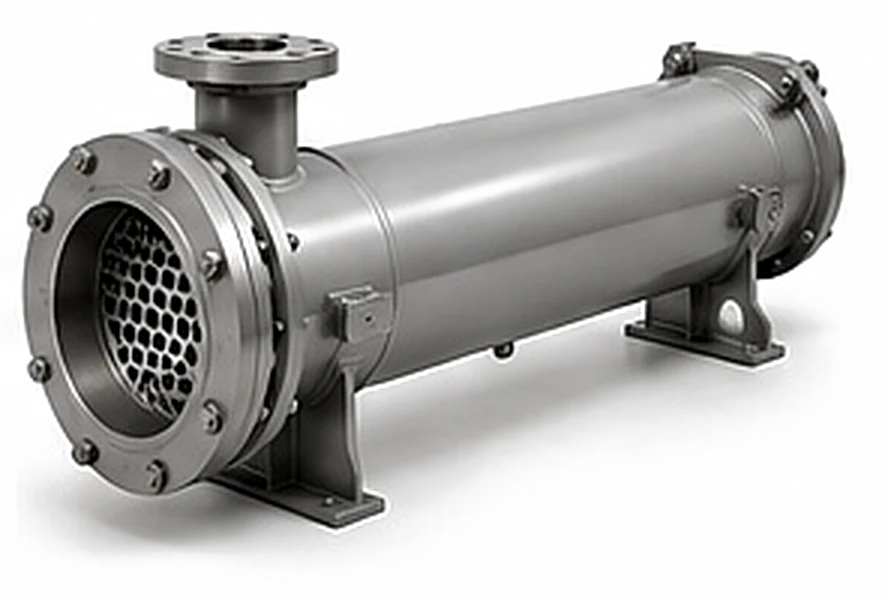
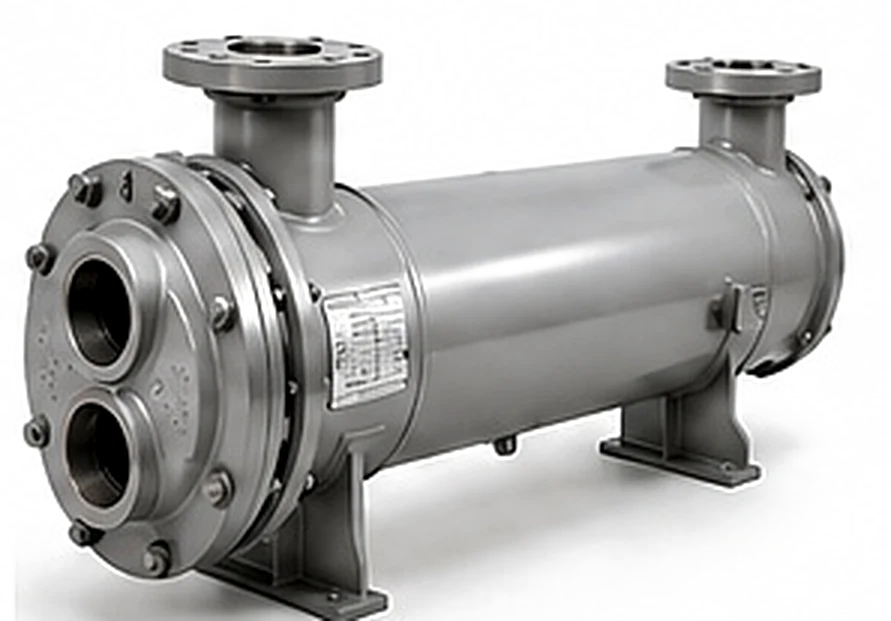






Both Sides Matter, and the Pressure Drop Is the Input People Omit
A liquid-to-liquid selection needs six numbers before it can be made properly: flow rate, inlet temperature and required outlet temperature on each side. Two more make it reliable: the allowable pressure drop on each side. That last pair is the input most often left off an enquiry and the one that most often changes the answer. An exchanger can meet the thermal duty perfectly and still be the wrong unit, because the pump in the system cannot push the design flow through it. On oil duty this happens routinely, because oil-side pressure drop rises steeply with both flow and viscosity.
The second thing worth stating is which side fouls. On a U-tube bundle the cleanable side is the shell side, because nothing rigid passes a 180 degree bend. That makes the standing rule straightforward: clean fluid in the tubes, fouling fluid in the shell. It is worth checking on an existing installation, because a change of duty over twenty years occasionally leaves the fouling stream on the side that cannot be reached, and no amount of chemical cleaning fixes a geometry problem.
Pass count is how tube-side velocity is bought. Two-pass is standard across the WU range; four and six pass arrangements raise velocity where the flow rate alone would leave the tubes laminar and the coefficient poor. Each additional pass costs pressure drop, and the increase is steeper than the thermal gain, so the optimum is frequently at two or four rather than higher. The compact CHX and CHXS ranges include single-pass arrangements precisely because on a small shell there is not much flow to distribute and forcing it through four passes buys velocity a small pump cannot pay for.
Liquid-to-Liquid Applications
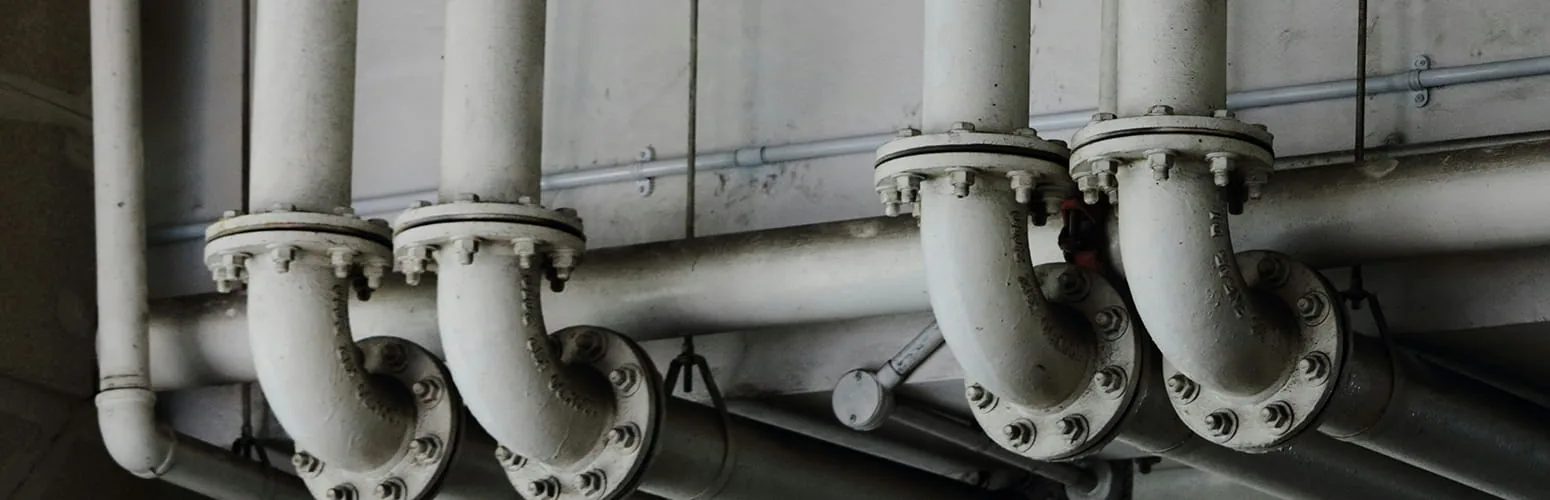
HVAC • HYDRONIC
Building Heating Loops
Boiler isolation, secondary loop separation and zone heating. The WU handles the duty and the removable bundle handles the water quality over the building's life.
+ Learn More
INDUSTRIAL • OIL
Hydraulic and Lube Oil
Oil is viscous and transfers heat poorly, which is why the OC range runs to larger shells and longer tubes than the general-purpose WU.
+ Learn More
INDUSTRIAL • GLYCOL
Glycol and Process Water
Freeze protection and process isolation. Glycol is more viscous and less conductive than water, so a loop converted without resizing will fall short.
+ Learn More