1-805-484-2992
Quotes - Engineering - SalesSteam to Hot Water Conversion
Building Steam Into a Hydronic Circuit
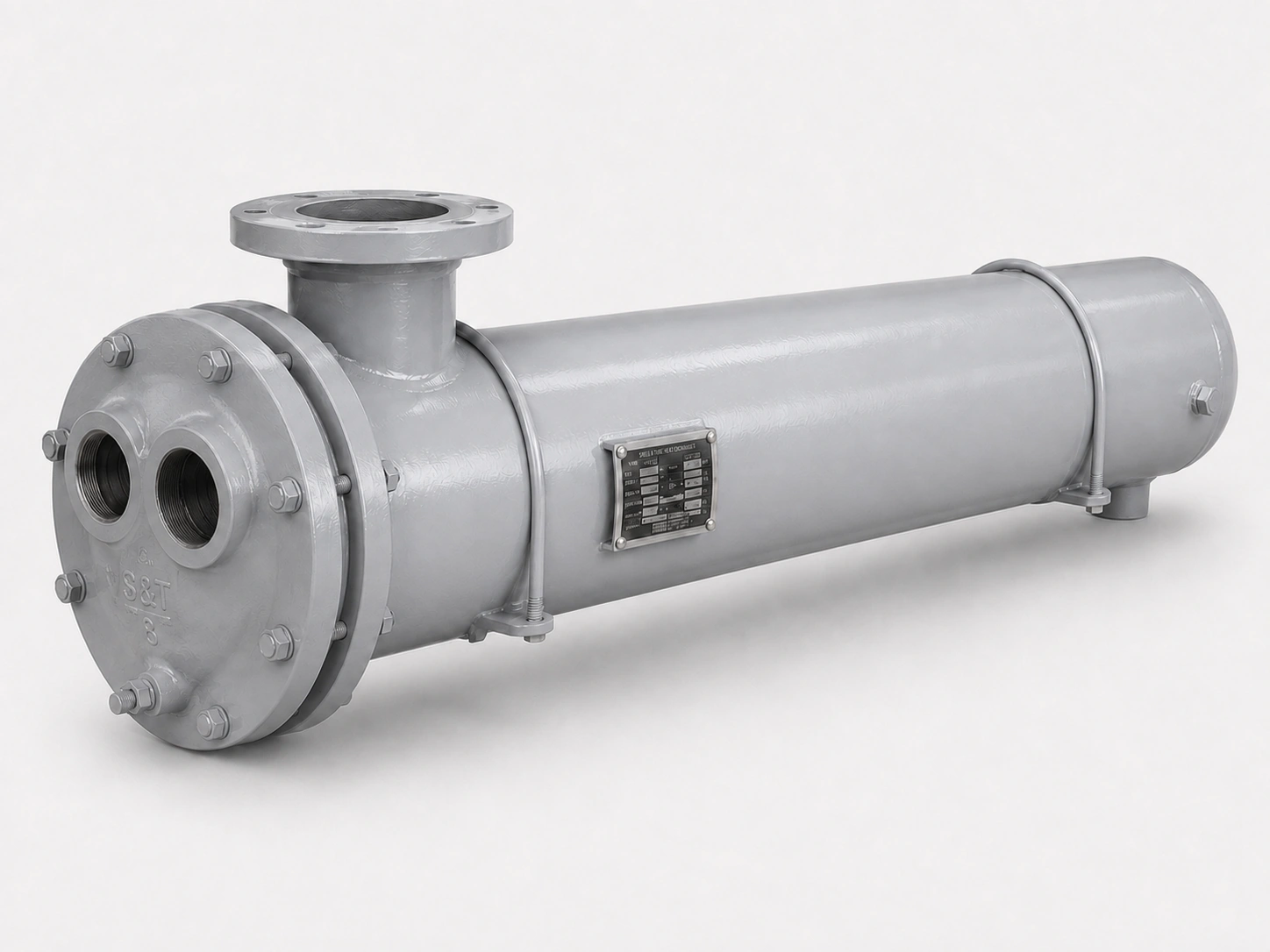
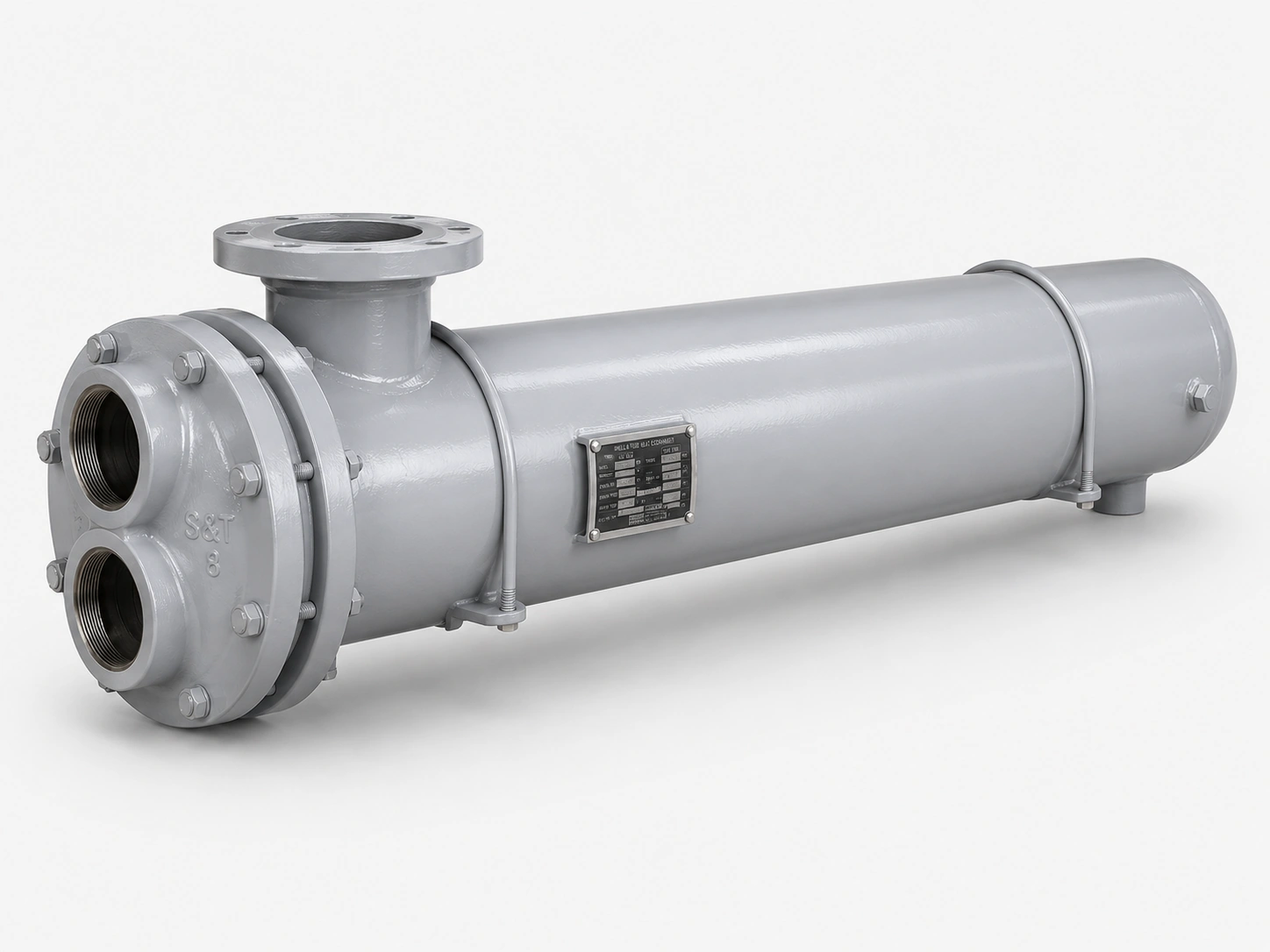
A campus or high-rise steam main arrives at a plant room and has to become hot water for radiation, air handling coils or fan coil units. An SU Series exchanger does that conversion: steam condenses in the shell around a removable U-tube bundle while the building water circulates through the tubes.
The temperature difference is the reason for U-tube construction. Saturated steam at even modest pressure is far hotter than return water, and on morning startup the exchanger goes from ambient to full steam temperature in seconds. Each tube expands independently from its anchored end, so no differential load reaches the shell or the tubesheet and no expansion joint is required.
Condensate drainage decides stability. The exchanger has to shed condensate as fast as it forms. Trap capacity sized for the running load rather than the startup load, back pressure in the return line, or a lift after the trap will all cause flooding, and flooding presents exactly like a fouled bundle.
Stall is the failure mode nobody designs for. When a modulating control valve throttles steam pressure down at low load, the shell pressure can fall below the condensate return line pressure. Condensate then physically cannot drain, the shell floods and control becomes erratic. Where the load turns down a long way, that needs a pumping trap or a vented arrangement designed in.
Two-pass is normally right. The condensing coefficient is high, so the water side controls and adding passes mostly adds steam-side pressure drop, which lowers saturation temperature and works against the duty.
 Building Steam
 Hydronic Water
 Condensate Return
 Modulating Control
Steam to Hot Water Selection
The duty is set by the water-side flow and temperature rise. The steam side follows from the pressure available.
Duty Inputs
- Water flow: GPM through the tubes
- Water temperatures: In and required out
- Steam pressure: At the control valve
- Turndown: Minimum load expected
Series
- SU for standard duty
- DSU where potable water is heated
- HTWU where static head exceeds 150 PSI
- TCS for storage tank duty
- 2, 4 and 6 pass available
Install Right
- Trap sized for startup load
- Check for stall at low load
- Vacuum breaker where applicable
- Vent at the high point
- Bundle pull clearance
Getting a Steam Converter to Behave
Size the Trap for Startup, Not Running Load
On a cold start the exchanger condenses steam at several times its steady-state rate, because the entire water volume and the metal mass have to be brought up to temperature. A trap sized for the running load will not keep up, the shell floods, and the unit takes far longer to come on line than it should.
This is the most common single cause of a steam converter that appears undersized. Before anyone questions the exchanger, check what the trap can actually pass at the available differential pressure.
Design for Turndown Deliberately
A building heating load in October is a fraction of what it is in January, and a control valve sized for the January duty operates near the bottom of its range for most of the season. That produces hunting, wide temperature swings and, on steam, the risk of stall.
Where the turndown ratio is wide, either a smaller valve in parallel or a control scheme that keeps the exchanger out of the stall region is worth designing in from the start.
Related