
1-805-484-2992
Quotes - Engineering - SalesU-Tube Bundle in Tank Construction
One Penetration, One Flange, One Removable Assembly
A tank bundle is a heat exchanger with no shell of its own. The bundle mounts on a flange that bolts to a tank nozzle, the heating medium circulates inside the tubes, and the tank contents surround the outside.
The U-tube geometry earns its place twice here. Both tube ends terminate at the mounting flange, so the tank needs only one penetration and one set of external connections. And the free thermal expansion means a bundle can be sitting in cold stored water when steam is admitted without any differential load reaching the flange.
Natural convection sets the size. With no forced circulation on the tank side, heat moves by convection driven only by density difference. The resulting film coefficient is low, and the bundle needs a great deal of surface to compensate. That is why catalogued tank bundles reach 120 inch lengths for duties an external exchanger would handle in a fraction of the space.
Agitation changes the arithmetic. A tank with a mixer, an agitator or a circulation loop transfers heat far better than a still one, and the required bundle gets noticeably smaller. If the tank has any of those, it is worth saying.
Removal follows the same path as installation. The bundle withdraws back through the nozzle, so clear space outside the tank at least equal to the bundle length is required. On a tank in a plant room or against a wall, that clearance frequently limits which length can be fitted.
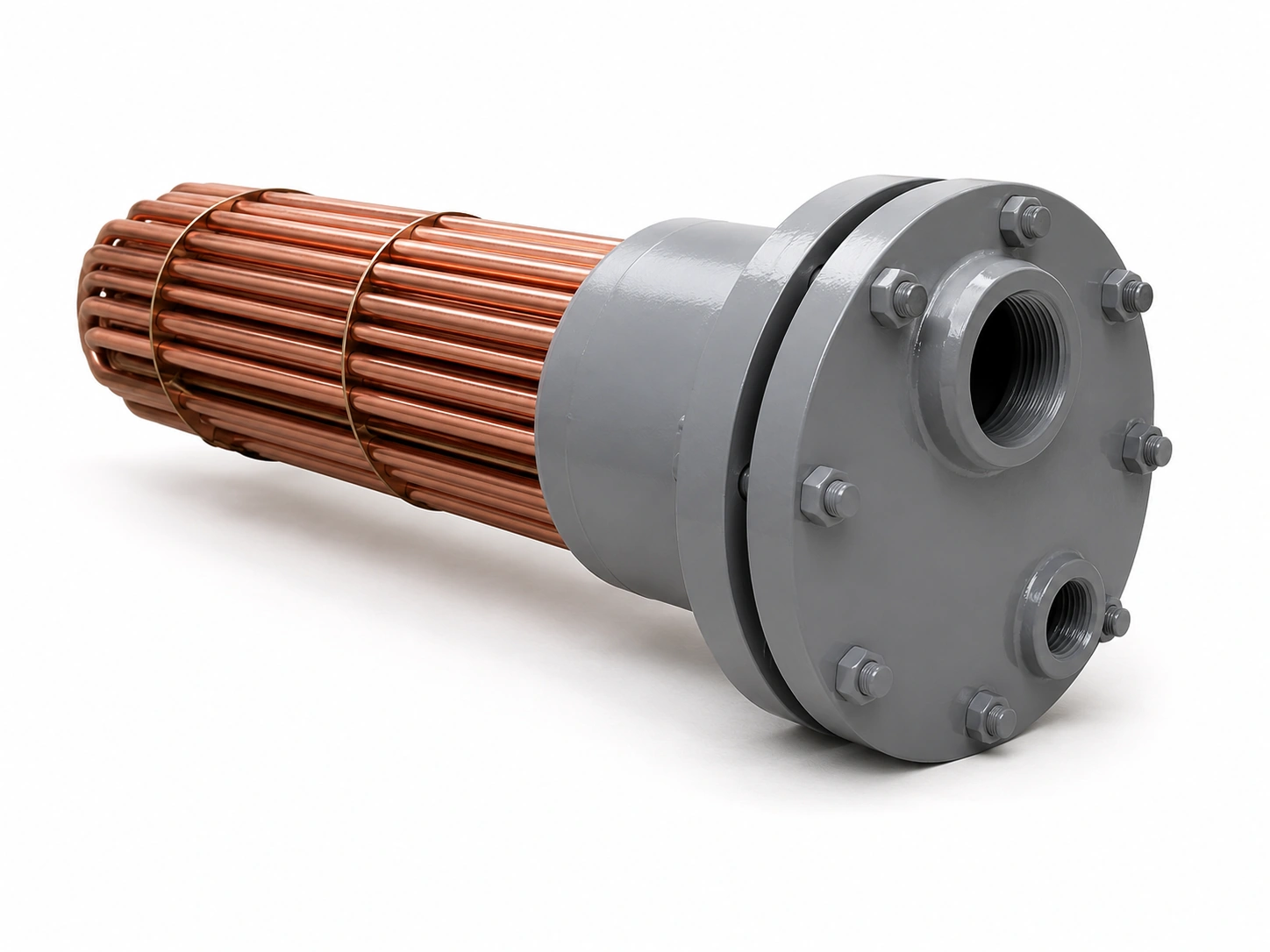
Tank Bundle Configuration
Bundle diameter and length are set by the duty, the tank geometry and the clearance available outside the nozzle for removal.
Configuration
- Mounting: Flange to tank nozzle
- Penetrations: One
- Tube arrangement: U-bend
- Bundle: Removable through nozzle
Features
- Single tank penetration
- Free thermal expansion
- Removable for service
- Steam or water heated
- Double-wall option available
Series
- TCS steam heated
- TCW water heated
- DTCS double-wall steam
- DTCW double-wall water
| CONSTRUCTION | PENETRATIONS | TANK SIDE | BUNDLE |
| U-Tube in Tank | One | Natural Convection | Removable |
Sizing and Installing a Tank Bundle
Recovery Rate, Not Standing Load
A storage tank's standing heat loss is small. What sizes the bundle is how quickly the tank has to come back to temperature after a draw, and that recovery requirement is a different number entirely.
Tell us the tank volume, the temperature rise required and the time available for recovery. Those three figures size the bundle far more reliably than a heat loss calculation does.
Clearance Is the Practical Constraint
Bundle length is frequently limited not by the tank but by the room outside it. Confirm the clear distance from the nozzle face to the nearest obstruction before selecting, because a bundle that cannot be withdrawn cannot be serviced.
Where clearance is genuinely tight, two shorter bundles in separate nozzles sometimes deliver the same surface in a serviceable arrangement.
Common FAQs
Related
STEAM • TANK HEATER
TCS Series
Steam heated tank bundles, 4 to 14 inch, to 120 inch long.
+ Learn More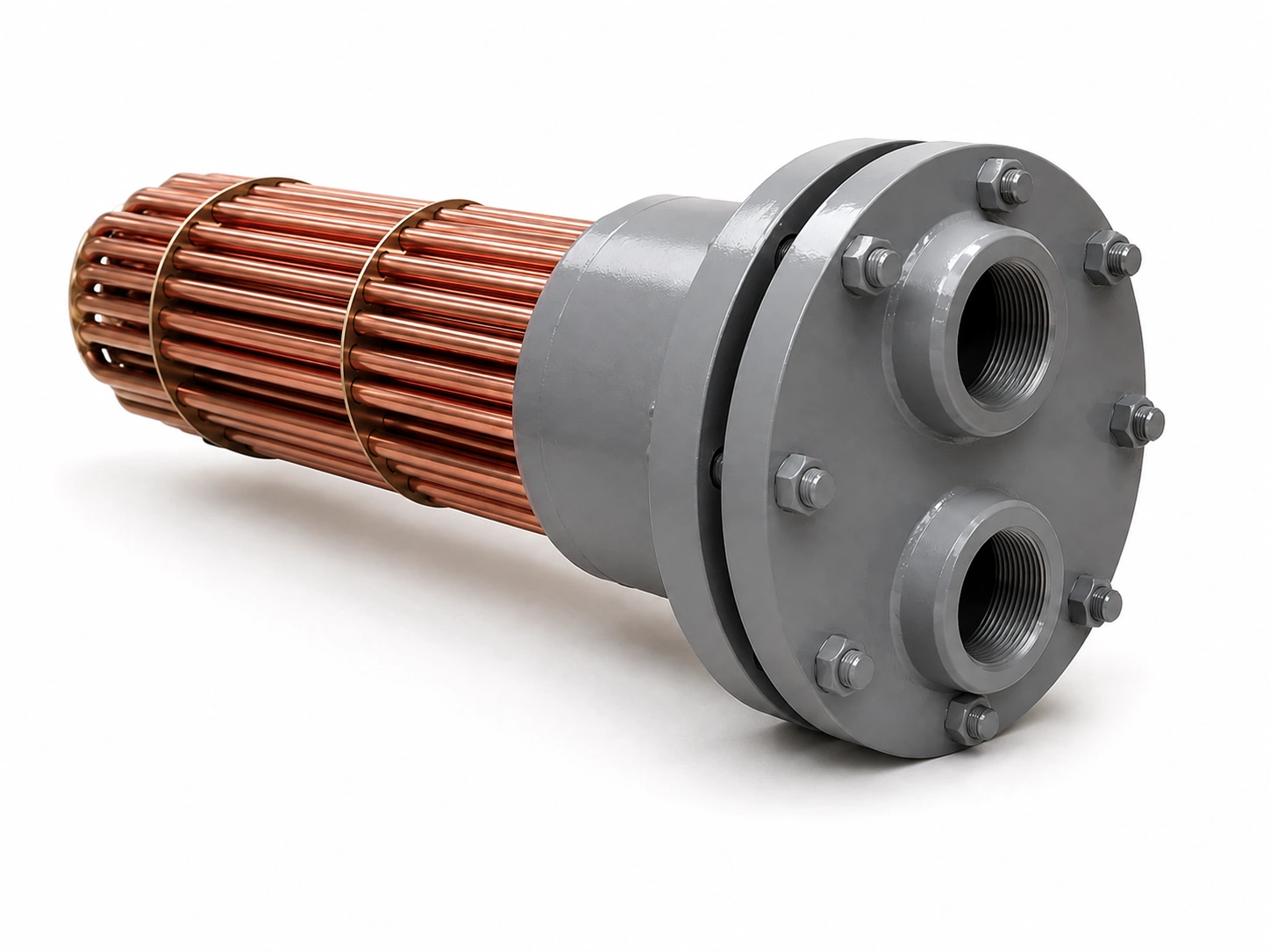
WATER • TANK HEATER
TCW Series
Water heated tank bundles on a pumped hot water circuit.
+ Learn More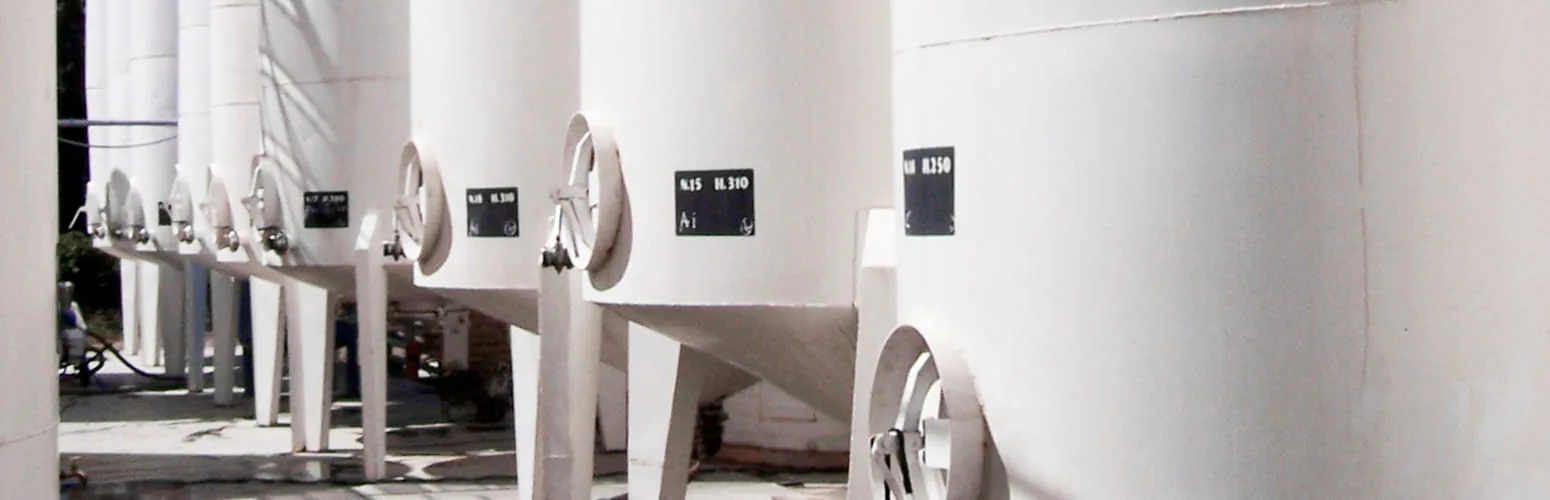
APPLICATION • STORAGE
Storage Tank Heating
How storage heating duty is sized and controlled.
+ Learn More