
1-805-484-2992
Quotes - Engineering - SalesConstruction Types
Shell and Tube
Bundle Construction
The tube arrangement is the single most consequential thing about a shell and tube exchanger. It decides how thermal expansion is accommodated, whether the bundle can be withdrawn, and which side of the unit you are able to clean mechanically.
Bell & Gossett units divide into U-tube, double-wall U-tube, fixed tube and heavy-duty U-tube construction. The SU, WU and most of the catalogued range are U-tube; the DSU, DWU, DTCS and DTCW use double-wall tubes; and the HTWU is the heavy-duty variant rated for higher tube pressure.
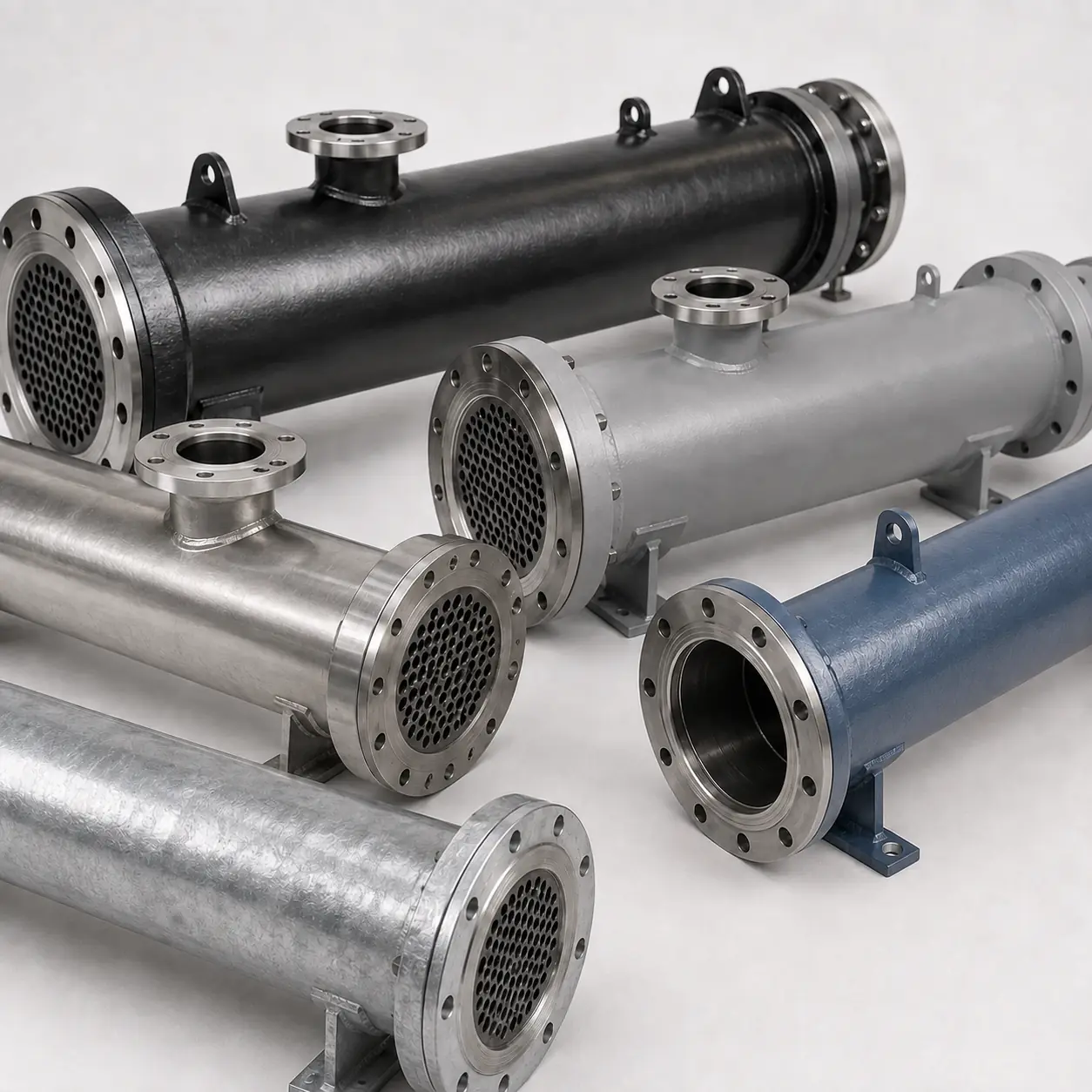
Identify the construction from the nameplate part number rather than by eye. Dimensionally similar units frequently differ in tube arrangement, tubesheet material and pressure rating.
Request a Quote



Choosing a Construction
Two questions settle the construction more reliably than anything else. First, how large is the temperature difference and does it cycle? Saturated steam meeting cold water is a large difference by definition, and startup makes it abrupt. A U-tube bundle absorbs that because every tube is anchored at one end and free at the bend, so it grows independently and no differential load reaches the shell. A fixed tubesheet unit on the same duty needs an expansion joint, which is the most fatigue-sensitive part of the assembly.
Second, what pressure does each side have to hold? The ranges pair a standard shell rating with whatever tube rating the duty needs, because a shell is a large-diameter pressure boundary and uprating it costs disproportionately more than uprating tubes and tubesheets. That is why the compact CHX and CHXS carry 300 PSI on a small shell while the larger SU and WU sit at 150, and why the HTWU reaches 400 PSI on the tube side without the shell following it up.
Materials follow the fluids rather than the geometry. Copper tubes and steel or brass tubesheets are standard across most of the catalogued line, with cast iron or cast brass bonnets and a steel shell, or brass on the compact CHX. The double-wall ranges use naval brass tubesheets, which is one of the more reliable ways to tell a DSU or DWU from a visually similar SU or WU when a nameplate has become hard to read.
Beyond that the part number carries the rest. A catalogued number encodes the series group, the shell diameter, the shell length and the pass and connection arrangement, so a single number establishes the whole configuration. Legacy designations such as SU85-2 describe the same units in shorter form, and either is enough to confirm what a duty needs or what an existing installation already has.
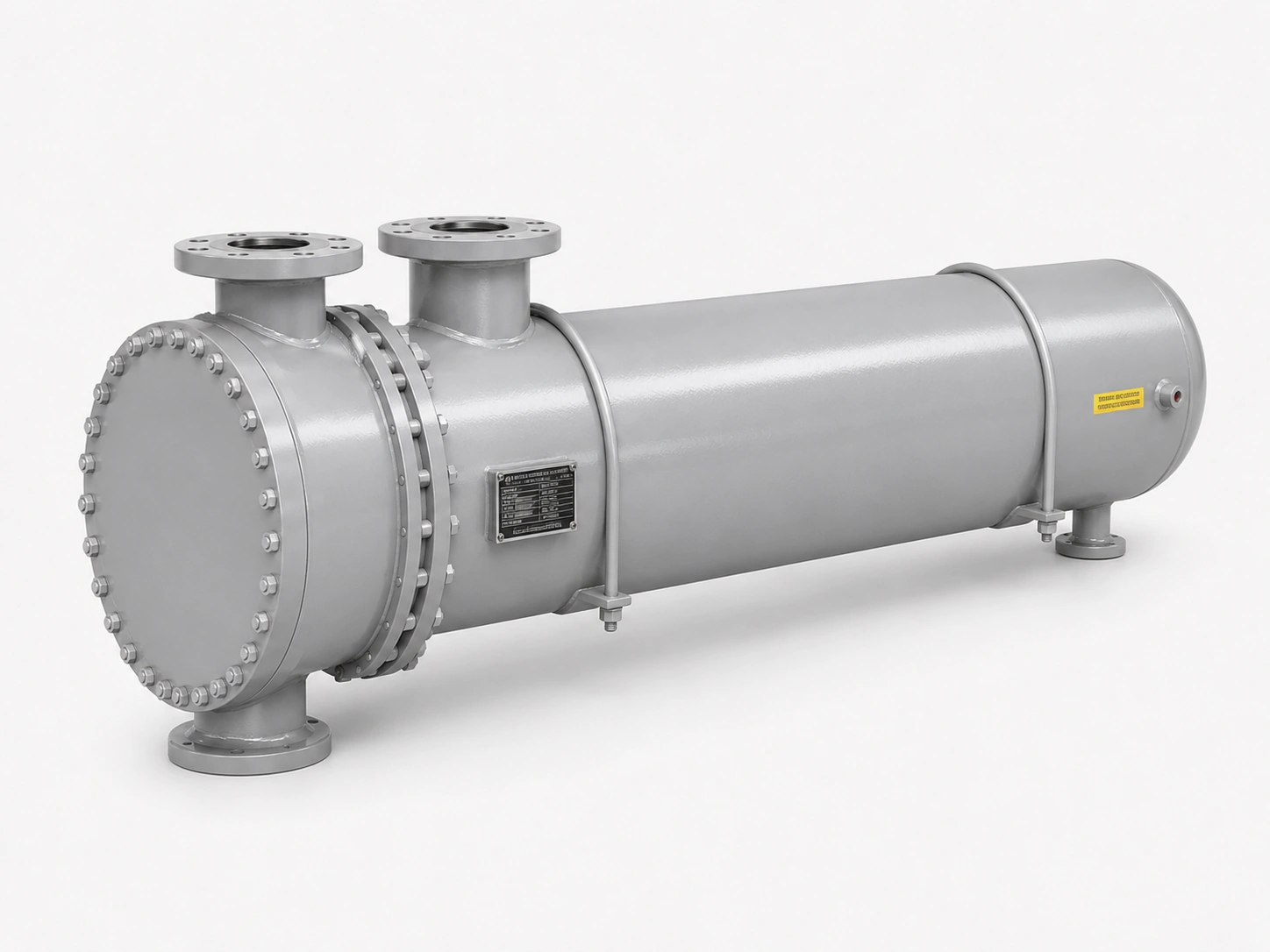




Why the Tube Arrangement Decides Everything Else
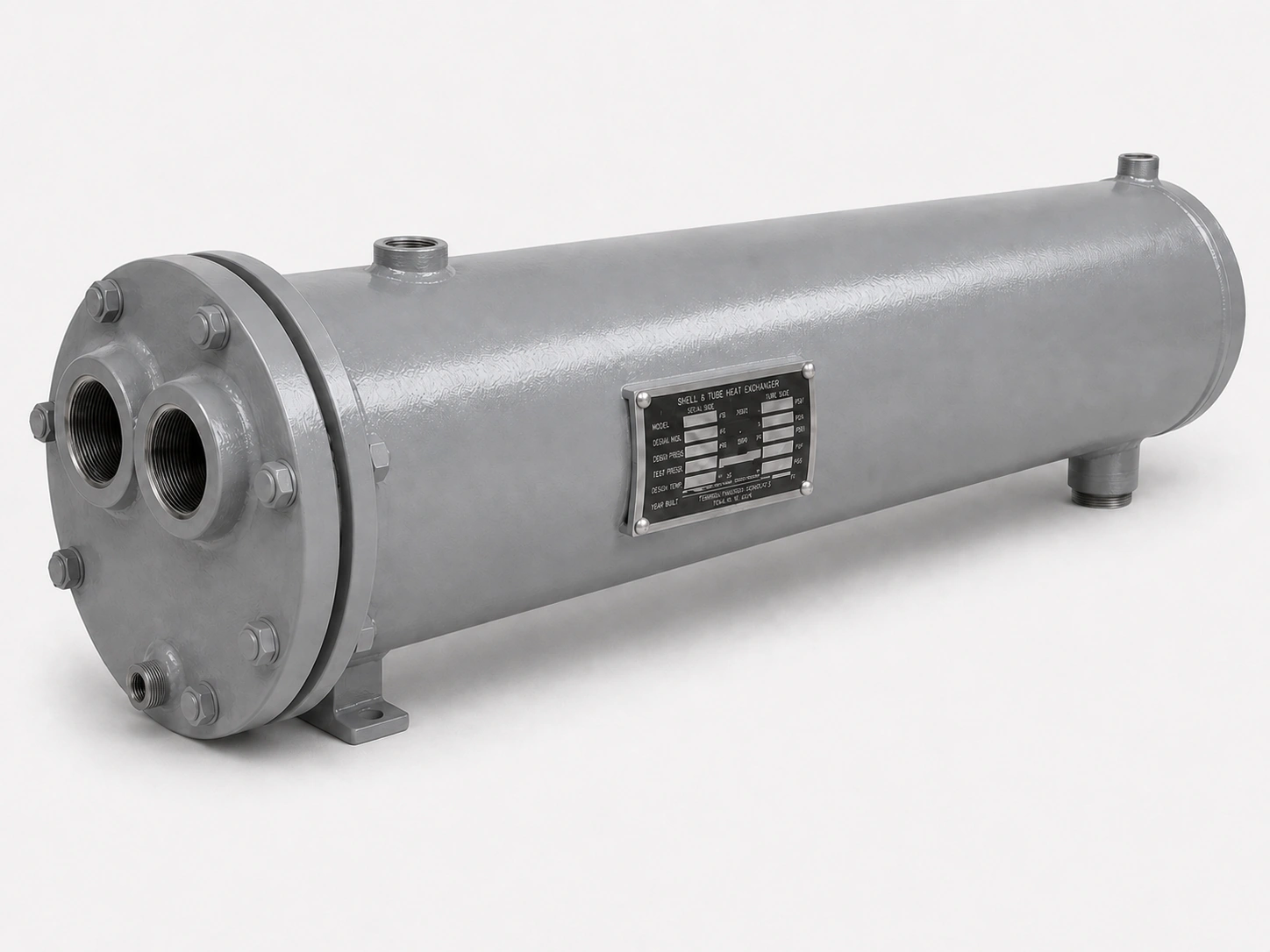
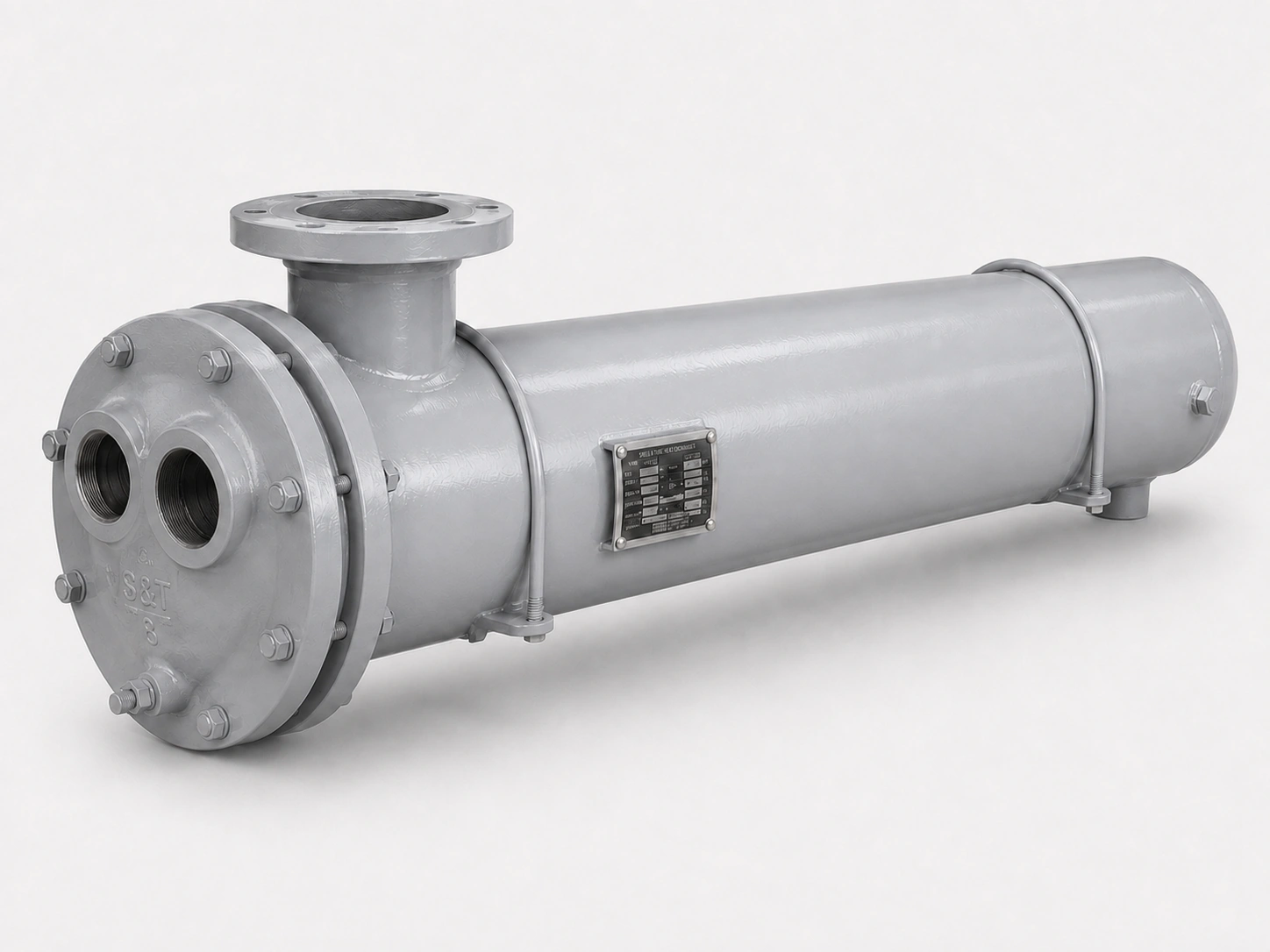
A U-tube bundle is anchored at one end and free at the bend, so each tube expands independently and no differential load reaches the shell. That removes the expansion joint a fixed tubesheet unit would need, and it lets the whole bundle withdraw as one assembly for shell-side cleaning.
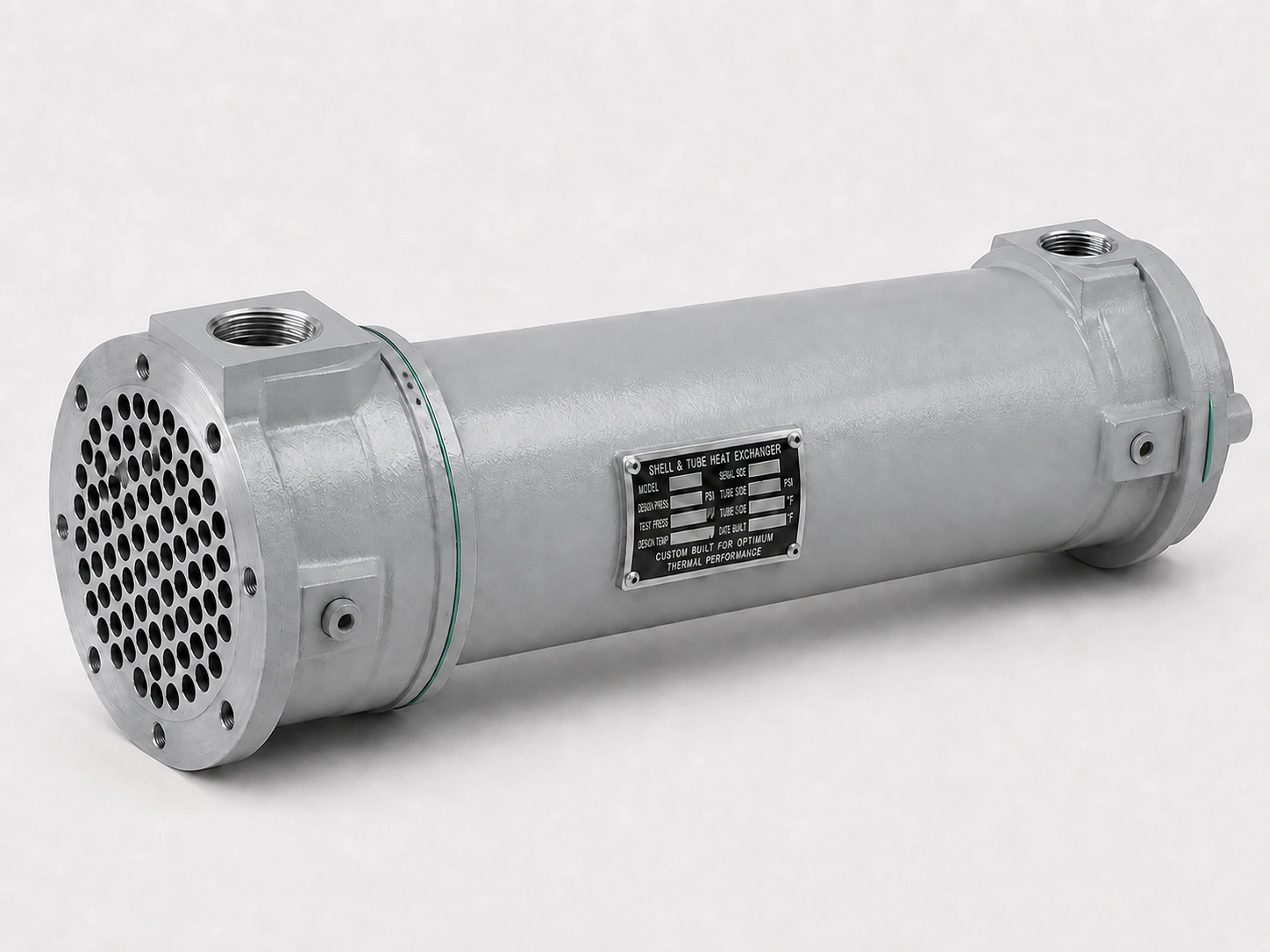
A fixed tube bundle is welded at both ends. It is cheaper, and the tube interiors can be rodded end to end, but the shell side can only be cleaned chemically and a large temperature difference has to be accommodated some other way.
What the Part Number Tells You
Catalogued Bell & Gossett part numbers encode the series group, the shell diameter, the shell length and the pass and connection arrangement. A number in the 5-260 range is a steam unit; 5-265 and 5-266 are liquid-to-liquid; 5-267 and 5-262 are double-wall.
Legacy designations such as SU85-2 or WU124-46 describe the same units in a shorter form. Either style on a nameplate is enough to identify the unit and confirm a replacement.
Removable Bundles and Clearance
The maintenance advantage of a removable bundle only exists if there is room to remove it. Allow clear space in front of the unit at least equal to the bundle length, plus room to handle it. This is the most commonly overlooked item during layout and the most expensive to resolve afterwards.
Where a unit is already installed without that clearance, chemical cleaning of the shell side is the fallback, and it is considerably less effective on a deposit that has been building for years.
Materials Across the Range
Copper tubes and steel or brass tubesheets are standard across most of the catalogued range, with cast iron or cast brass bonnets. Shells are steel on the larger ranges and brass on the compact CHX.
Double-wall ranges use naval brass tubesheets, which is one of the details that distinguishes a DSU or DWU from a visually similar SU or WU. Substituting one for the other on the basis of dimensions is a mistake worth avoiding.