
1-805-484-2992
Quotes - Engineering - SalesSteam in the Shell, Liquid in the Tubes
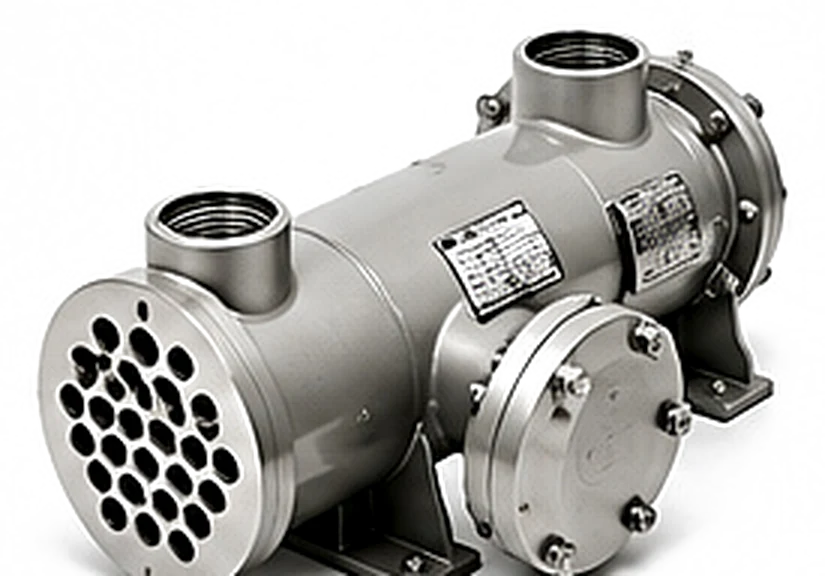
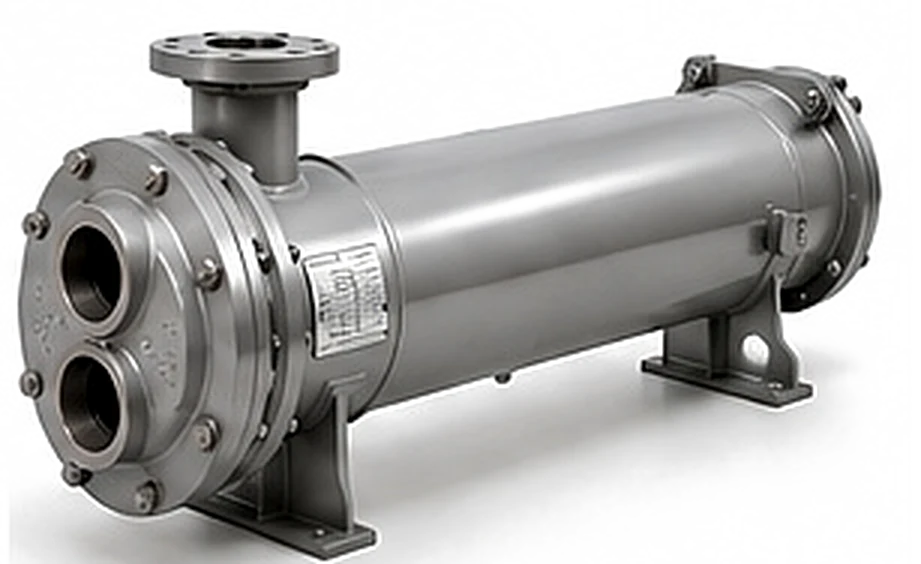
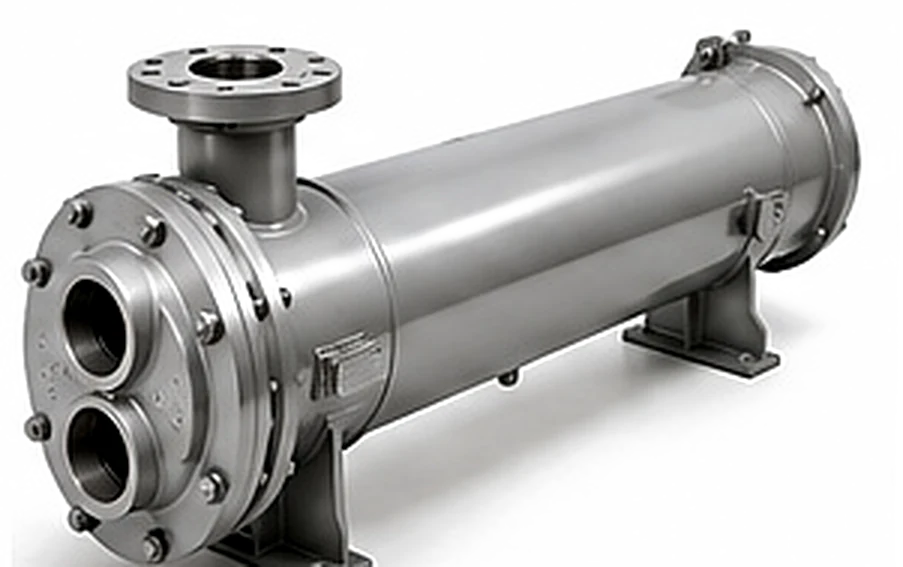
Steam-to-liquid is the largest family in the Bell & Gossett shell and tube catalogue, and the reason is thermal. Saturated steam meeting cold water produces a large temperature difference by definition, and startup makes it abrupt. A removable U-tube bundle absorbs that without an expansion joint, and it withdraws for shell-side cleaning when condensate quality eventually leaves a deposit. Between the SU and the DSU there are the full catalogued range across shell diameters from 4 to 30 inches.
- SU Series covers general steam-to-liquid duty in 772 catalogued part numbers, rated 150 PSI shell and 375°F, with 2, 4 and 6 pass tube-side arrangements.
- Steam condenses at essentially constant temperature, so the water side controls the design and the unit is sized on tube-side velocity and pressure drop.
- DSU Series carries the same geometry with double-wall tubes and naval brass tubesheets, for duty where a non-potable heating medium warms potable water.
- Both ranges use cast iron, cast brass or steel bonnets on a steel shell with copper tubes, and both withdraw as a single bundle assembly.
- Condensate drainage decides whether the installation is stable. A unit that cannot drain floods from the bottom up and loses surface progressively, and the symptom looks exactly like fouling.
- Part numbers in the 5-260 and 5-261 ranges are SU units; 5-262 is the DSU. Legacy designations such as SU85-2 describe the same units.






Why Steam Duty Favours a Removable U-Tube Bundle
Steam-to-liquid duty produces the largest temperature differences in ordinary building and process heating, and it produces them suddenly. A cold exchanger admitted to saturated steam goes from ambient to steam temperature in seconds, and it does so on the shell side while the tubes are still full of cold water. Every tube in a U-bundle is anchored at one end and free at the bend, so it grows independently and no differential load reaches the shell or the tubesheet. A fixed tubesheet unit on the same duty needs an expansion joint, which is the most fatigue-sensitive component in the assembly and the usual first failure on cycling service.
The second advantage is access. Steam is clean, so it belongs on the side that cannot be mechanically cleaned. That leaves boiler-treated or make-up water in the tubes, and eventually that water leaves a deposit. Because the bundle withdraws as one assembly, the shell interior and the outside of every tube can be brushed or hydroblasted rather than merely flushed. Allow clear space in front of the unit equal to the bundle length, or the advantage exists only on paper.
The failure mode to design against is condensate flooding. Steam condenses to a fraction of its volume, and that condensate has to leave as fast as it forms. When it cannot, it backs up into the shell and progressively covers surface. Performance falls, the approach temperature widens, and every symptom points at a fouled bundle. Check the trap capacity, the back pressure and the drain leg before anyone opens the exchanger. On modulating service, also check whether the control valve can throttle the shell pressure below the condensate return line pressure, because that stalls drainage entirely.
Steam-to-Liquid Applications
HVAC • BUILDING HEATING
Steam to Hot Water
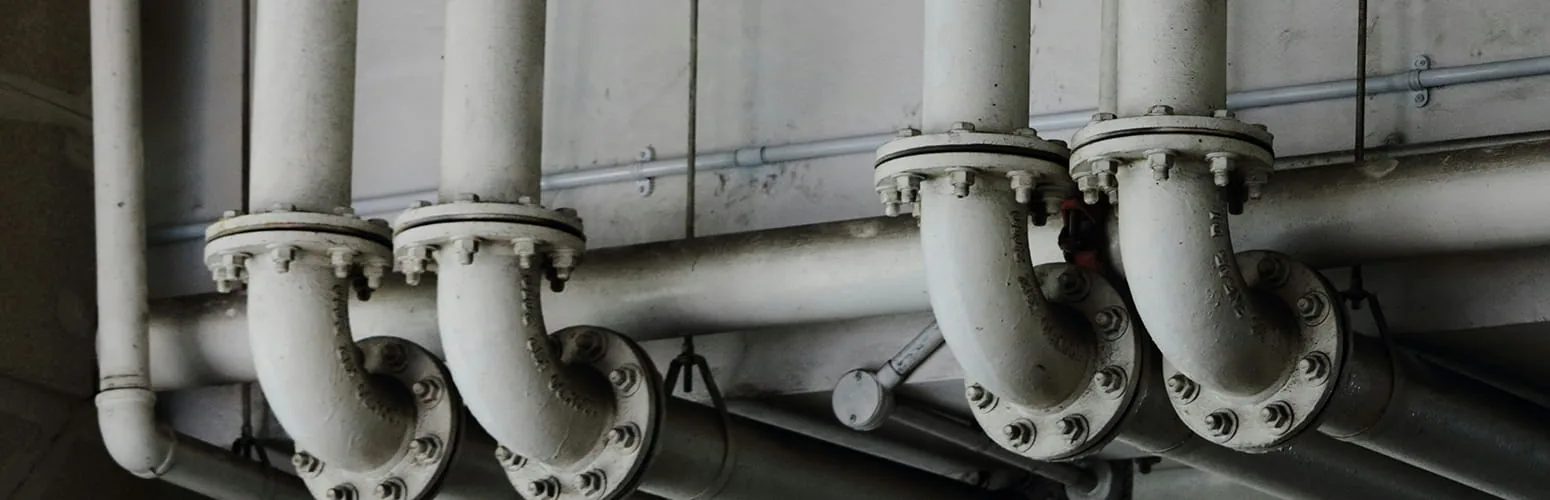
Converting building steam to a hydronic circuit is the single most common Bell & Gossett duty. The SU handles the temperature difference and the cycling without an expansion joint.
+ Learn More
POTABLE • DOUBLE WALL
Domestic Hot Water
Where steam heats drinking water, a single tube wall is the only barrier. The DSU puts a vented gap in the leak path so a failure appears outside the unit.
+ Learn More
PROCESS • SANITARY
CIP and Process Water
Cleaning solutions and process water both need bringing to setpoint quickly. Steam delivers the recovery rate, and the bundle comes out when the water side scales.
+ Learn More