1-805-484-2992
Quotes - Engineering - SalesPROVINCIAL REGISTRATION
Canadian
Registration
Numbers
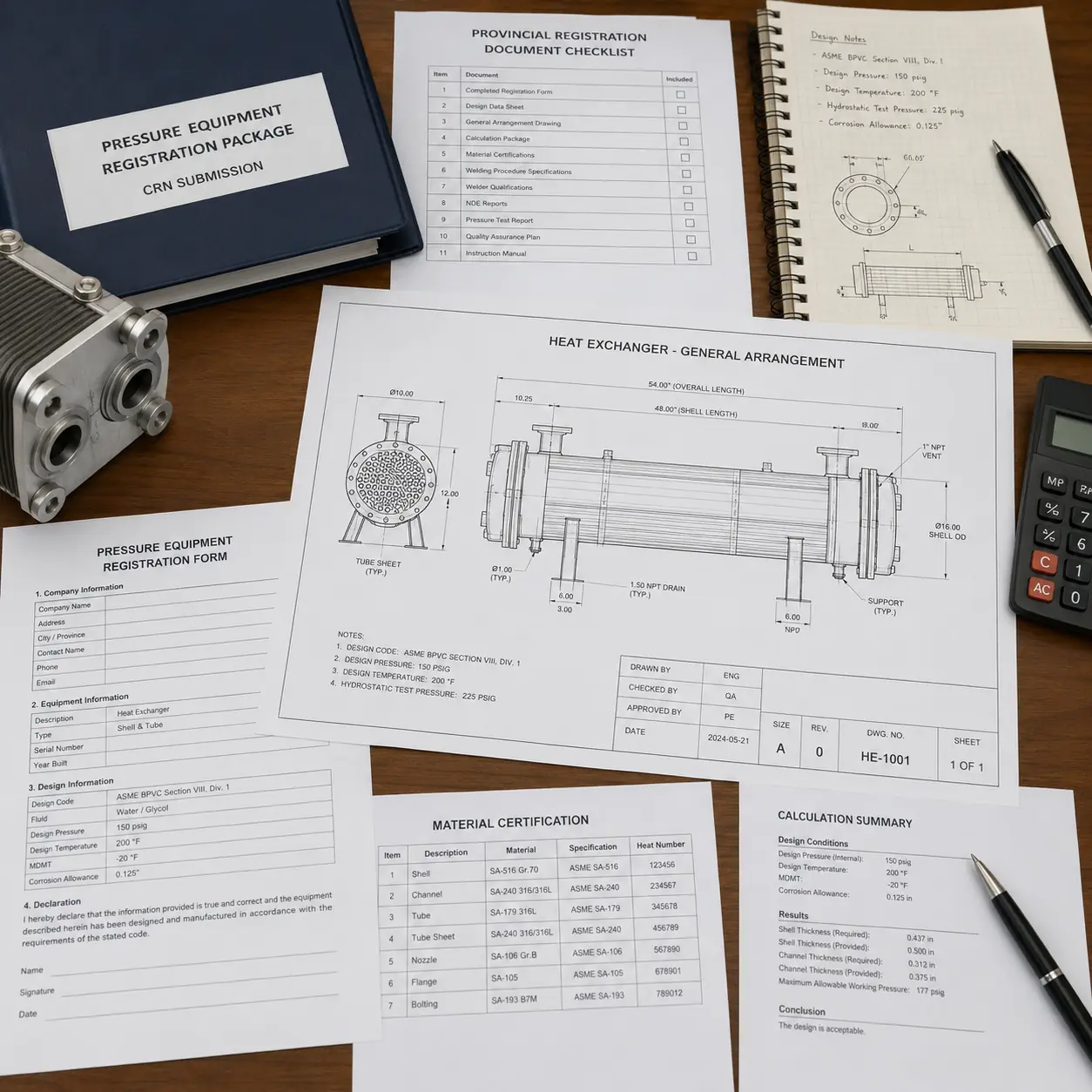
Pressure equipment installed in Canada requires a Canadian Registration Number, and registration is granted provincially rather than nationally. A design registered in one province is not automatically registered in another, so the destination address matters as much as the duty. The CRN attaches to the design rather than to the individual unit, which means a registered model can be supplied repeatedly against the same registration.
Where a catalogued model is already registered in the destination province, quoting the number is the whole of the process and the schedule is unaffected. Where it is not, registration proceeds at the pace of the provincial authority, and that pace is outside a fabricator's control. It is the single most common reason a finished exchanger waits before shipping to a Canadian site.
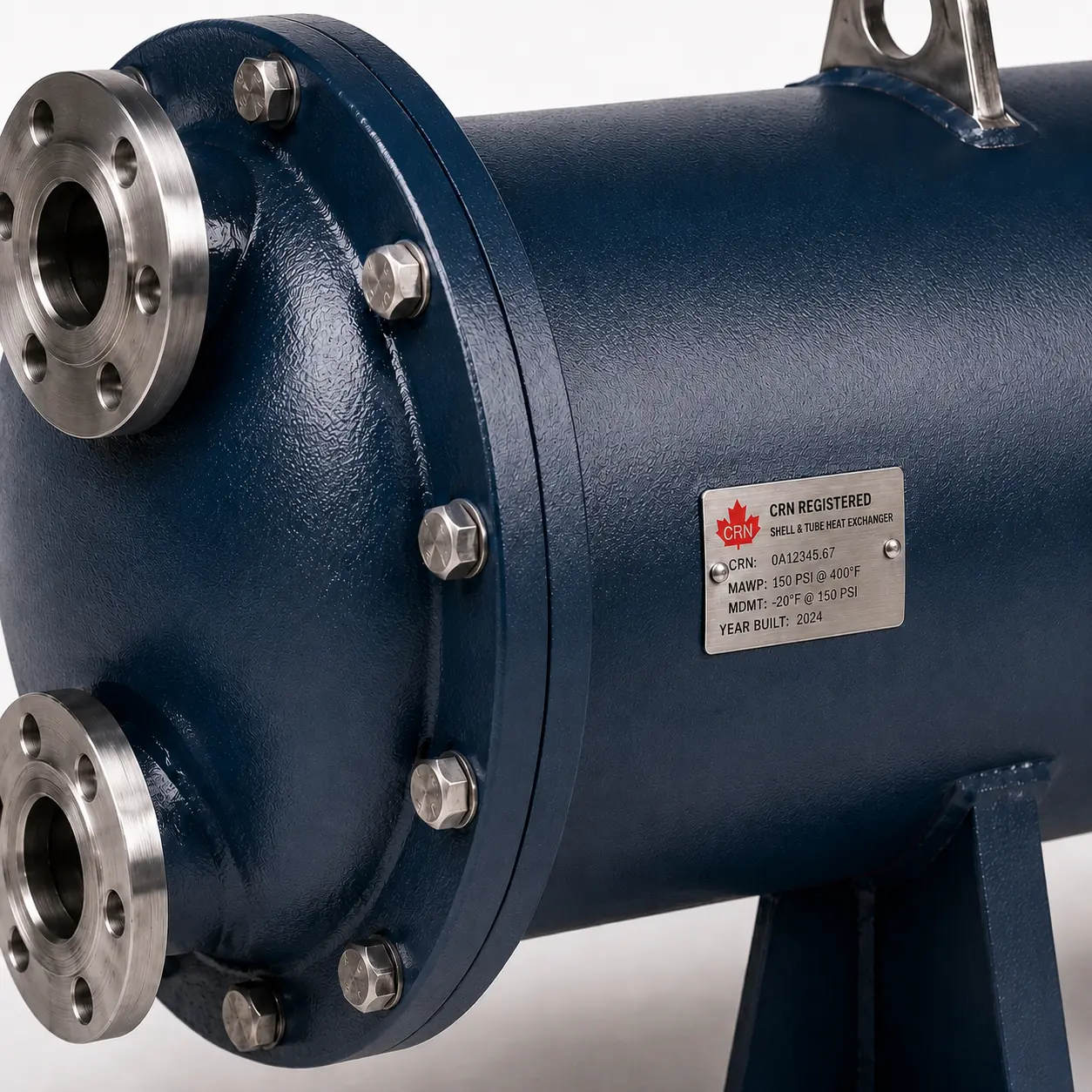
Code construction does not remove the requirement. A stamped and National Board registered vessel still needs a CRN for Canadian installation, because the two systems are complementary rather than alternatives. Raise the destination province with the enquiry rather than with the order: if a registered model covers the duty we will say so, and if it does not, knowing early is what protects the programme date.
Request a QuoteRegistration is never on the critical path if it is raised at enquiry. It becomes the critical path when a unit is ordered, fabricated and then found to need a registration nobody applied for.
Regulated Process Duty
Registration in Validated Plant
- Design Registration Held Against the Model
- Documentation Package Issued With the Unit
- Deviations Registered Before Fabrication
Qualified Equipment
Traceable Build Records
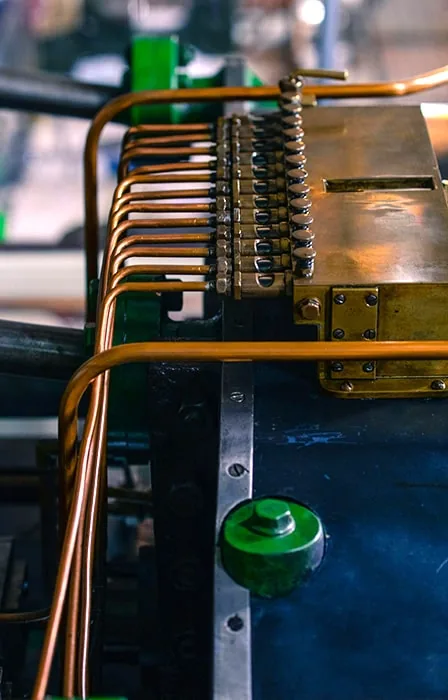
- Material Certificates Traced to Heat Number
- Weld Maps and Examination Records
- Surface Finish Recorded on Product Contact
How Registration Works
A CRN is a design registration rather than a unit certificate, and understanding that distinction explains almost everything else about how it behaves on a project.
- Required for pressure equipment installed anywhere in Canada
- Granted provincially, so each destination province is assessed separately
- Attached to the design, so registered models can be supplied repeatedly
- Additional to code construction rather than a substitute for it
- Reset by design deviation, including changes that appear minor
- Quoted on the nameplate and in the documentation package
What to Tell Us at Enquiry
Because the registration attaches to the design, a deviation from a registered model may need registering in its own right. Staying inside a registered configuration is frequently worth more than the convenience a deviation would have bought.
- The destination province, at enquiry rather than at order
- Whether a registered catalogued model is acceptable for the duty
- The programme dates the installation is working to
- Any design deviation the installation genuinely requires
- Whether code construction is specified alongside the registration
Common FAQs
No. An ASME-stamped and National Board registered vessel still requires a Canadian Registration Number for installation in Canada. The two systems are complementary rather than alternatives.
No, it is provincial. A design registered in one province is not automatically registered in another, so the destination province matters.
It varies by province and by workload, and it is outside a fabricator's control. Where a catalogued model is already registered, supplying against that registration adds nothing to the schedule.
It can. Because the registration attaches to the design, deviations may need registering, including changes that seem minor such as a nozzle relocation or a different pass arrangement.
Related