1-805-484-2992
Quotes - Engineering - SalesWHERE THE RANGES DIFFER
Bonnets,
Tubesheets
and Hardware
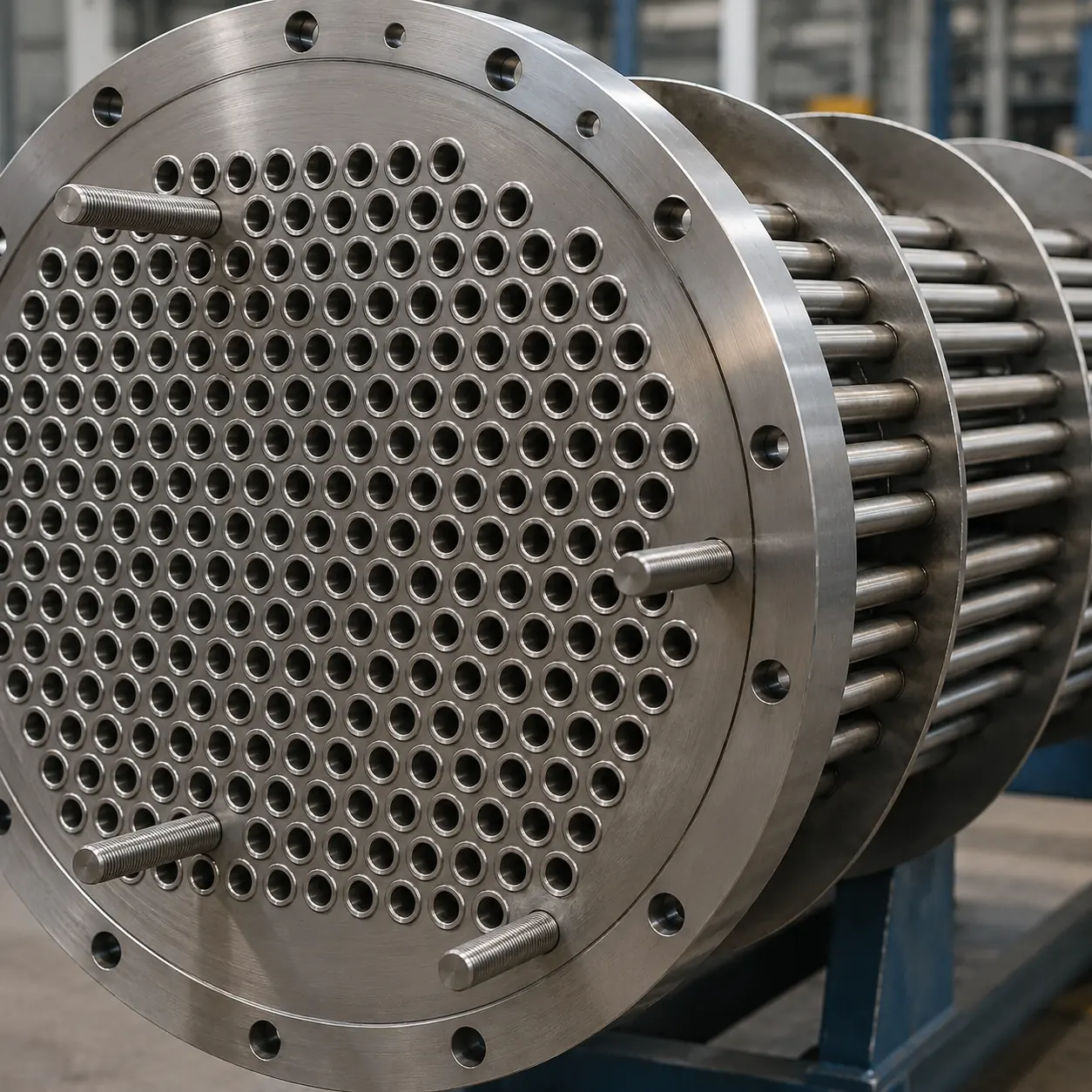
Beyond the shell and the tubes, an exchanger is made up of bonnets, tubesheets, baffles, tie rods and hardware. These components vary considerably across the catalogued ranges, and they are where identification by part number matters most. Cast iron bonnets are standard across most of the range, with cast brass as an alternative on several series and steel on some units.
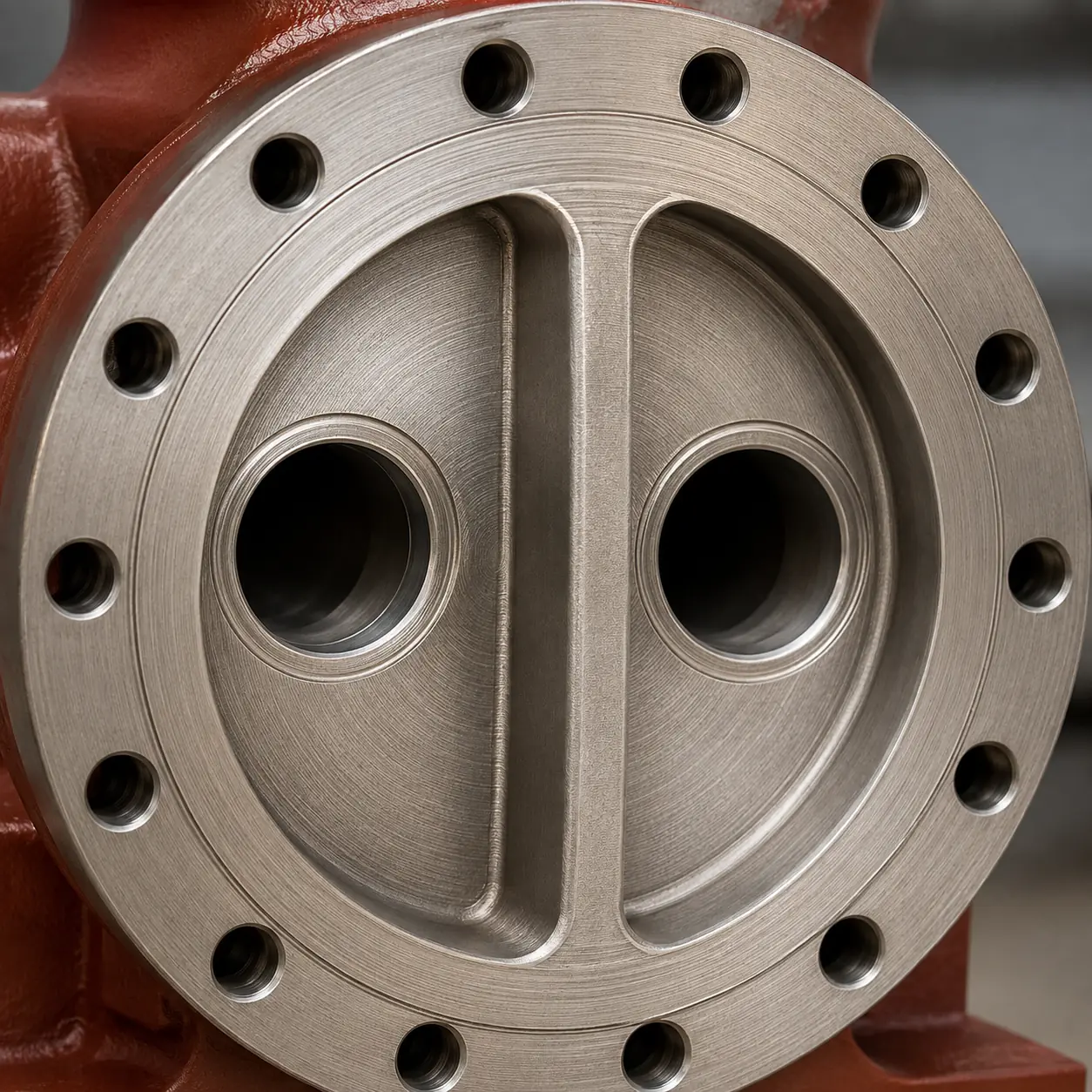
The bonnet also houses the pass partitions, which makes it specific to the pass arrangement as well as to the size. Tubesheets are steel or brass on the single-wall ranges depending on series and vintage, and naval brass on the double-wall shell and tube ranges. That naval brass is one of the more reliable ways to identify genuine double-wall construction when a nameplate has become illegible.
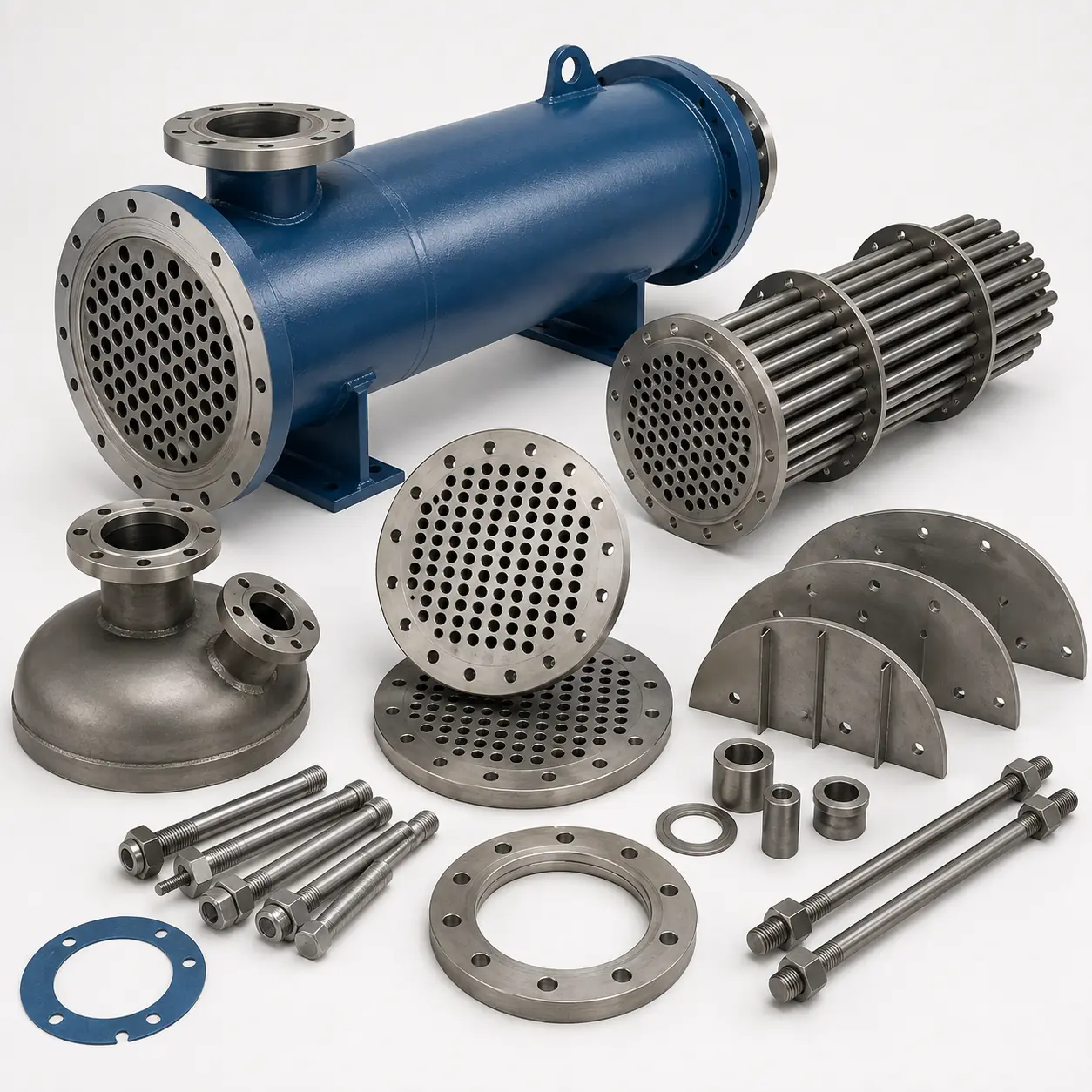
Two units of identical shell dimensions can carry different bonnet materials, different tubesheet materials and different pass arrangements. Measuring establishes the size and tells you nothing about the rest. Compression bolts, tie rods and the machined gasket faces all wear, and where a joint keeps weeping despite correct gaskets and torque sequence, the gasket face is worth measuring rather than fitting a third gasket.
Request a QuoteA photograph of the nameplate takes a minute and establishes everything from the record. Field measurement establishes the size and leaves the rest to be guessed at.
Gasketed Joints
Where the Sealing Face Governs
- Gasket Matched to the Pass Arrangement
- Sealing Faces Measured Rather Than Assumed
- Torque Sequence Followed on Reassembly
Tank-Mounted Elements
Hardware Inside the Vessel
- Element Supported Independently of the Nozzle
- Drainable Geometry Inside the Tank
- Connections Specified With the Vessel
Component Materials
Every component below is established by the part number rather than by measurement, which is why the nameplate is worth more than a tape measure when spares are being ordered.
- Cast iron bonnets as standard across most of the range
- Cast brass bonnets as an alternative on several series
- Steel bonnets on some units within the steam range
- Steel or brass tubesheets depending on series and vintage
- Naval brass tubesheets on the double-wall shell and tube ranges
- Pass partitions housed in the bonnet and matched by the head gasket
Also Varies by Series
Naval brass tubesheets indicate double-wall construction on the shell and tube ranges. It is a useful clue rather than proof, and the catalogue number range remains the definitive answer where identification genuinely matters.
- Baffle arrangement and spacing through the shell
- Tie rod and spacer detail holding the bundle together
- Compression hardware and its condition after long service
- Gasket face machining on both bonnet and tubesheet
- Connection size and type at every nozzle
Common FAQs
Cast iron as standard across most of the range, with cast brass as an alternative on several series and steel on some SU units. The part number establishes which a given unit has.
Steel or brass on the single-wall ranges depending on series and vintage, and naval brass on the double-wall DSU and DWU. The naval brass is a useful indicator of double-wall construction.
Because dimensions establish size and nothing else. Two units of identical shell dimensions can differ in bonnet material, tubesheet material and pass arrangement, all of which affect which parts fit.
Measure the gasket face on the bonnet and tubesheet. Decades of service can thin or pit it enough that a correct gasket will not seal, and a third gasket will not fix it either.
Related