
1-805-484-2992
Quotes - Engineering - Sales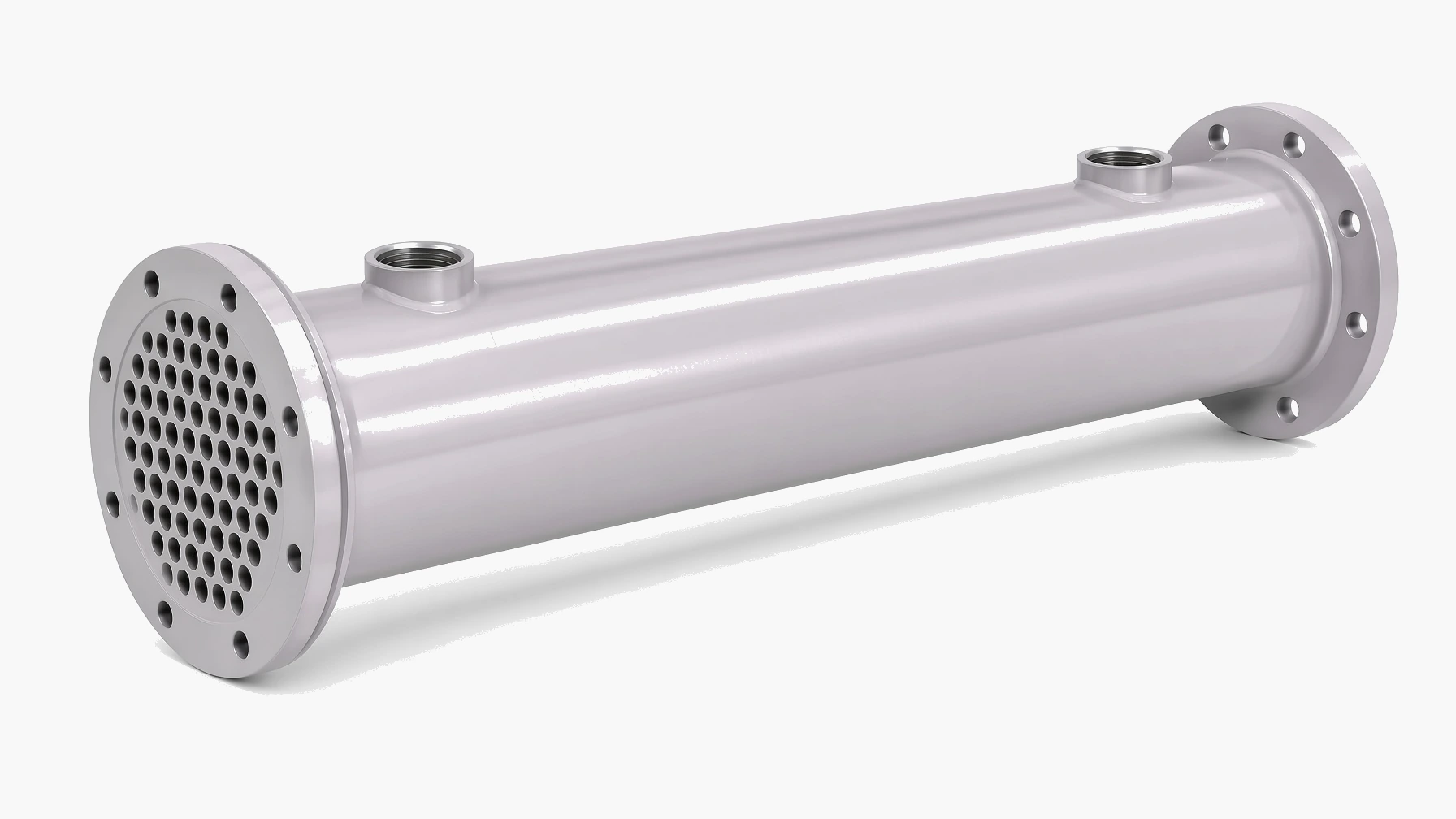
ACFR Series
| PRODUCT | TYPE | STYLE | RATING |
|---|---|---|---|
| Heat Exchanger | Shell & Tube | Aftercooler | 300°F |
Specifications
Configuration & Size
Shell Diameter:
3-1/2" to 10-3/4"
Shell Length:
50"
Tubes:
Copper
Passes:
Single Pass
Brand:
Bell & Gossett
Materials
- Bonnets: Cast Iron
- Shell: Steel
- Tubes: Copper
- Tubesheet: Steel
ACFR Series Compressed Air Aftercoolers
Pipe-Size Shells for Compressor Package Duty
The ACFR range uses pipe-size shells, which is why its dimensions read as 3-1/2, 6-5/8, 8-5/8 and 10-3/4 inches rather than the round numbers used elsewhere in the catalogue. Nameplates carry both ACF and ACFR designations depending on vintage.
The duty is the same as the ACA. Cool compressed air so that moisture condenses out before it reaches the dryer and the distribution system. What differs is the construction and the size band, not the job.
Pressure drop discipline still applies. Air-side pressure drop across an aftercooler is compression energy already spent, and it is spent every hour the compressor runs. The single-pass arrangement keeps it low, and oversizing the air side is a legitimate way to buy that back.
Separation and drainage are not optional. An aftercooler produces liquid water by design. Without a separator and a working trap, that water enters the distribution system in slugs. Any aftercooler installation that has a water problem downstream should have its drain checked before the exchanger is blamed.
Identifying an ACFR. Part numbers in the 5-005 range cover the series, alongside legacy designations such as ACFR-8151 and ACF-847. The pipe-size shell dimension on the nameplate is a useful confirmation.
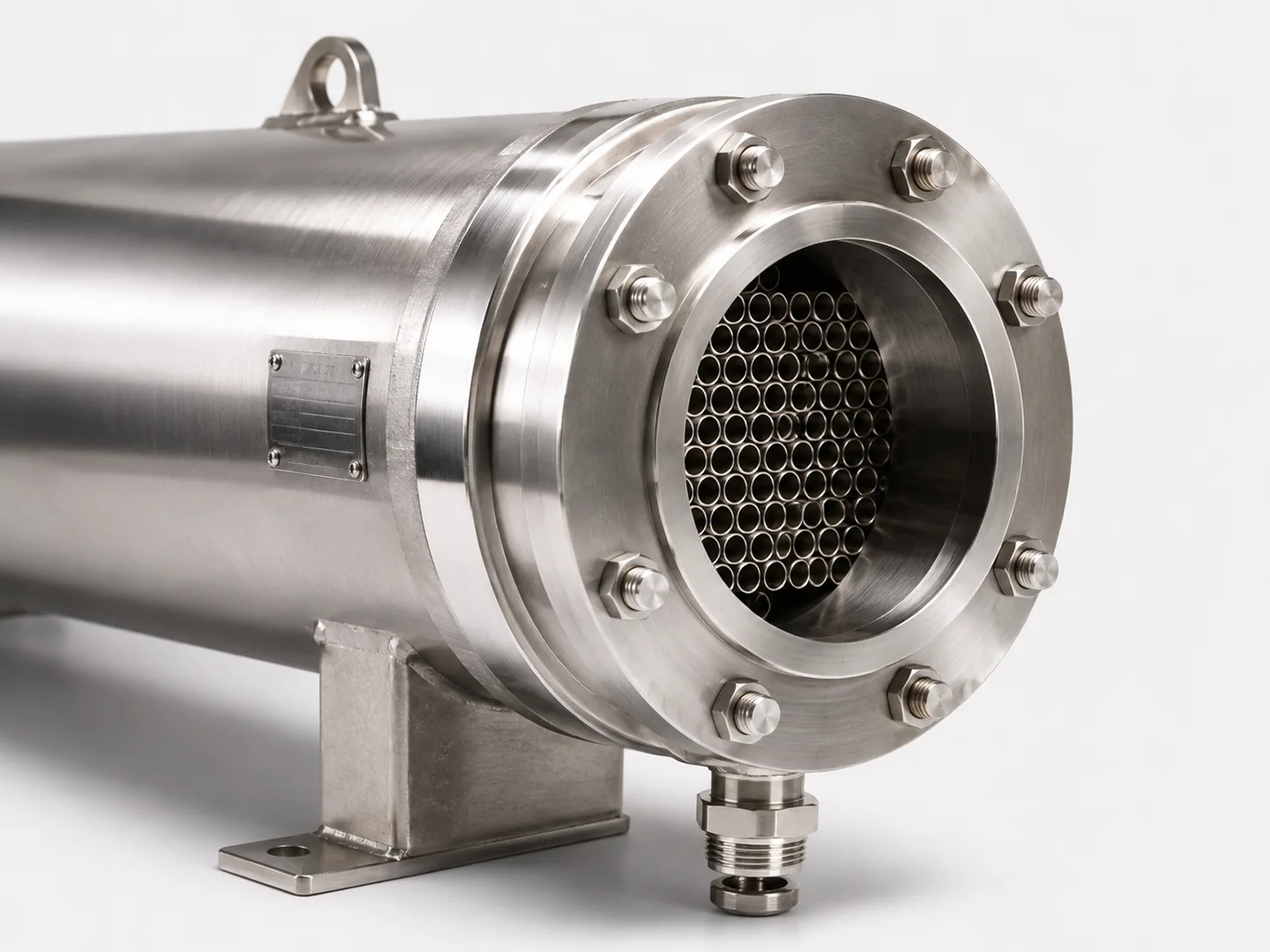
Pipe-size shell construction for compressor package duty, in ACF and ACFR designations.
Request a QuoteACFR Series Applications




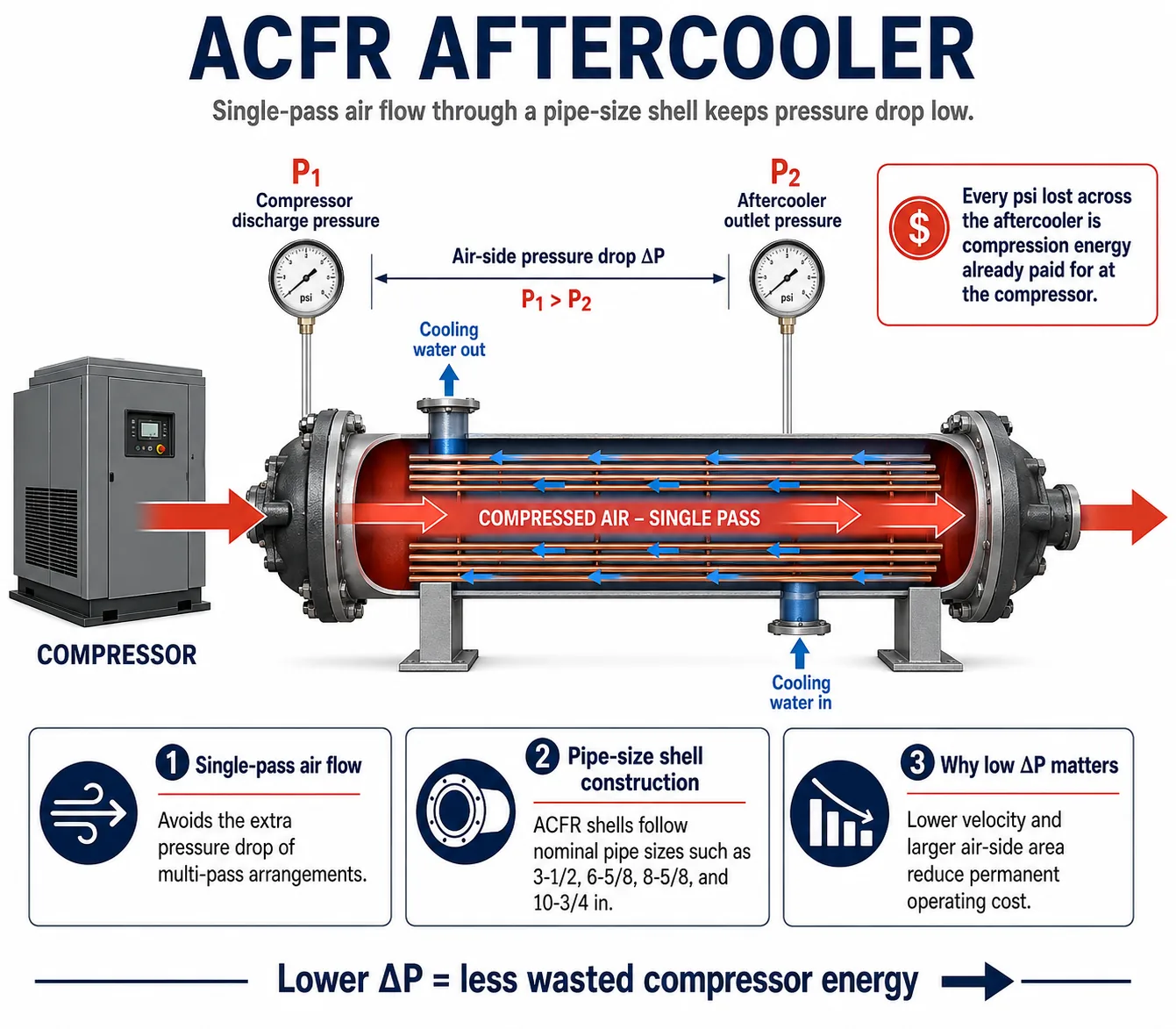
Air-Side Pressure Drop Is Energy You Already Bought
Every psi lost across an aftercooler was paid for at the compressor, and it is paid for again every hour the compressor runs. That is the reason the ACFR and ACA ranges use single-pass air flow rather than the multi-pass arrangements found on water duty: additional passes would buy a better coefficient at a running cost that never stops.
It is also the reason oversizing the air side is a legitimate design choice here in a way it rarely is elsewhere. A slightly larger unit with a slightly lower velocity gives back pressure drop permanently, and on a compressor running most of the week that return is continuous rather than theoretical.
The ACFR reaches the same conclusion from a different direction on construction. Its shells are nominal pipe sizes, which is why the dimensions read 3-1/2, 6-5/8, 8-5/8 and 10-3/4 inches rather than round numbers, and it is the quickest way to tell an ACFR nameplate from an ACA. Standard pipe is economical and readily available, and on a compressor package that is exactly what the duty wants. Call and talk it through with an engineer: 1-805-484-2992