
1-805-484-2992
Quotes - Engineering - SalesBundle Construction
Tank Heater
Bundle Designs
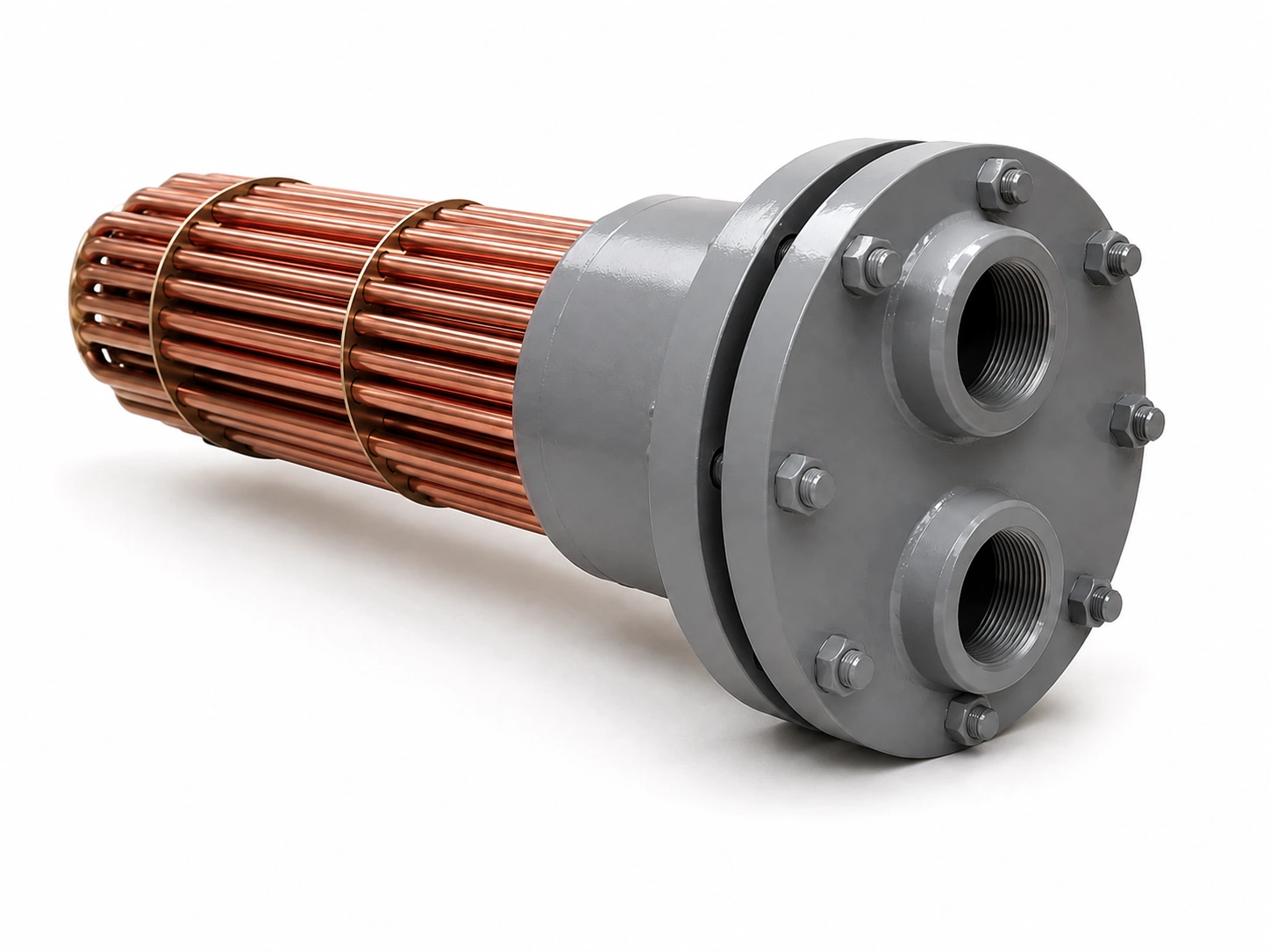
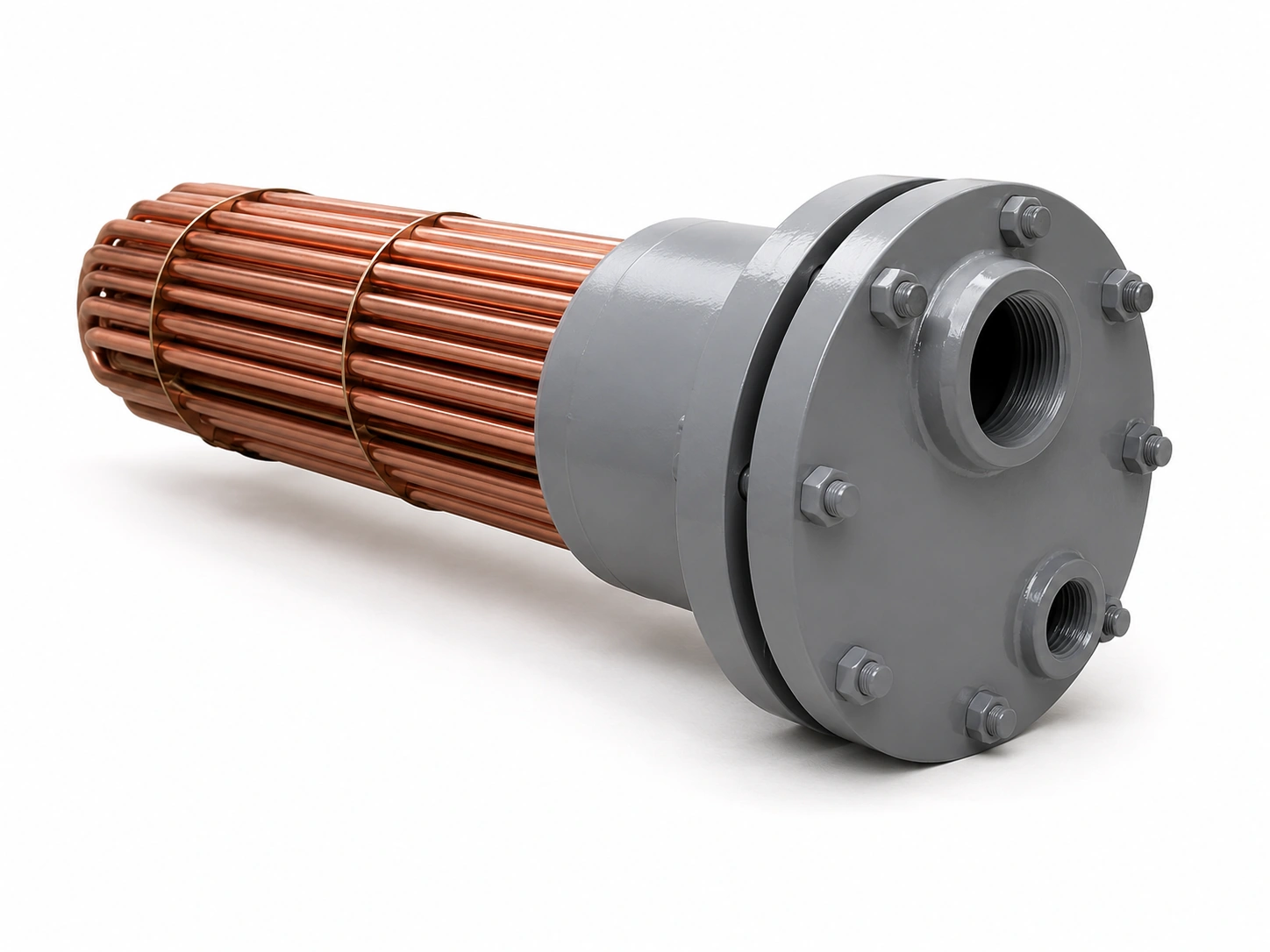
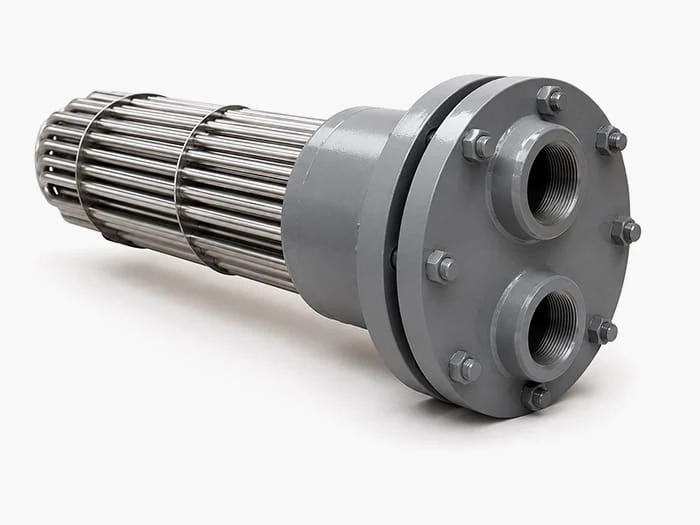
Tank heater bundles come in two arrangements. A U-tube bundle enters through a single nozzle, turns inside the tank and returns to the same flange, so there is only one penetration and one set of connections.
A straight tube bundle passes through the tank and terminates at both ends, which suits some vessel geometries and complicates others. Which arrangement a unit uses affects the mounting, the removal clearance and the way thermal expansion is handled.
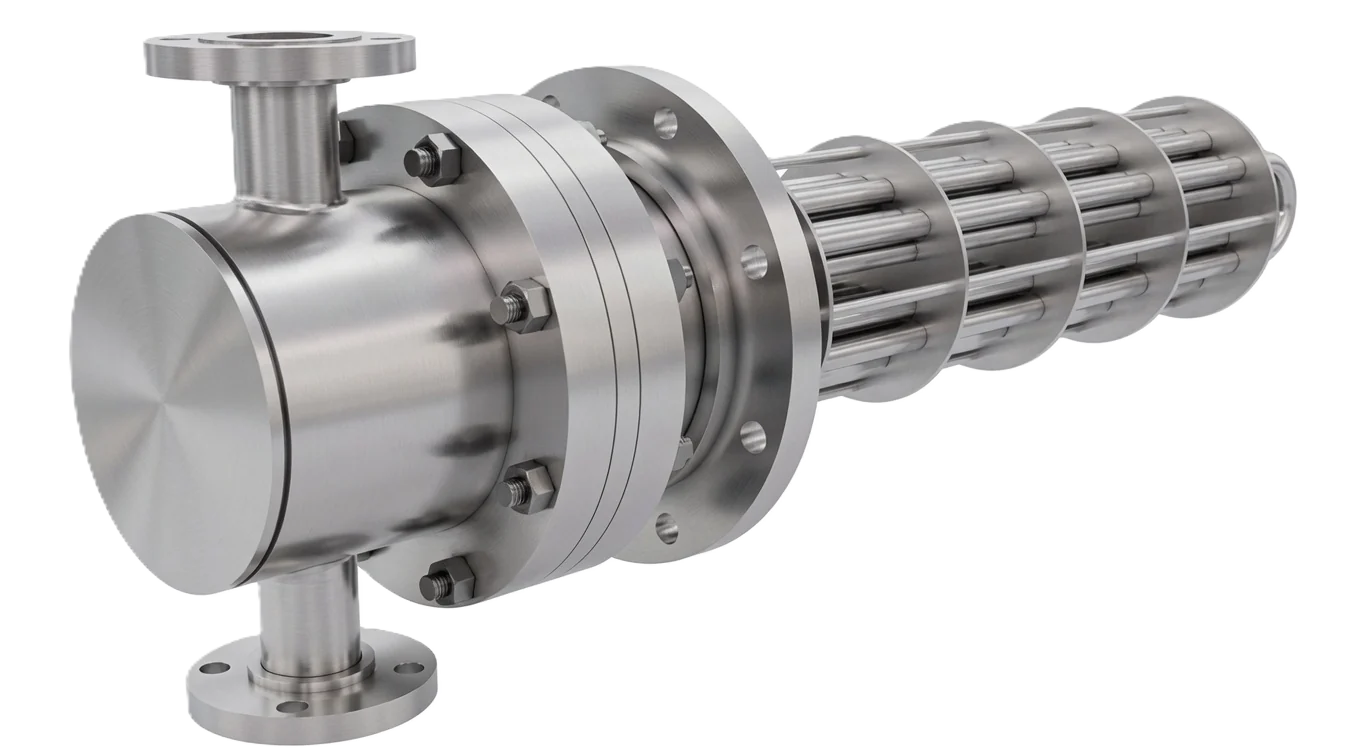
Because tank heating relies on natural convection, bundles carry a great deal of surface for a modest duty. Agitation or a circulation loop changes that substantially, so it is worth stating.
Request a Quote


Specifying a Tank Heater Bundle
Three numbers size a tank bundle: the volume of the tank, the temperature rise required, and the time available to achieve it. Standing heat loss is negligible by comparison, and sizing against it produces a bundle that holds temperature perfectly and cannot recover the tank after a draw. Send those three figures and the recommendation follows quickly.
The fourth number is the one that most often decides which bundle can actually be fitted: the clear distance from the tank nozzle face to the nearest obstruction. A bundle withdraws back through the nozzle it entered, so that space has to be at least the bundle length, and it has to stay clear for the life of the installation. In a plant room, against a wall, or inside a bund it is frequently less than the thermal calculation would like. Where it is genuinely tight, two shorter bundles in separate nozzles sometimes deliver the same surface in a serviceable arrangement.
Then the heating medium. Steam delivers latent heat at constant temperature and gives a much higher heat flux per unit of bundle length, which is what recovers a large tank quickly after heavy draw. The trade is a higher tube surface temperature, and on hard water or a sensitive product that matters: scale forms preferentially on the hottest surface. Pumped hot water runs cooler and gentler at the cost of needing more surface, and it avoids adding a steam connection where a boiler loop already exists.
Finally, what the tank holds. Where the contents are potable water and the heating medium is not, the bundle sits inside the tank and a tube failure would discharge directly into stored drinking water. The DTCS and DTCW ranges put a vented double-wall path in that route so any leak appears outside the tank instead. Requirements vary by jurisdiction, so it is worth confirming before the order.


Natural Convection Sets the Size
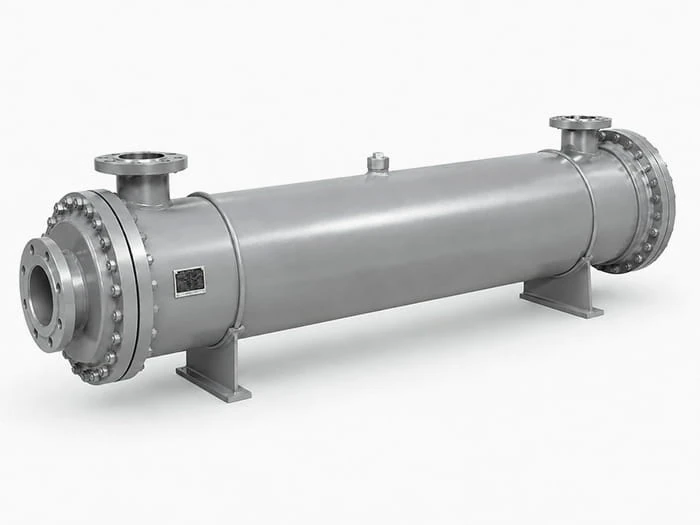
Most tank heating has no forced circulation on the tank side. Heat moves by natural convection, which gives a low film coefficient, and the bundle has to carry enough surface to compensate. That is why catalogued tank heaters run to 120 inch lengths for duties an external exchanger would handle in a fraction of the space.
Where the tank has an agitator, a mixer or a circulation loop, the coefficient improves considerably and the bundle gets smaller. It is worth telling us, because the difference is not marginal.
Steam or Water
Steam-heated bundles deliver latent heat at constant temperature and give a much higher heat flux per unit of bundle length, which is why they are chosen where recovery rate matters. The trade is a higher tube surface temperature, which promotes scaling on hard water and can damage sensitive products.
Water-heated bundles run cooler and gentler, at the cost of needing more surface for the same recovery. Where a boiler loop already exists, they also avoid adding a steam connection to the tank.
Removal Clearance
A tank bundle withdraws back through the nozzle it entered, so clear space outside the tank at least equal to the bundle length is required. On a tank in a plant room, against a wall, or inside a bund, that clearance is frequently the binding constraint on which length can be fitted.
Confirming it before the order is a short conversation. Discovering it at the first service is not.
Double-Wall Bundles
Where the tank holds potable water and the heating medium does not, double-wall construction puts a vented path between the two so any leak discharges outside the tank rather than into the stored contents.
The DTCS and DTCW ranges cover this in steam and water heated forms respectively. Requirements vary by jurisdiction, so confirm locally rather than assuming.