1-805-484-2992
Quotes - Engineering - SalesFixed Tube Heat Exchanger Construction
Straight Tubes, Two Tubesheets, No Removable Bundle
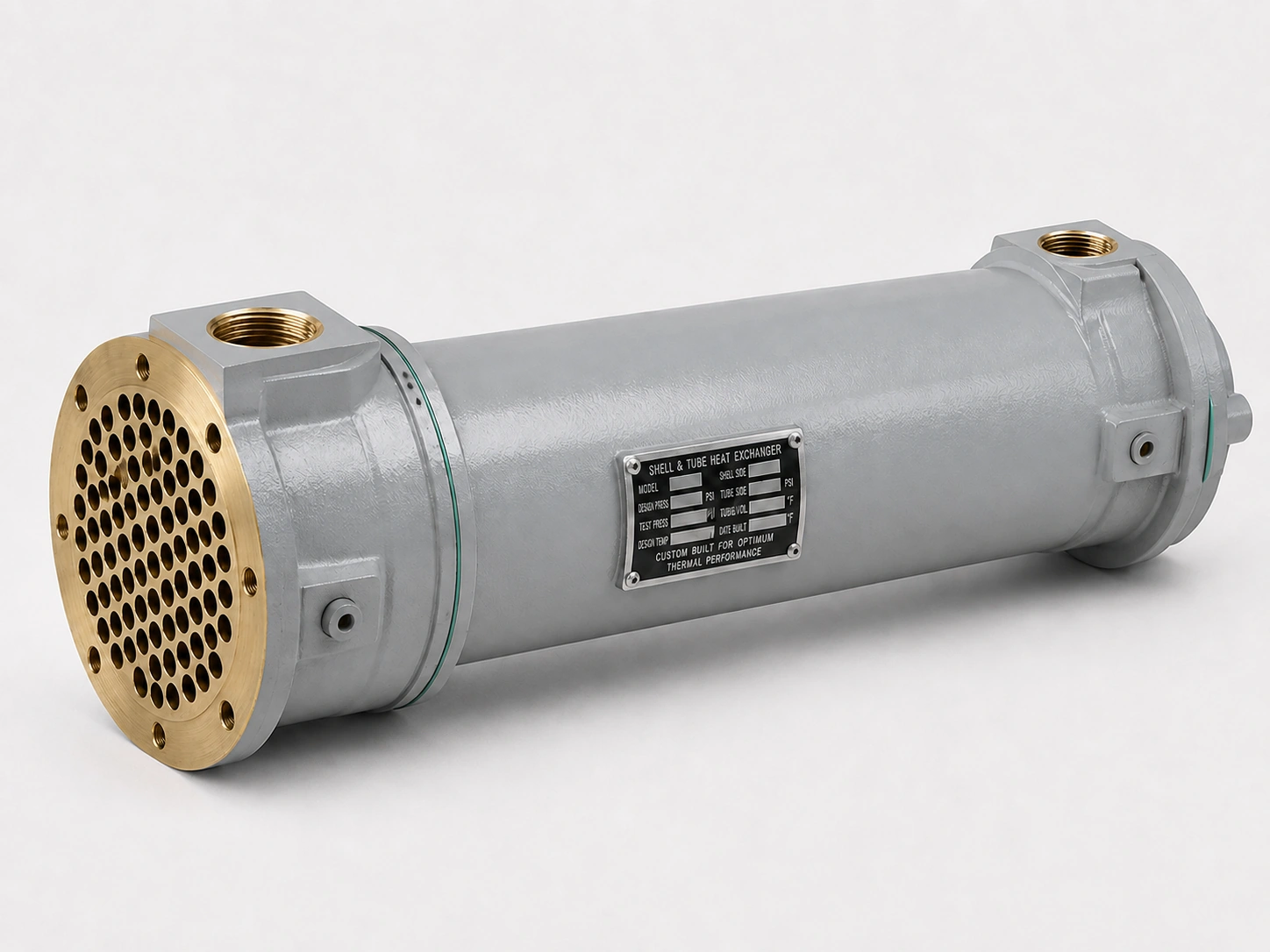
In fixed tube construction the tubes run straight from one tubesheet to the other, and both tubesheets are welded to the shell. Nothing in the assembly is designed to come apart. That makes it the simplest and cheapest arrangement, and it is why fixed tube units appear at the compact end of the range.
The tube side cleans end to end. A straight tube can be rodded, brushed or lanced from one tubesheet to the other, which is the one thing a U-tube unit cannot offer. Where the fouling stream must run through the tubes and needs mechanical cleaning, fixed tube construction is the right answer.
The shell side does not. Because the bundle cannot be withdrawn, shell-side cleaning is chemical only. On a shell-side fluid that lays down a deposit chemical cleaning will not shift, a fixed tube unit has a limited service life on that duty.
Thermal expansion is constrained. Tubes anchored at both ends cannot grow independently of the shell. Modest temperature differences are absorbed by the structure; large ones are not, and a fixed tube unit on high differential duty needs an expansion joint or a different construction entirely.
Where it fits the range. Fixed tube construction suits compact units on clean duty at moderate temperature difference. The larger SU, WU and tank heater ranges use U-tube construction precisely because the duties they serve produce temperature differences a fixed bundle would struggle with.
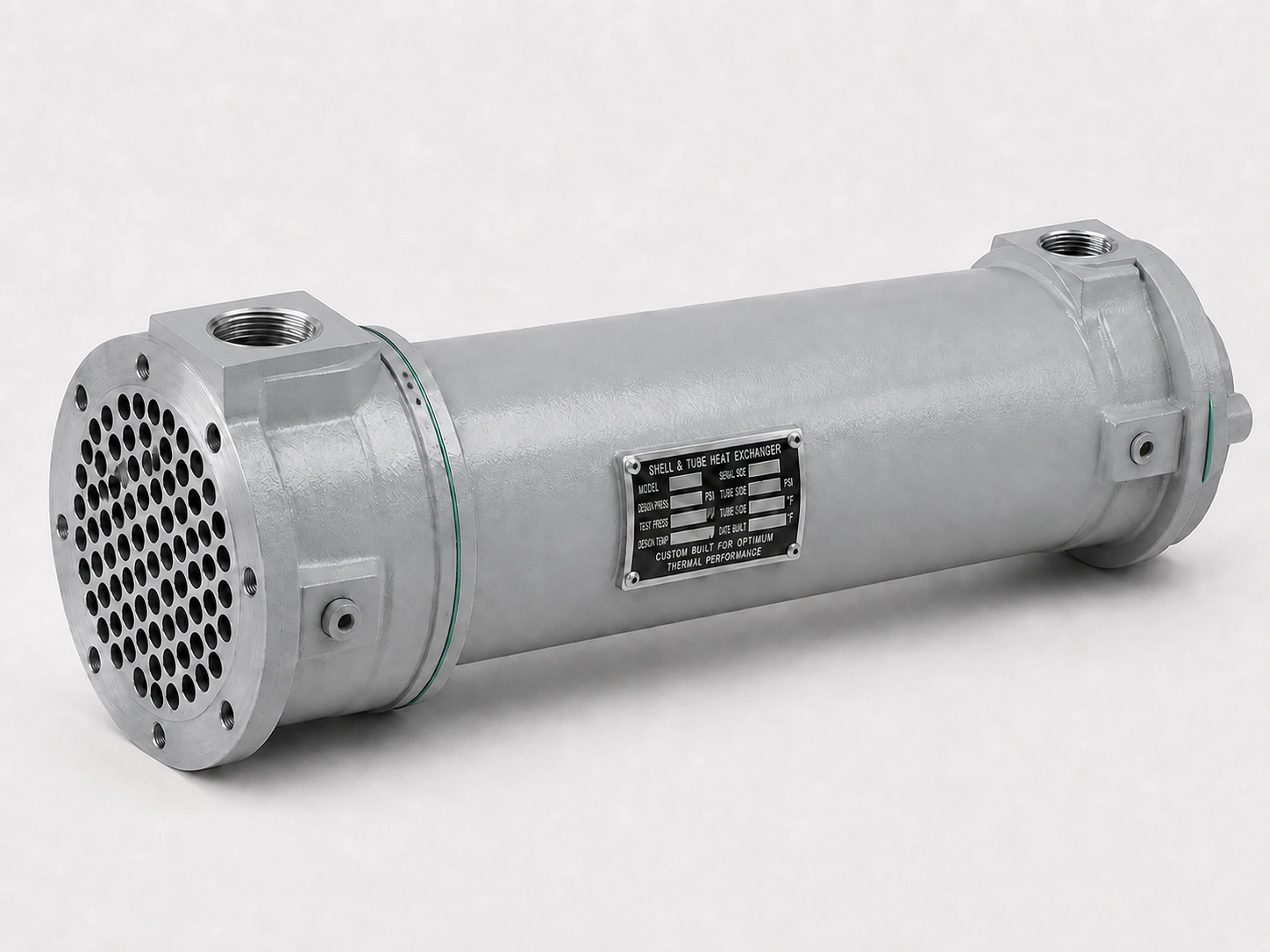
Fixed Tube Configuration
Fixed tube construction suits clean duty at moderate temperature difference, where tube-side mechanical cleaning matters more than shell-side access.
Configuration
- Tubesheets: Two, welded to shell
- Tube arrangement: Straight
- Bundle: Not removable
- Expansion: Constrained by construction
Features
- Lowest cost construction
- Tube side rodded end to end
- Odd or even pass counts
- Individual tubes replaceable
- No shell-side mechanical access
Best Suited To
- Clean shell-side fluid
- Moderate temperature difference
- Fouling tube-side stream
- Compact duties
- Cost-sensitive selections
| CONSTRUCTION | TUBESHEETS | EXPANSION | BUNDLE |
| Fixed Tube | Two | Constrained | Not removable |
Choosing Between Fixed and Removable
Two Questions Settle It
Which stream fouls, and how large is the temperature difference? If the fouling stream runs tube-side and needs rodding, fixed tube construction is right. If the fouling stream runs shell-side, or the temperature difference is large or cycling, a removable U-tube bundle is right.
Cost is the third question, not the first. Starting with price produces exchangers that are cheap to buy and expensive to own, because the cleaning access you did not pay for is the thing that determines service life.
Individual Tube Replacement
One genuine advantage of straight tubes is that a failed tube can be pulled and replaced individually, because it is accessible from both ends. On a U-tube bundle the practical field repair is plugging, and every plug removes surface area permanently.
On a duty where occasional tube failures are expected, that difference matters more than the headline comparison suggests.
Common FAQs
No. Both tubesheets are welded to the shell, so the bundle is part of the pressure vessel. Shell-side cleaning is chemical only, which is the main limitation of the construction.
Fewer machined faces, no bonnet gasket to seal against a removable bundle, and simpler fabrication. On clean duty at moderate temperature difference the saving is real and nothing is given up that the duty needs.
There is no single number, because it depends on shell and tube materials, length and diameter. As a rough guide, differences of a hundred degrees Fahrenheit or more start the conversation, and cycling duty settles it in favour of a U-tube bundle.
Yes, which is a real advantage over U-tube construction. A straight tube is accessible from both tubesheets and can be pulled and replaced rather than plugged.
Related
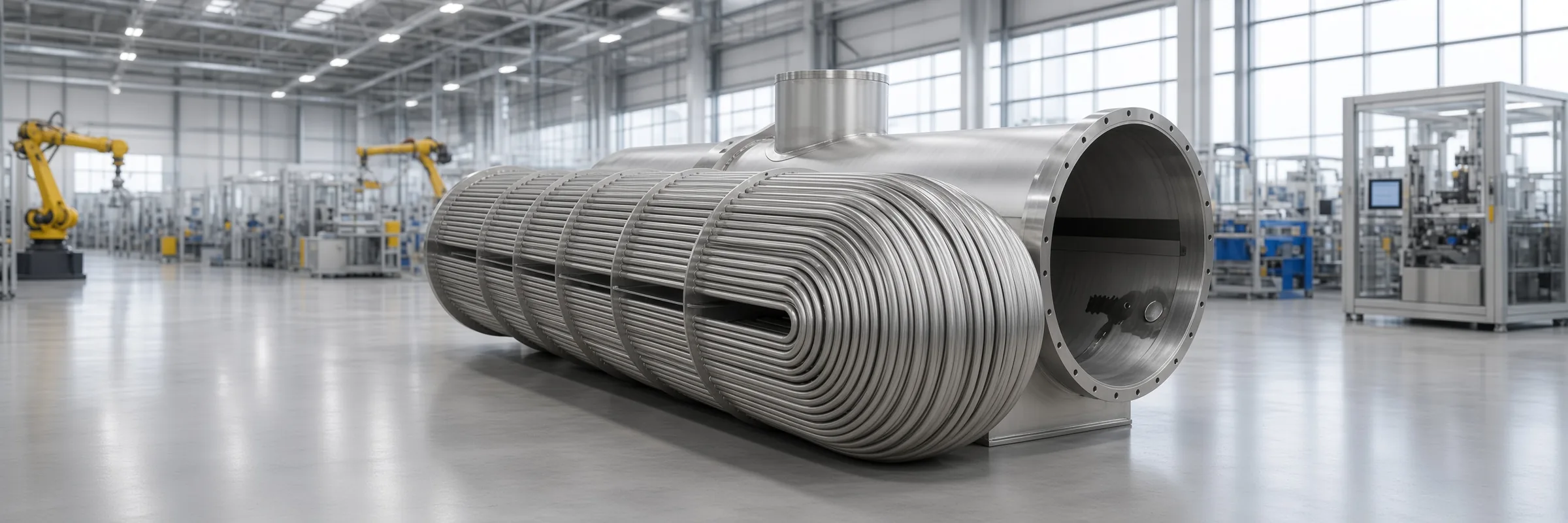
U-TUBE • REMOVABLE
U-Tube
Free expansion and a bundle that withdraws for shell-side cleaning.
+ Learn More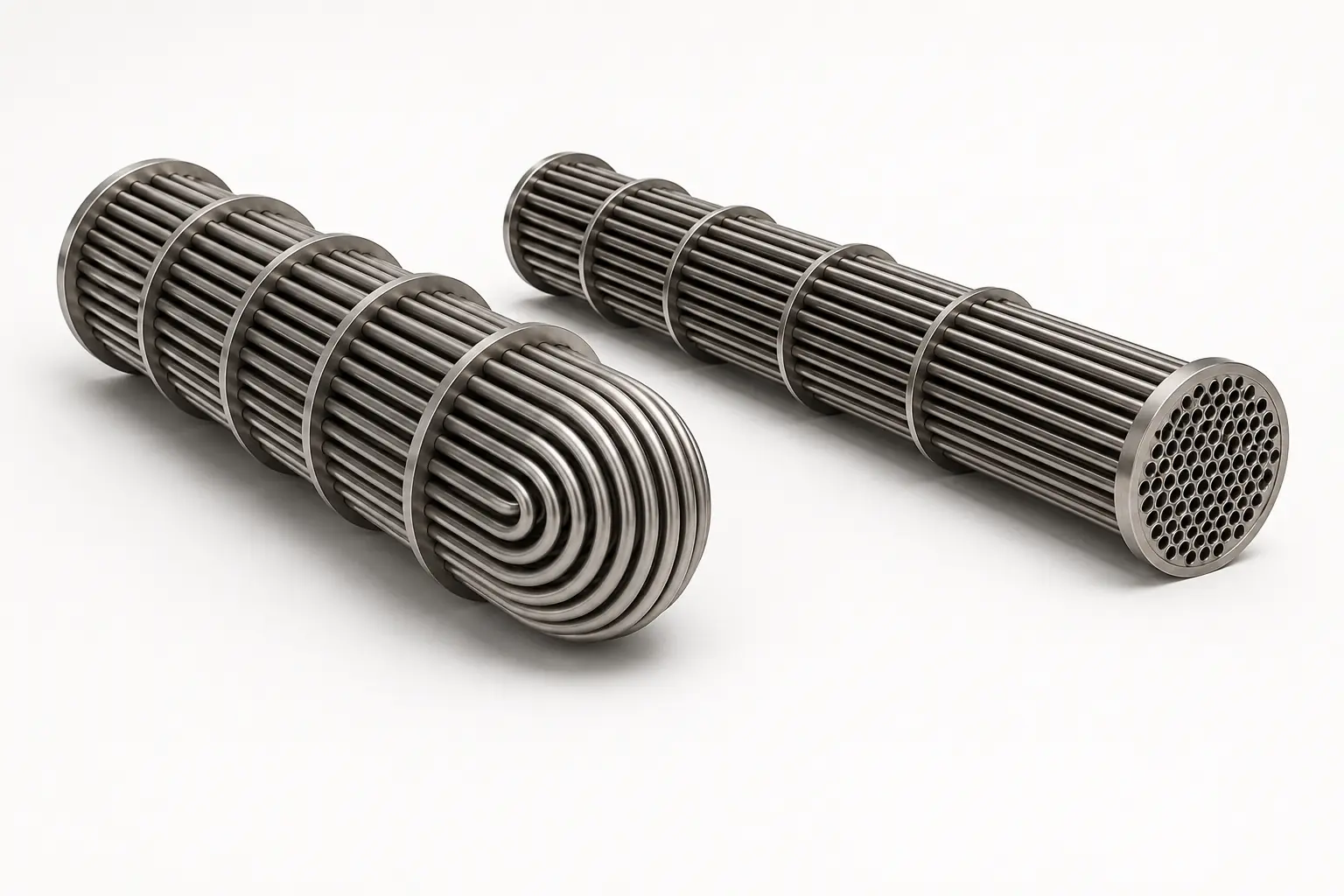
COMPARISON • DESIGN
U-Tube vs Straight-Tube
The two constructions compared, and when each is right.
+ Learn More