
1-805-484-2992
Quotes - Engineering - SalesTHE REQUIREMENT BEHIND IT
Double-Wall
Construction and
the Vented Gap
The requirement behind double-wall construction is straightforward: where a non-potable fluid heats potable water, a single tube wall failure must not put one into the other without anyone noticing. Double-wall construction answers it by providing a second barrier and venting the space between the two walls, so the two fluids can never share a single point of failure.
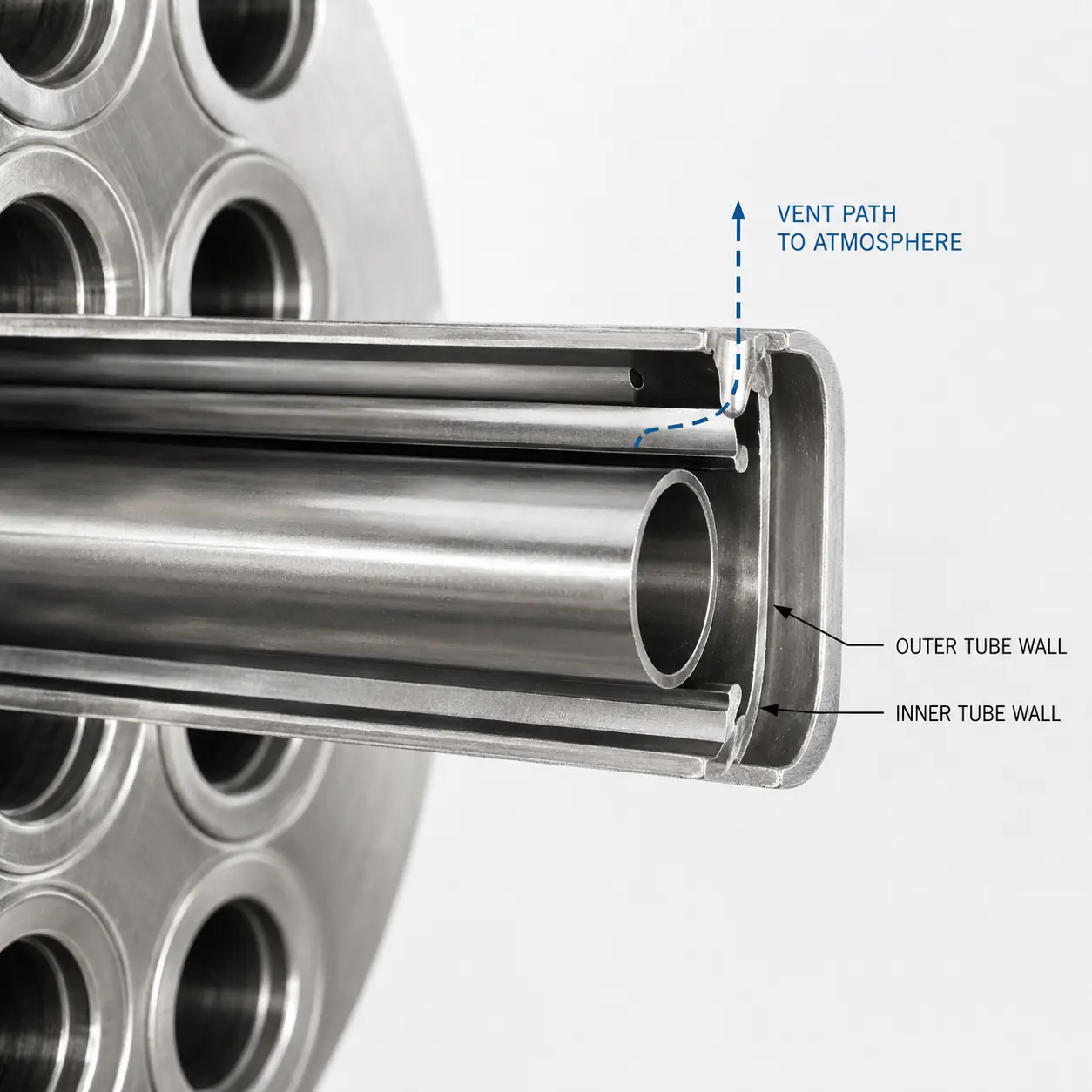
The vent is the essential feature rather than an accessory to it. Two walls with no vented path between them would still let a leak migrate from one fluid to the other. The vent leads to the tube end, outside the pressure boundary of both fluids, so any leak discharges where it can be seen and identified instead of accumulating invisibly inside the bundle.
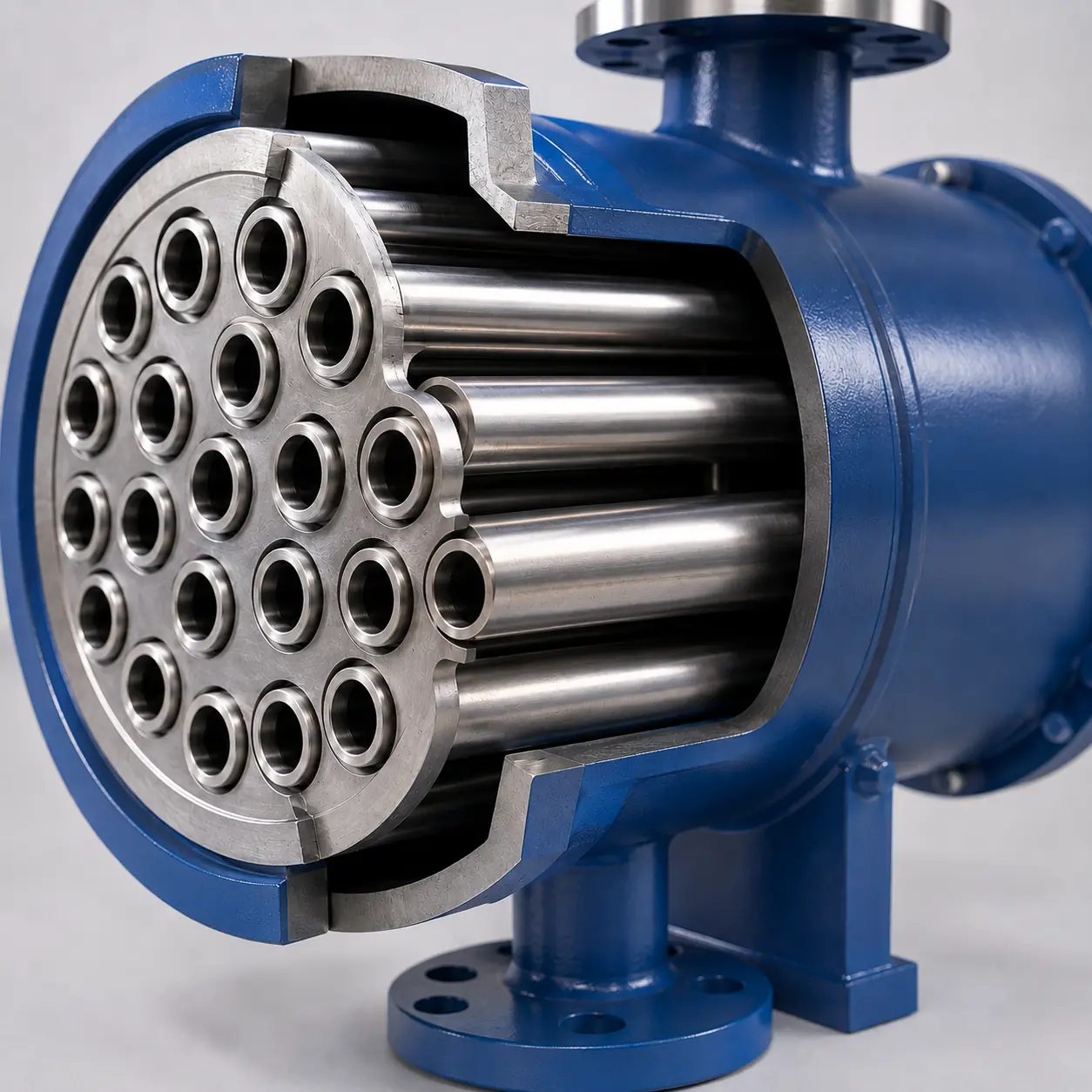
The requirement appears in plumbing codes, health regulations and local amendments, and the authority having jurisdiction interprets it. Two neighbouring jurisdictions can take different views of the same installation. It applies to tank bundles too, and arguably more critically, because a failure inside a storage tank discharges directly into stored water.
Request a QuoteA catalogue can tell you what construction is available. Only the authority having jurisdiction can tell you what is acceptable, and that conversation costs nothing before the order and a great deal at inspection.
Product Protection
Barriers in High-Purity Service
- Second Barrier Between the Two Fluids
- Vented Gap Discharging to Atmosphere
- Leak Visible Rather Than Cross-Contaminating
Sterile Water Duty
Where Detection Has to Be Immediate
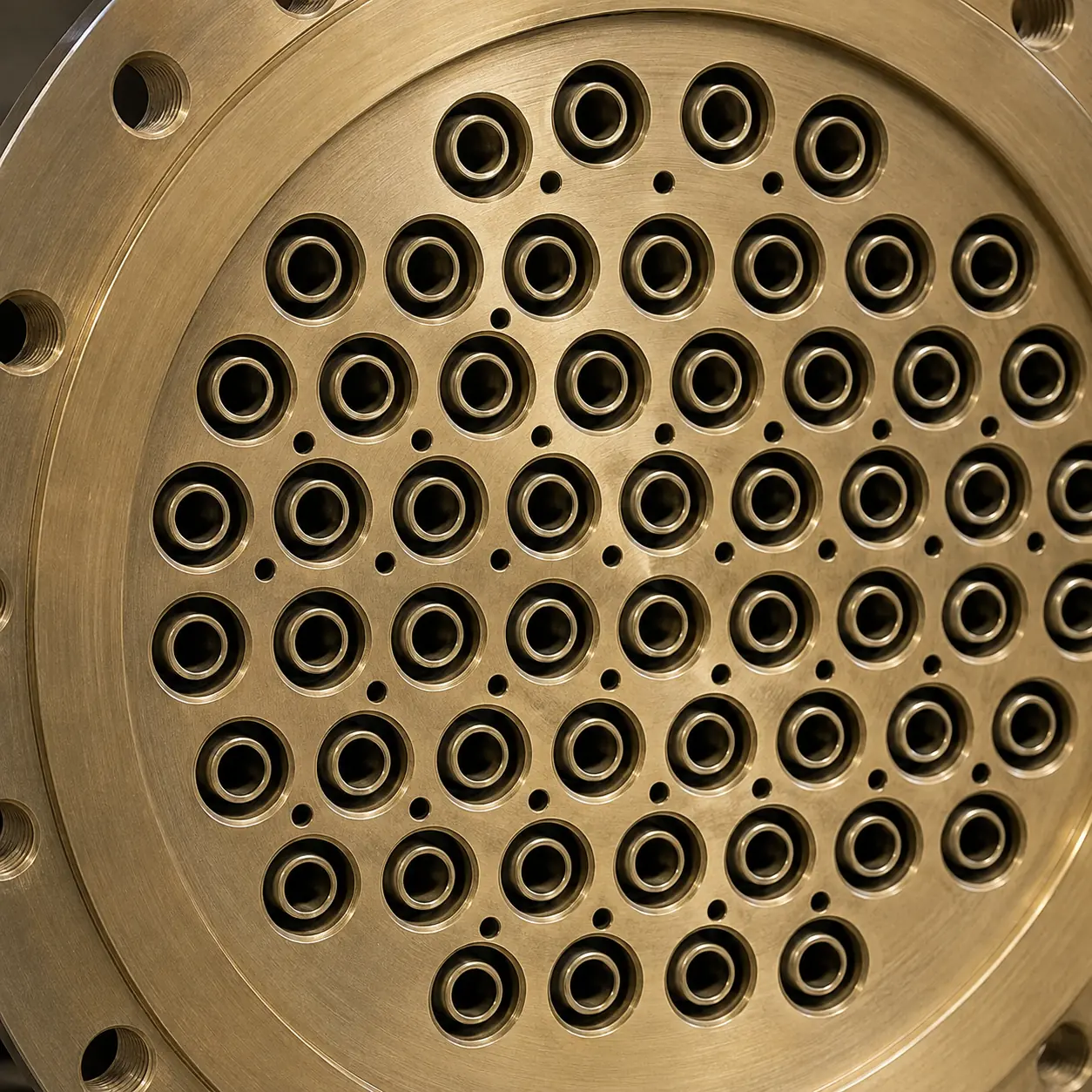
- Double Tubesheet Leak Detection
- Drainable Construction Throughout
- No Threads in Wetted Areas
Construction Detail
Double-wall units are separate catalogued ranges rather than a variant of the single-wall equivalents. Part numbers do not cross over, and ordering by dimension is how the wrong unit arrives.
- Two tube walls held in intimate contact for heat transfer
- A vented path between them leading to the tube end
- Naval brass tubesheets on the shell and tube double-wall ranges
- Removable U-tube bundle construction
- Separate catalogue number ranges from the single-wall equivalents
- Tank bundle versions for units mounted inside storage vessels
Establishing the Requirement
The interface between the two tube walls is a real thermal resistance, so a double-wall unit needs more surface for the same duty and the catalogued ranges stop at smaller shell diameters. On a duty near the top of the range that can mean two units where one single-wall unit would have served.
- Confirm with the authority having jurisdiction before the order
- Check the local plumbing code and any health regulations that apply
- Establish whether tank bundles fall inside the same requirement
- Allow for the larger footprint a double-wall unit needs
- Record the construction on the specification, not just the size
Common FAQs
That a non-potable heating medium must not be able to reach potable water through a single barrier undetected. Double-wall construction provides a second barrier and vents the space between so any leak is visible.
Without it, a leak between the two walls would migrate rather than discharge. The vent leads to the tube end outside both pressure boundaries, so the leak appears where it can be seen.
Frequently yes, and arguably more critically, because a bundle inside a potable storage tank discharges directly into stored water on failure. The DTCS and DTCW ranges cover it.
The authority having jurisdiction, interpreting local plumbing code and health regulations. Adjacent jurisdictions can take different views, so confirm rather than assume.
Related
APPLICATION • POTABLE
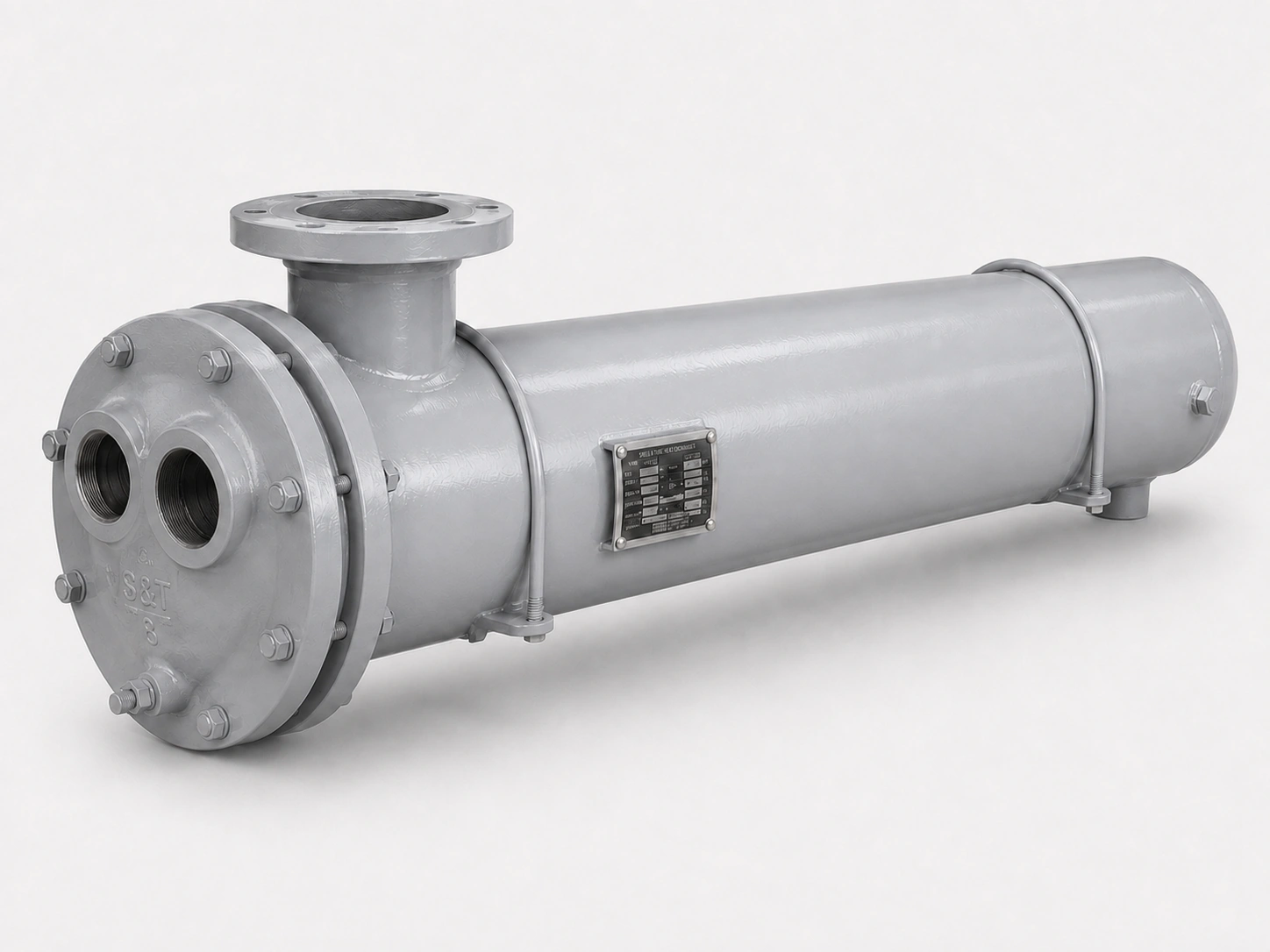
Double-Wall Protection
The application view of the same requirement.
+ Learn More