
1-805-484-2992
Quotes - Engineering - SalesShell and Tube Heat Exchangers for Commercial HVAC
Building HVAC duty is characterised by long run hours, modest temperature differences on the water side and a large one wherever steam is involved. Equipment is expected to last decades with minimal attention, and to be serviceable during a summer shutdown rather than an emergency. That profile favours a removable U-tube bundle: free thermal expansion handles the steam differential and the daily cycling, and the bundle withdraws for shell-side cleaning when building water quality eventually leaves a deposit.
Converting building steam into a hydronic circuit is the most common duty on this site. Steam condenses in the shell around a removable U-tube bundle while building water circulates through the tubes. Saturated steam meeting return water is a large temperature difference by definition, and morning startup makes it abrupt, which is exactly what U-tube construction absorbs without an expansion joint.
The failure to design against is condensate flooding. A trap sized for the running load cannot pass what a cold start produces, and the shell floods from the bottom up, progressively covering surface. Stall is the other cause: when a modulating valve throttles shell pressure below the condensate return line pressure, condensate physically cannot drain. Both present exactly like an undersized exchanger, and neither is fixed by adding surface.
A liquid-to-liquid exchanger in a hydronic system almost never exists because the temperatures demand it. It exists to separate circuits: a high-pressure riser from low-pressure terminal equipment, a glycol loop from clean building water, a campus main from a building's internal distribution, or a boiler from a system it cannot tolerate. Both sides are pumped, so both sides feed into the selection.
On a district network the building interface consumes part of the temperature difference between network supply and return, and that difference sets how much heat the same pipework can carry to every building on the network. Networks meter return temperature and price it accordingly, so a poorly selected interface is a cost that persists for the life of the installation.
A snow melt loop is glycol buried in concrete: long idle periods, sudden full load, and a fluid that is deliberately hard to pump. Glycol is more viscous, less conductive and lower in specific heat than water, and all three get worse as temperature falls. Size at the coldest realistic start, not the operating point, or the slab will take far longer to clear than the calculation predicted.
In a tall building, static head alone can exceed the standard 150 PSI tube-side rating at the bottom of a riser before any pump head is added. Calculate the pressure at the exchanger location rather than at the top of the stack. The HTWU range carries a 400 PSI tube-side rating for exactly that case, as a catalogued option rather than an engineered build.
Where a boiler or steam circuit heats domestic water, many jurisdictions require double-wall construction. The DSU and DWU ranges cover it, and they are physically larger than their single-wall equivalents for the same duty because the interface between the two tube walls is a real thermal resistance. Confirm the requirement with the authority having jurisdiction before ordering rather than at inspection.
For a steam converter: water flow, water inlet and required outlet temperature, and the steam pressure available at the control valve, plus the minimum load the unit has to hold. For a liquid-to-liquid duty: flow, inlet and required outlet temperature on both sides, plus the allowable pressure drop on each. For either, the static head at the exchanger location. Call and talk it through with an engineer: 1-805-484-2992
Building heating is where most Bell & Gossett shell and tube units spend their lives. Long run hours, modest temperature differences on the water side, and a large one wherever steam is involved.
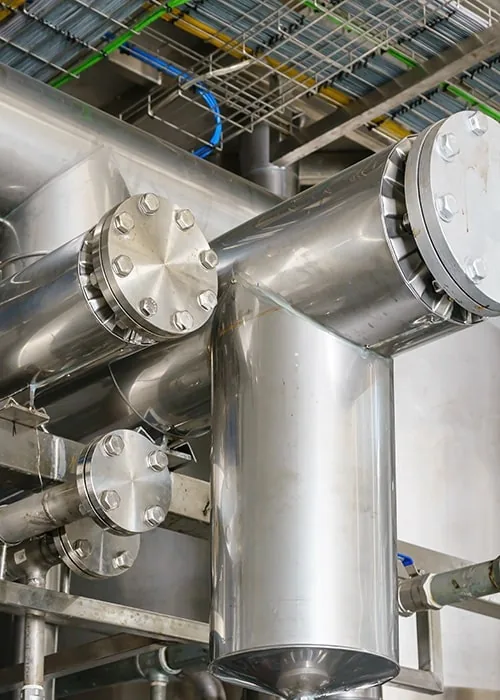
Commercial HVAC Building Heating



Building Heating Applications
HVAC duty covers steam conversion, hydronic circuit separation, district energy interfaces, boiler protection and glycol snow melt loops. What they share is long service life and a strong preference for equipment that can be maintained rather than replaced.
Selection and Service Life
Building water quality drifts over decades, make-up gets added and treatment lapses. An exchanger sized with no fouling margin will meet its duty on commissioning day and disappoint within a few heating seasons. The opposite error is just as real: an over-generous allowance produces excess surface, which means lower velocity when the unit is clean, which encourages the very deposition the allowance was meant to cover.
Related Applications
What Building Duty Asks For
Reliability over decades, with service that can be carried out during a summer shutdown rather than an emergency. That argues for a removable bundle and for clearance in front of the unit to withdraw it, both of which are cheap at design stage and impossible to add later.
It also argues for honest fouling allowances based on your own water treatment history rather than a default table value.
Steam Is the Demanding Half
Wherever building steam meets a water circuit, the temperature difference is large and the startup transient is abrupt. That is precisely what U-tube construction absorbs without an expansion joint.
The failure to design against is condensate flooding, which presents exactly like fouling and is far more common on building steam duty than genuine fouling is.
Common Applications
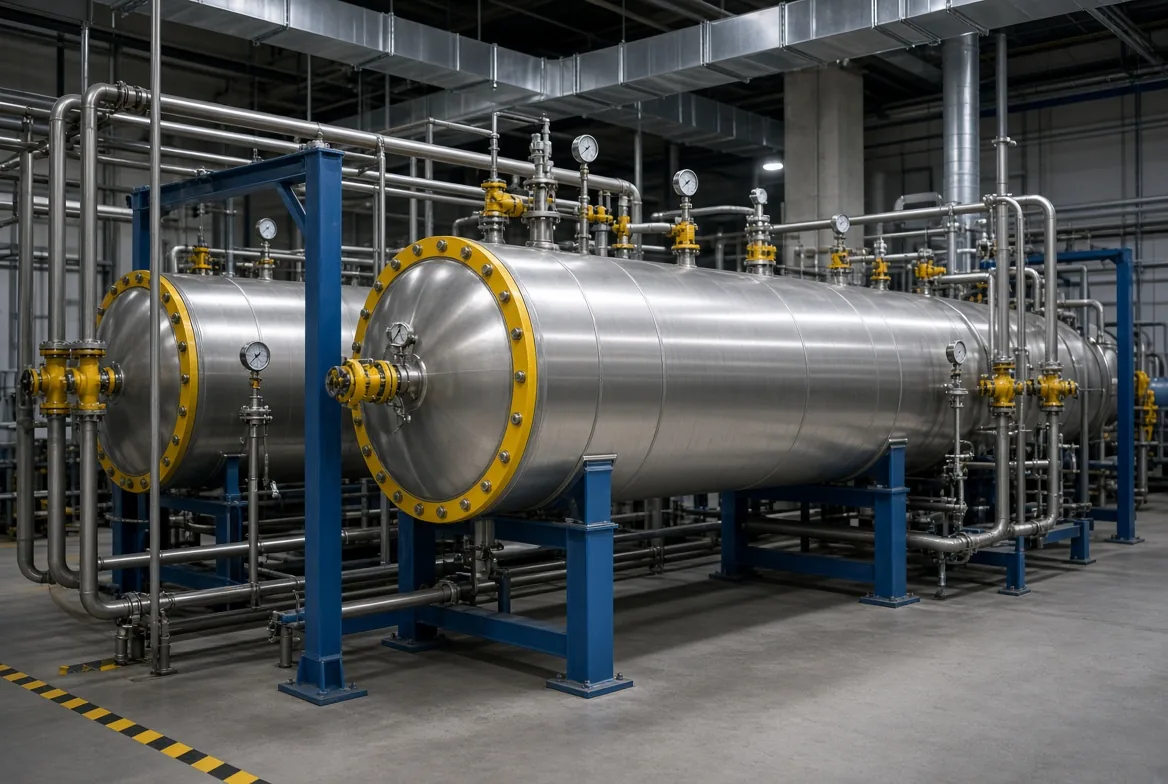
APPLICATION • STEAM
Steam to Hot Water
Converting building steam into a hydronic circuit.
+ Learn More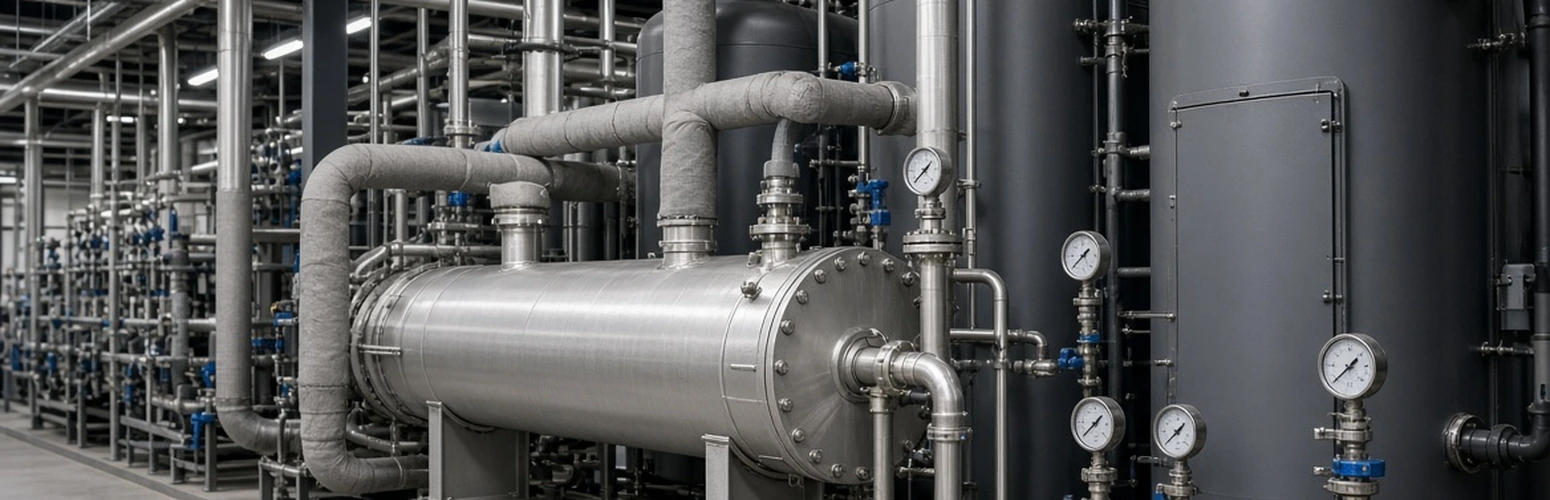
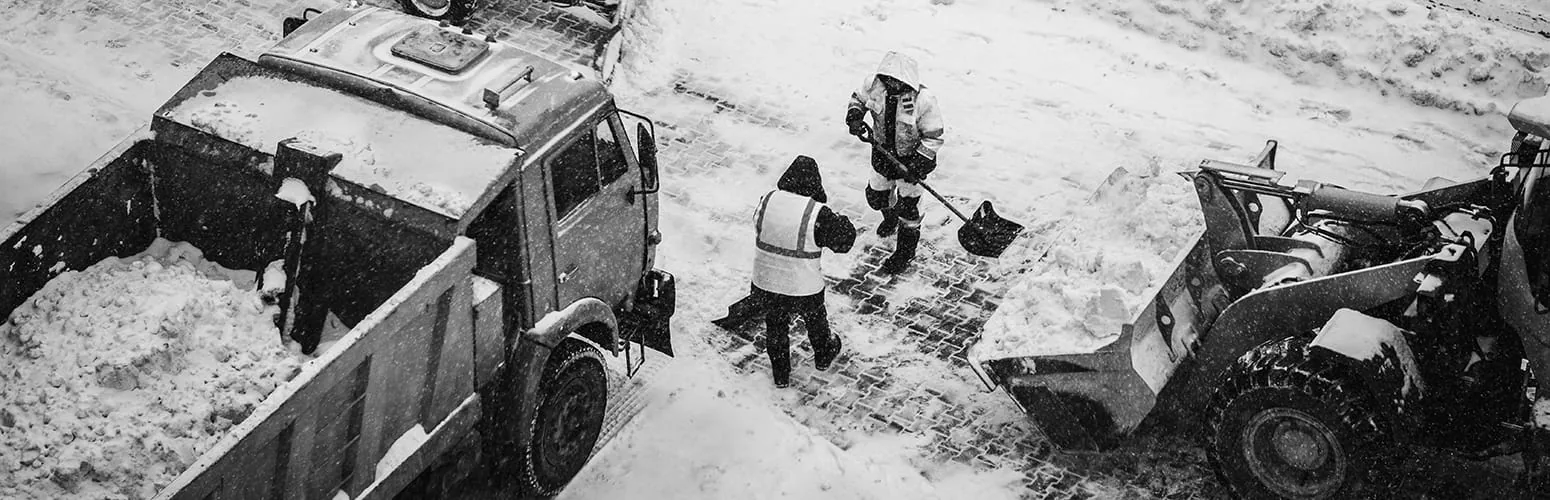
APPLICATION • GLYCOL
Snow Melt Systems
Idle for weeks, then full output in a snowstorm.
+ Learn More