1-805-484-2992
Quotes - Engineering - SalesCIP Solution Heating
Bringing Cleaning Solutions to Setpoint
A CIP circuit heats caustic, acid, sanitizer and rinse water and holds them at setpoint while solution recirculates through the equipment being cleaned. The heater sits in that circuit and sees every chemical the plant uses, hot, over and over again.
Ramp rate is the commercial driver, not energy. Once the solution is at setpoint the standing heat load is small. What matters is how quickly the tank reaches temperature, because that time is production time lost. CIP heaters are sized for heat-up rate rather than hold duty.
The cleaning cycle is the service condition. Hot caustic and hot acid alternating is more aggressive than most of the product the circuit cleans up after. Send the full sequence, with concentrations and temperatures, rather than just the peak temperature.
Chlorinated sanitizers change the conversation. Chlorides at temperature attack stainless, and where a chlorinated sanitizer is part of the cycle that affects material selection well beyond the gasket.
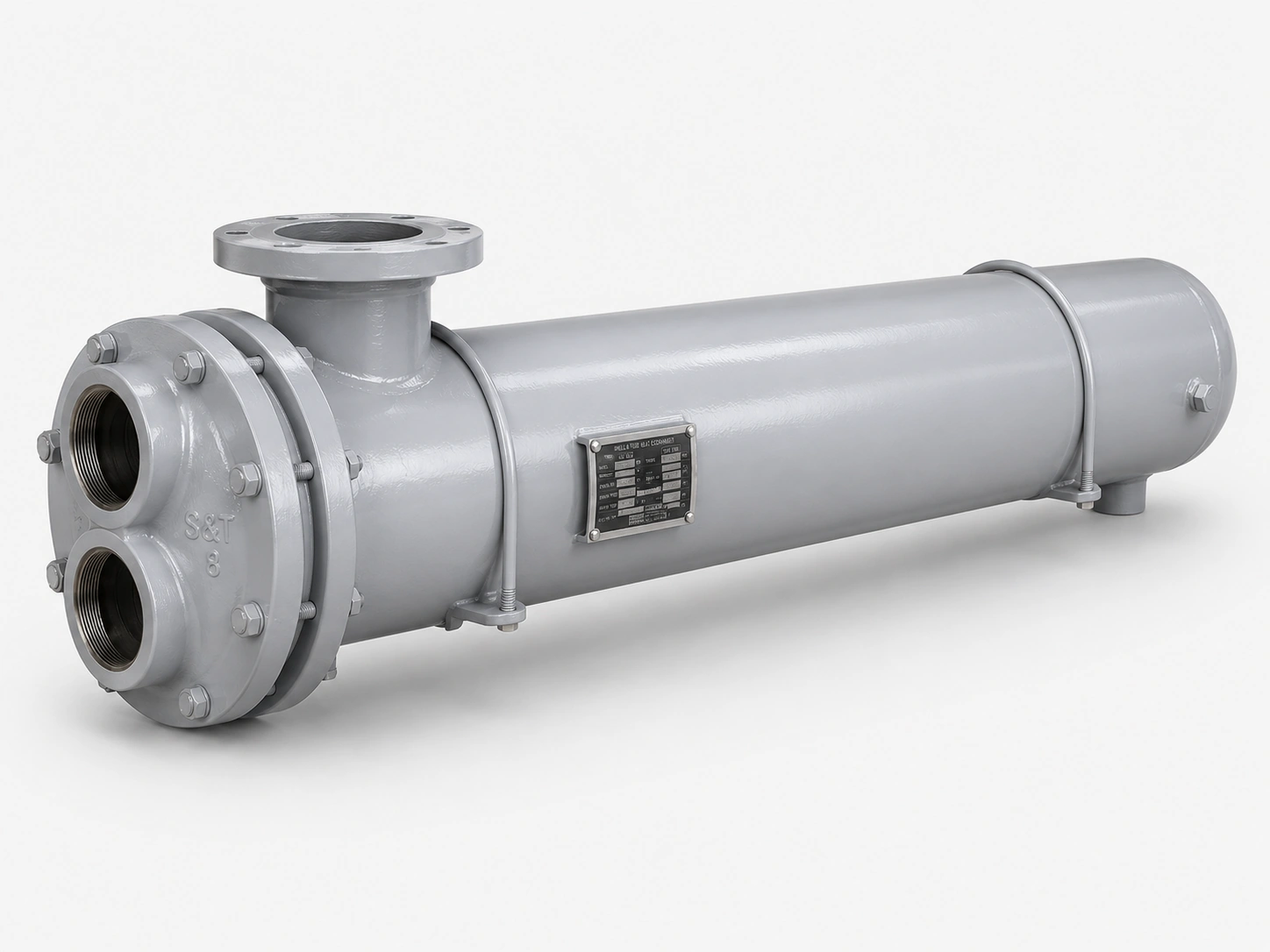
The heater has to be cleanable itself. It sits in the circuit and receives the same solutions as the equipment downstream, so drainability and the ability to open it for inspection matter as much as the thermal duty.
 Caustic Solutions
 Acid Cycles
 Rinse Water Heating
 Sanitizer Circuits
CIP Heater Selection
Tank volume, temperature rise and the time you are willing to spend on changeover.
Duty Inputs
- Solution volume: Gallons per tank
- Temperature rise: Ambient to setpoint
- Ramp time: Minutes available
- Chemistry: Full cycle with concentrations
Series
- SU where steam is available
- WU on a hot water circuit
- DSU where the water is potable
- TCS or TCW for in-tank heating
- Sized on ramp rate
Tell Us
- Every solution in the cycle
- Concentrations and temperatures
- Whether a chlorinated sanitizer is used
- Single or multi-tank arrangement
- Changeover time target
Size on Changeover Time, Not on Heat Load
The Expensive Thing Is the Line Standing Still
A CIP heater sized on the standing load will hold temperature perfectly and take far too long to get there. Every minute of that heat-up is a minute the production line is not making anything, and over a year of daily cleaning cycles that adds up considerably.
Tell us the changeover time you want and we will size for it. It usually produces a larger heater than a steady-state calculation suggests, and the payback is measured in production hours rather than fuel.
Select Against the Cleaning Cycle, Not the Product
Caustic at temperature is straightforward. Acid cycles are manageable. What catches austenitic stainless is chlorinated sanitizer at temperature, because chlorides attack it and the effect concentrates wherever there is residual stress.
Send the complete cleaning sequence. Selecting on the product and failing on the sanitizer is one of the more common and avoidable outcomes in food plant equipment.
Related