1-805-484-2992
Quotes - Engineering - SalesTHE PART THAT STAYS
Shell Materials
and the Shell-Side
Fluid
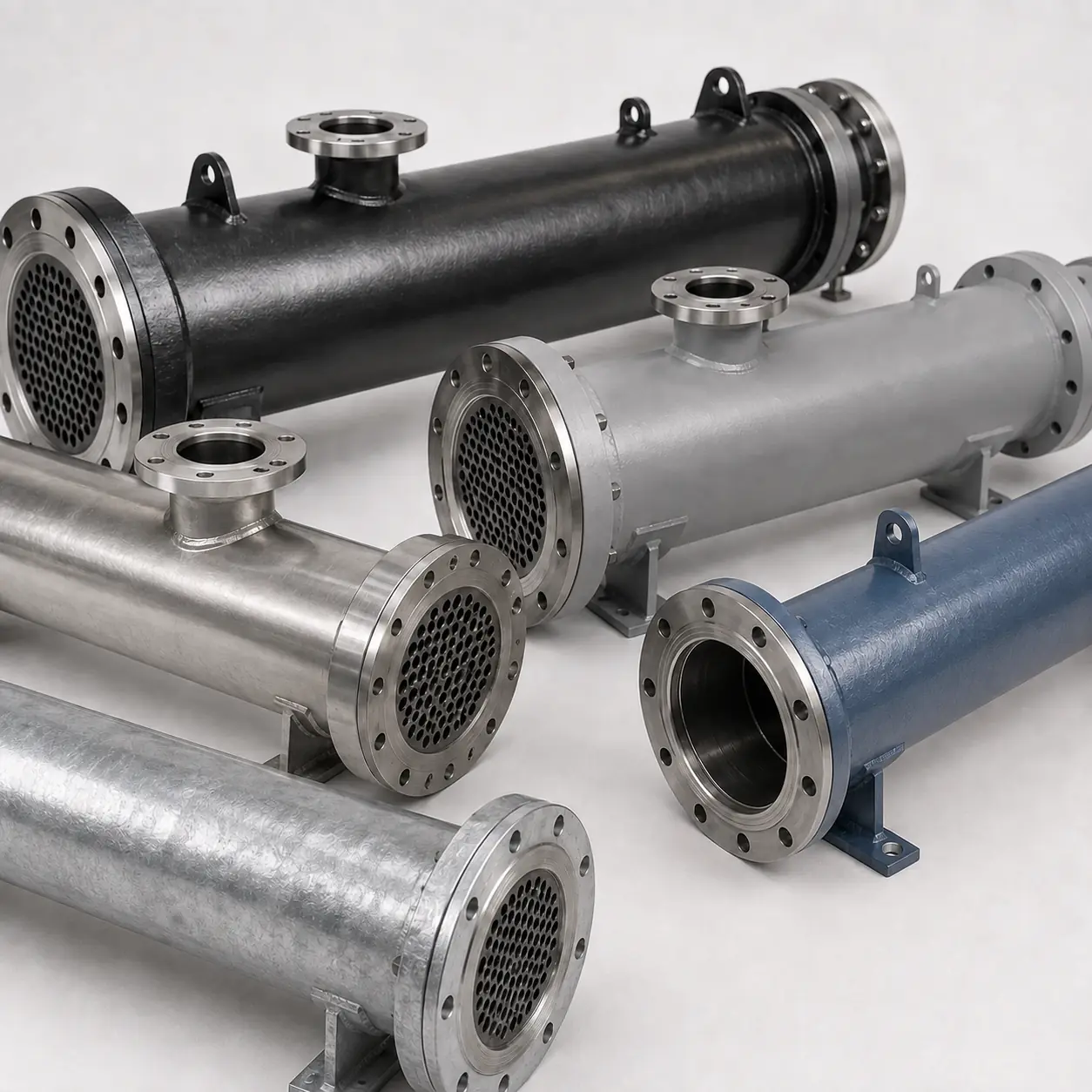
The shell is the largest single pressure component in the exchanger and the one in contact with the shell-side fluid over its whole area. Material selection follows that fluid and the pressure rating the duty requires. Steel is standard across most of the catalogued range: it is economical, weldable, well understood and entirely suitable for treated water, condensate, steam and general industrial service.
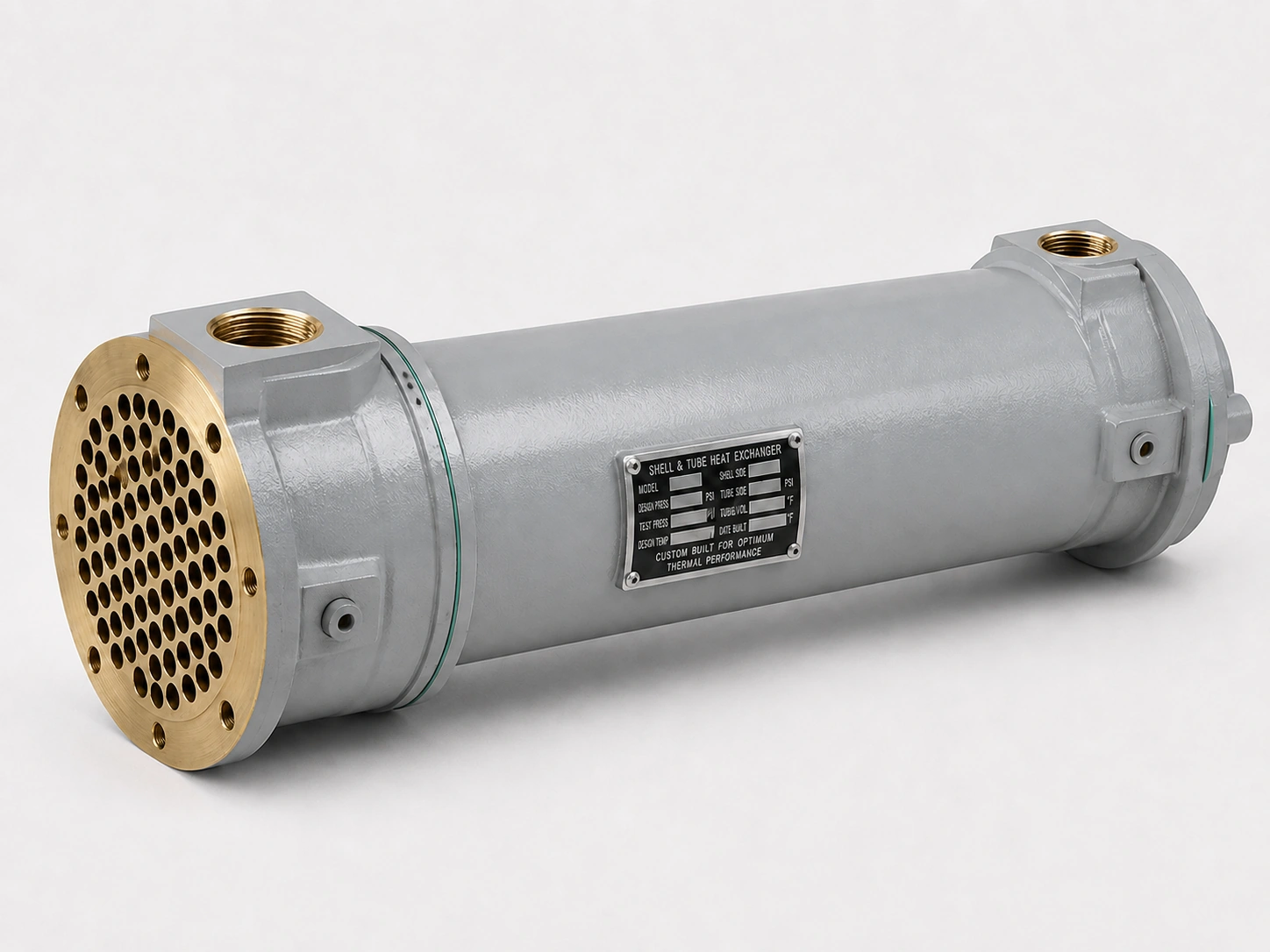
Brass appears on the compact range, where the equivalent steel-shelled series covers the same size band and the same 300 PSI rating. Because the two overlap so precisely, the choice between them is made on the shell-side fluid rather than on pressure, which is unusual in a catalogue and genuinely useful when the fluid is the awkward part of the specification.
A steel shell in water service relies on treatment and on a corrosion allowance that is expected to be consumed over the design life. Where the shell-side fluid is genuinely aggressive, that is a conversation about a different construction rather than about a thicker shell. Over a long service life a bundle may be replaced several times while the shell stays exactly where it was installed.
Request a QuoteBundles are replaceable and shells are not. That makes shell material a longer-term decision than tube material, and one worth getting right at the outset rather than discovering at the second bundle replacement.
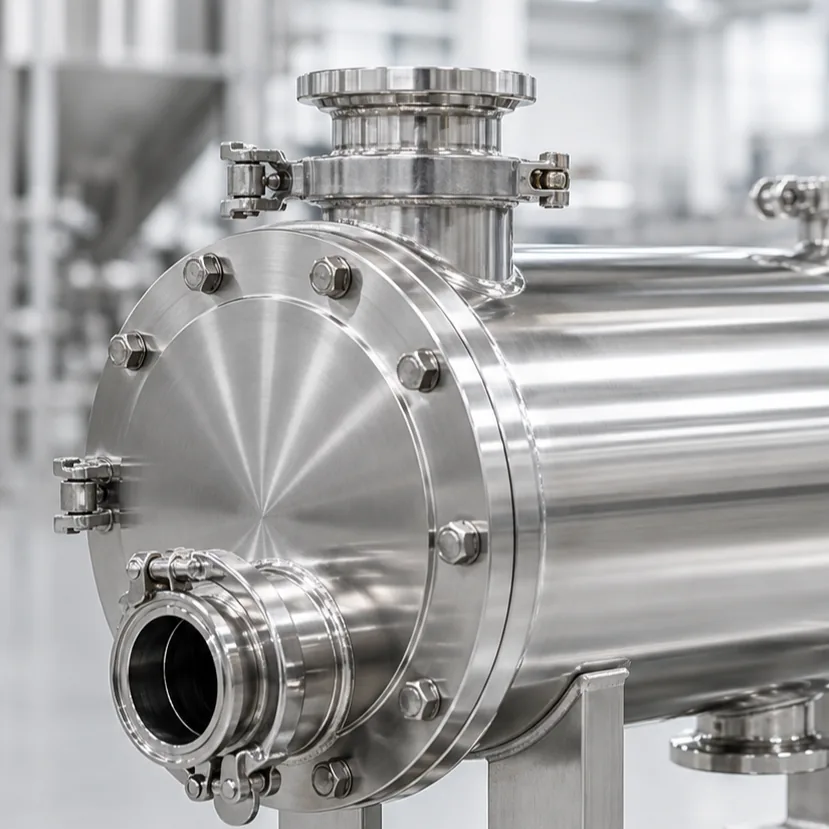
High Purity Shells
Where Steel and Brass Do Not Suit
- Stainless Shell Where the Fluid Attacks Steel
- No Corrosion Allowance to Consume
- Full Drainability Through the Shell Side
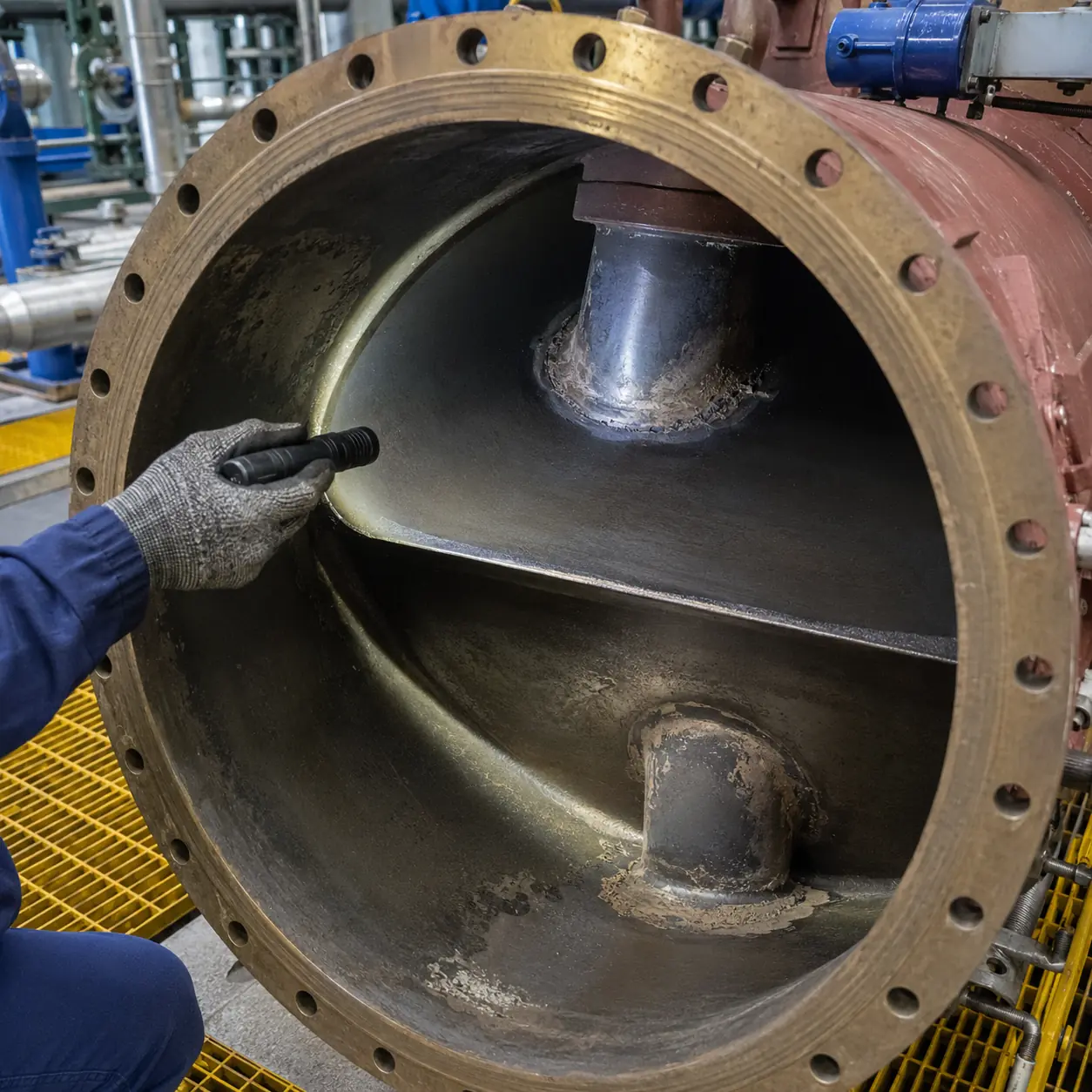
Aggressive Water
Treatment, Allowance and Alloy
- Shell Chemistry Assessed Before Material
- Baffle Contact and Nozzle Entries Inspected
- Gasket Faces Measured at Bundle Removal
Material by Range
The part number establishes the shell material for a given unit. Two exchangers of identical shell dimensions can be built from different materials to different ratings.
- Steel shells across the steam, liquid, oil cooler and high-head ranges
- Steel shells on the gas cooler, aftercoolers and every tank heater range
- Brass shells on the compact range only, in two to eight inch diameters
- Cast iron bonnets as standard, with cast brass as an alternative
- 150 PSI on the larger shells and 300 PSI on the compact diameters
- Corrosion allowance rather than corrosion resistance on carbon steel
Inspect the Shell While the Bundle Is Out
A bundle replacement is the one good opportunity to examine the shell interior. A shell that has thinned or eroded will not seal a new bundle any better than it sealed the old one, and finding that after the new bundle is fitted is considerably worse.
- Check baffle contact areas for wear and grooving
- Examine nozzle entries where impingement concentrates
- Measure the gasket faces rather than fitting a third gasket
- Confirm the shell-side fluid has not changed since installation
- Cost a replacement shell against another bundle if the shell is marginal
Common FAQs
Steel across most of the range, including the SU, WU, DSU, DWU, OC, HTWU, CHXS, GC, aftercoolers and tank heaters. The compact CHX uses brass.
They cover the same size band and the same 300 PSI rating with different shell materials, so the choice can be made on the shell-side fluid. Steel is more economical; brass suits fluids that would attack steel.
Diameter. A 300 PSI rating on a 2 to 8 inch shell is straightforward; the same rating on a 30 inch shell would need far heavier construction throughout.
Not on an existing unit, since the shell is the part that stays. If the shell-side fluid has changed and the shell no longer suits it, that is a new exchanger rather than a new bundle.
Related