1-805-484-2992
Quotes - Engineering - SalesDistrict Energy Building Interfaces
Where One Building Meets the Network
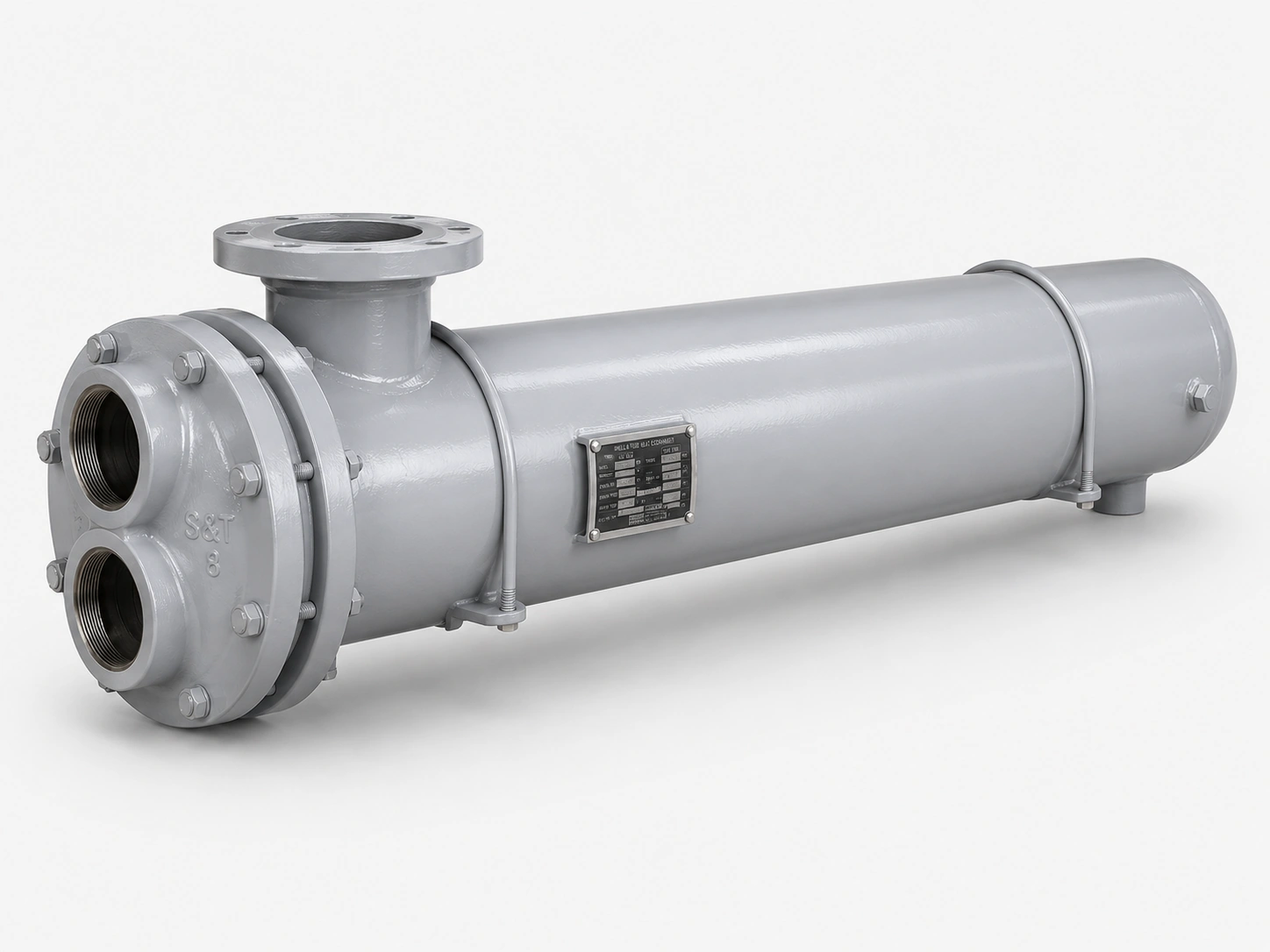
A district heating network connects to each building through an energy transfer station, and the heat exchanger in that station is the boundary between the network's water or steam and the building's internal circuit. Ownership, pressure zone and water treatment usually all change at that boundary, which is why separation is required rather than optional.
Approach temperature has a network-wide consequence. A district system's capacity is set by the temperature difference between supply and return. Every degree an interface exchanger consumes reduces that difference, which reduces the heat the same pipework can carry to every building on the network. On a district system that is a capital constraint, not just an operating cost.
Return temperature is frequently metered and penalised. Networks charge for high return temperatures because they degrade capacity for everyone. A poorly selected building interface is one of the more common causes, and it is a problem that persists for the life of the installation.
Steam or hot water networks need different ranges. A steam district main calls for an SU with condensate return handled properly; a hot water main calls for a WU sized on both circuits. The two are not interchangeable even where the building side is identical.
Plant rooms are tight and loads grow. A frame or shell specified with some margin, and clearance to withdraw the bundle, costs very little now and avoids a replacement when the building is extended or its use changes.
 Network Supply
 Building Loop
 Steam Interface
 Return Temperature
District Interface Selection
The network side is fixed by the utility. The building side is yours. The exchanger has to satisfy both.
Duty Inputs
- Network medium: Steam or hot water
- Network temperatures: Supply and required return
- Building load: Peak and turndown
- Metering: Return temperature limits
Series
- SU for steam networks
- WU for hot water networks
- HTWU where network pressure is high
- DSU or DWU for potable duty
- Sized on both circuits
Watch For
- Return temperature penalties
- Approach consuming network delta T
- Plant room clearance
- Future load growth
- Pressure zone at the interface
| DUTY | TYPICAL SERIES | KEY METRIC | AFFECTS |
| District Interface | SU / WU | Approach temperature | Network capacity |
The Interface Affects More Than One Building
Return Temperature Is a Shared Resource
On a district network, a building that returns water hotter than it should reduces the temperature difference available to everyone else. That is why networks meter it and price it, and why the interface exchanger is worth selecting carefully rather than to a price.
A close approach on the building side is what lets the network water be returned cold. It is the same exchanger property that makes free cooling viable on the chilled water side of a building, and it is worth paying for in both cases.
Design for the Building the Site Will Become
Building loads change. Extensions get built, uses change, and equipment that was adequate at handover becomes marginal. A shell with a little surface margin, or simply the clearance to install a larger unit later, is inexpensive insurance.
The one thing that cannot be retrofitted cheaply is clearance to withdraw the bundle. Establish that at design and the exchanger remains serviceable for its whole life.
Related