1-805-484-2992
Quotes - Engineering - SalesWHAT THE STAMP REPRESENTS
ASME Section VIII
Division 1
Construction
Section VIII Division 1 of the Boiler and Pressure Vessel Code sets the rules a pressure vessel is built to: allowable stresses, minimum wall thicknesses, joint efficiencies, nozzle reinforcement, tubesheet rules and the testing that closes the job out. None of that is visible on a finished exchanger, which is exactly why the stamp exists. The U-stamp is applied by a manufacturer holding a valid certificate, working under a quality system audited by ASME, with an Authorized Inspector verifying the work at agreed hold points.
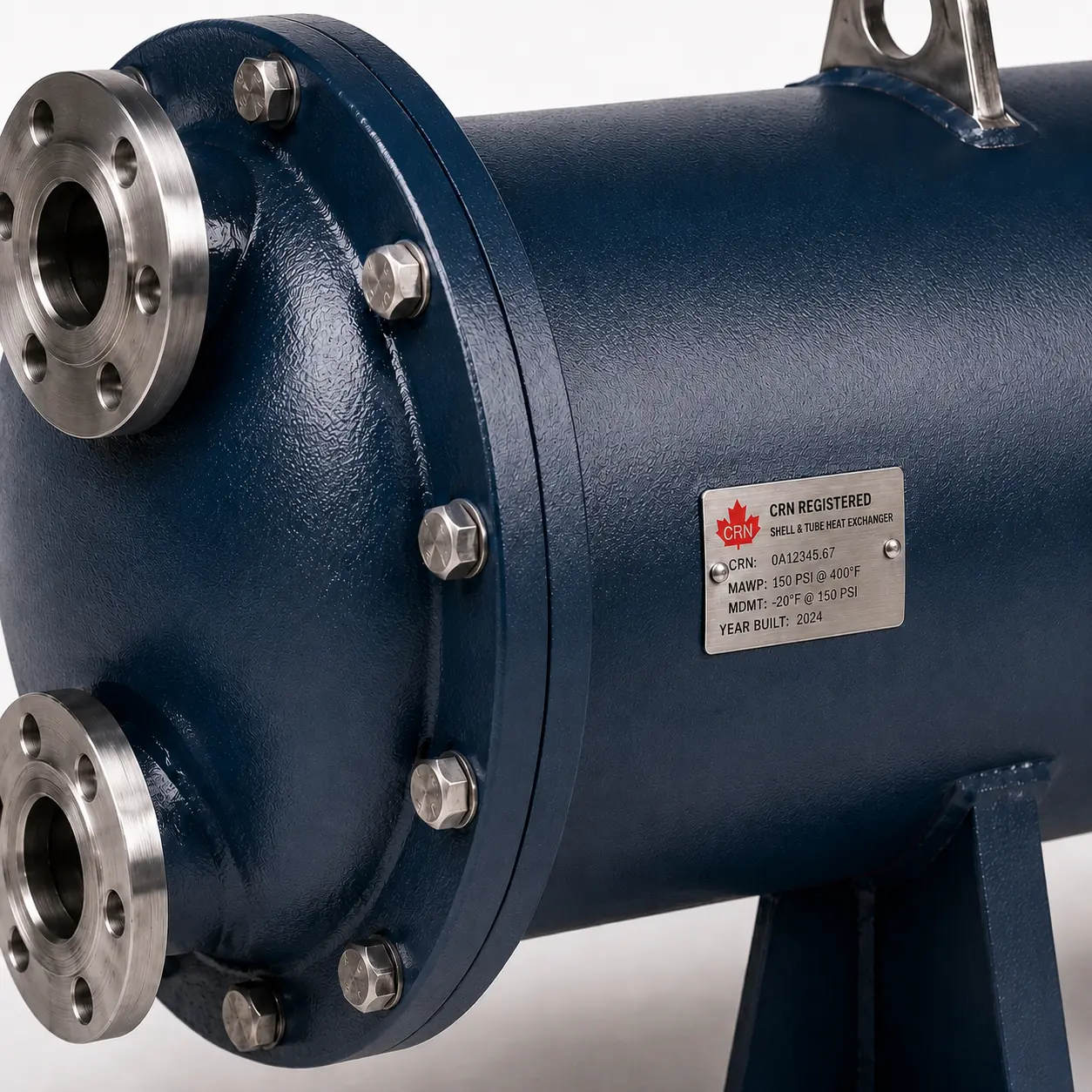
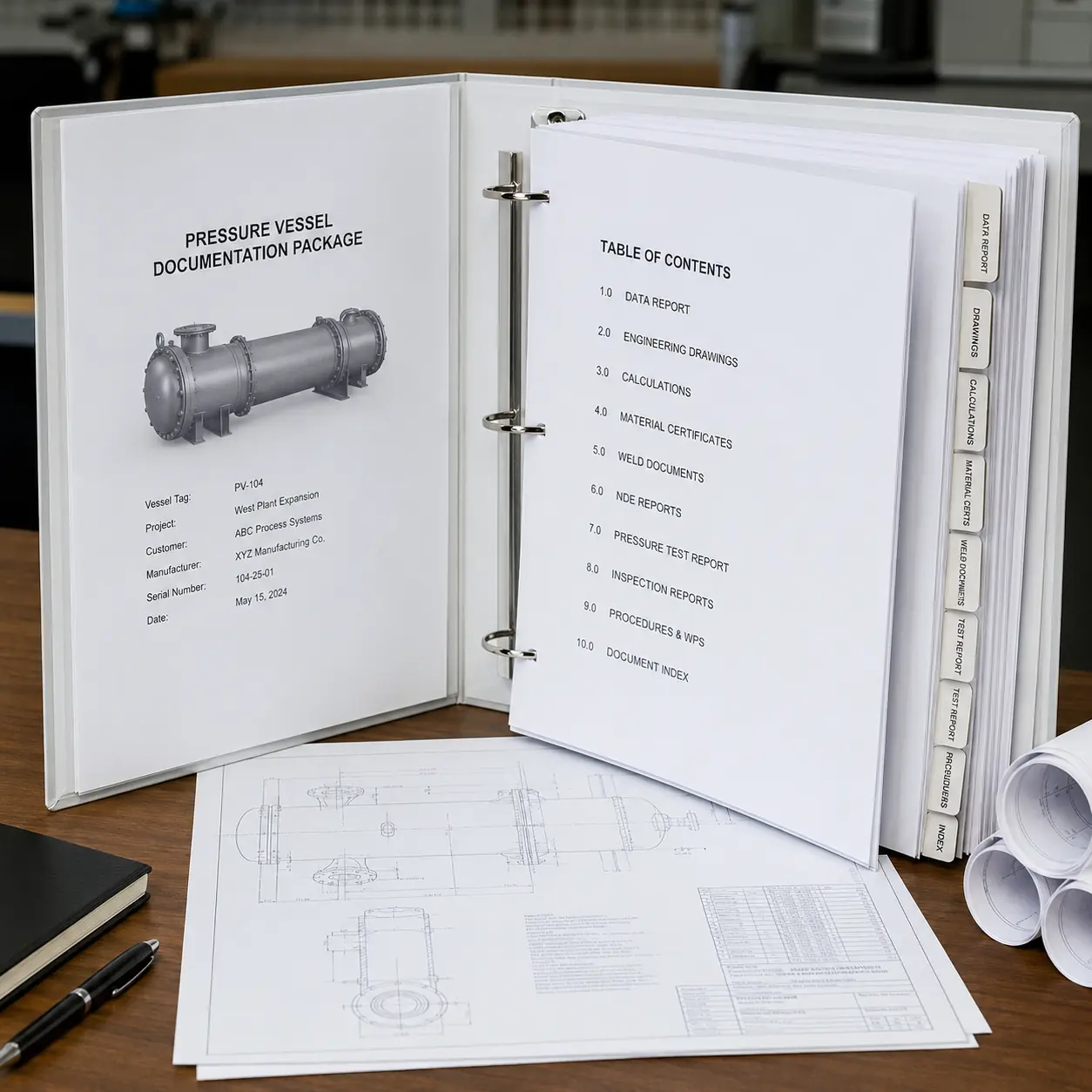
The nameplate is the visible end of that chain rather than the whole of it. Behind it sits the Manufacturer's Data Report, Form U-1, which records design conditions, materials, construction details, the inspector's signature and the National Board number. Keep it. Years later it is the difference between specifying a replacement bundle from a record and reconstructing the design by field measurement and inference.
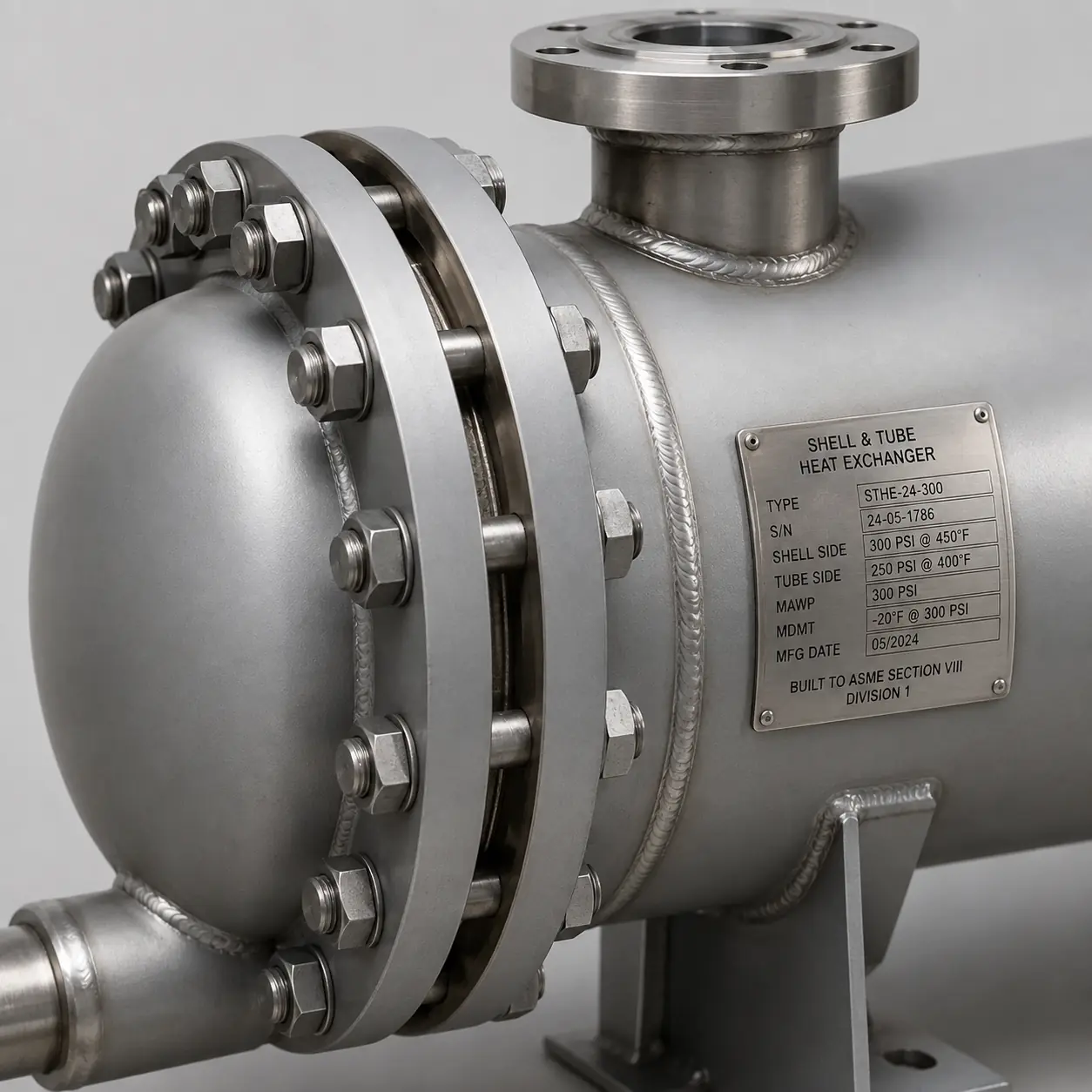
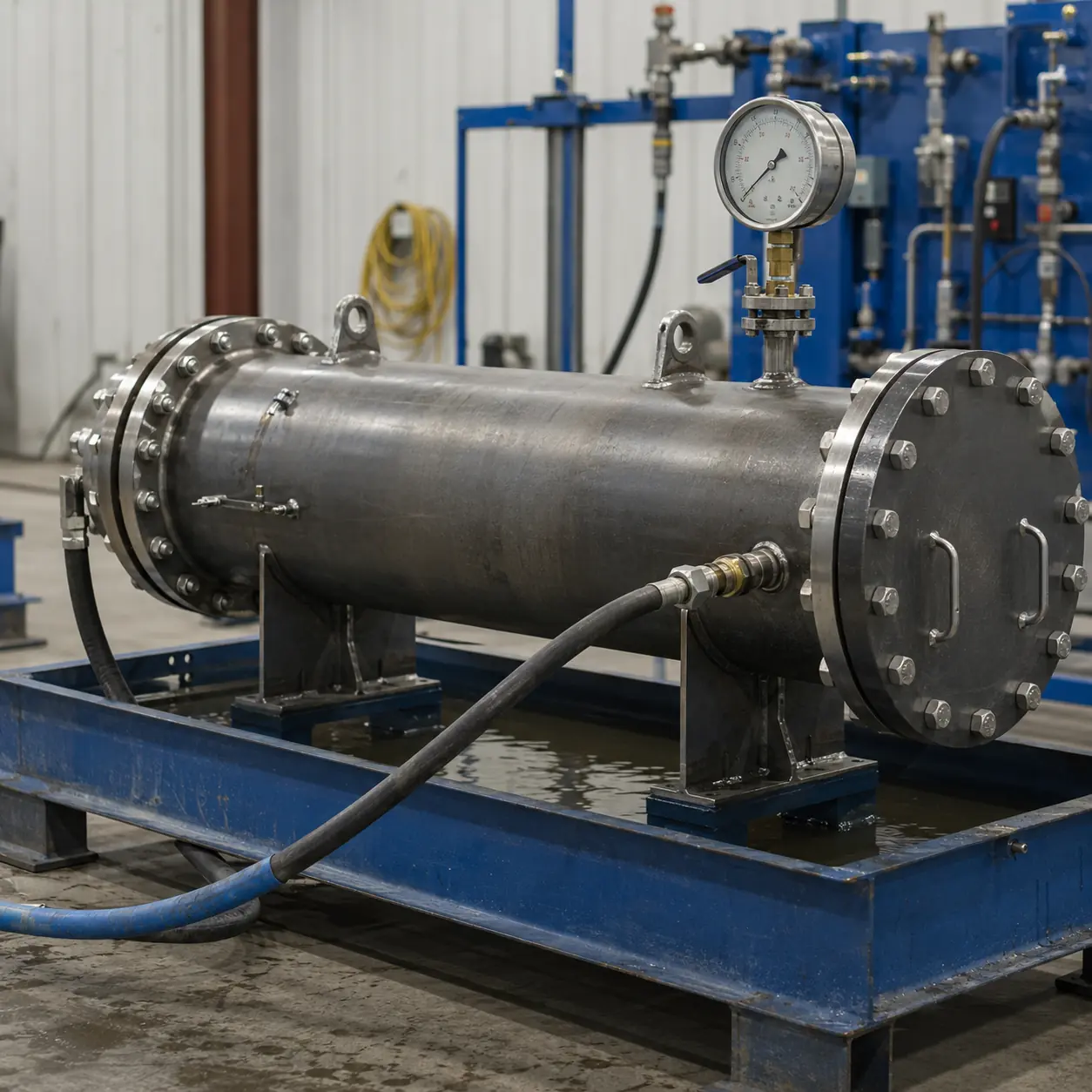
Hydrostatic testing is carried out at the multiple of design pressure the code requires and the result is documented as part of the data report. Examination coverage follows from the joint efficiency claimed in the design and from the service. In most North American jurisdictions, vessels above certain size and pressure thresholds must be code stamped and registered, and insurers generally require it regardless of what the jurisdiction says.
Request a QuoteA code stamp is not a claim about quality. It is a record that an independent inspector watched the work against a published rule set, and it is the difference between a vessel that can be signed off at installation and one that has to be justified after the fact.
Hygienic Code Duty
Where Code Construction Meets 3-A
- Code Shell With 3-A Product Surfaces
- U-1 Data Report and Material Traceability
- Documented Weld and Finish Records
Stainless Construction
Code Vessels in Sanitary Service
- 316L Product Contact Throughout
- Hydrostatic Test at Code Pressure
- Sanitary Ferrule Connections
Design & Construction
Code construction is a sequence of documented steps rather than a single act. Each one leaves a record, and the records together are what the stamp certifies.
- Code-listed materials supplied with mill test reports
- Minimum thicknesses and joint efficiencies established by calculation
- Nozzle reinforcement designed to the rules for the opening
- Authorized Inspector verification at agreed hold points
- Hydrostatic test at the code-required multiple of design pressure
- Nameplate and Form U-1 issued together at completion
Documentation & Registration
The most common problem on replacement work is a plant that has the exchanger and none of its paperwork. Everything below takes minutes to record at handover and saves days later.
- National Board registration where the jurisdiction requires it
- Form U-1 retained for the working life of the vessel
- Nameplate photographed before corrosion makes it illegible
- Design conditions recorded alongside the catalogue part number
- Material test reports filed with the data report rather than separately
Common FAQs
In most North American jurisdictions, pressure vessels above certain size and pressure thresholds must be stamped and registered, and insurers generally require it regardless. Small low-pressure units may fall outside, but the stamp is cheap against the cost of finding out you needed one.
The Manufacturer's Data Report for a Section VIII Division 1 vessel. It records design conditions, materials, construction details, the inspector's certification and the National Board number. It is the exchanger's birth certificate.
It is the registration under which the vessel is recorded, and it lets a unit be traced back to its data report even when plant records are gone. It is often the fastest route to identifying an older exchanger.
On code-stamped vessels, yes, at the pressure the code requires, and the result is documented as part of the data report.
Related