
1-805-484-2992
Quotes - Engineering - Sales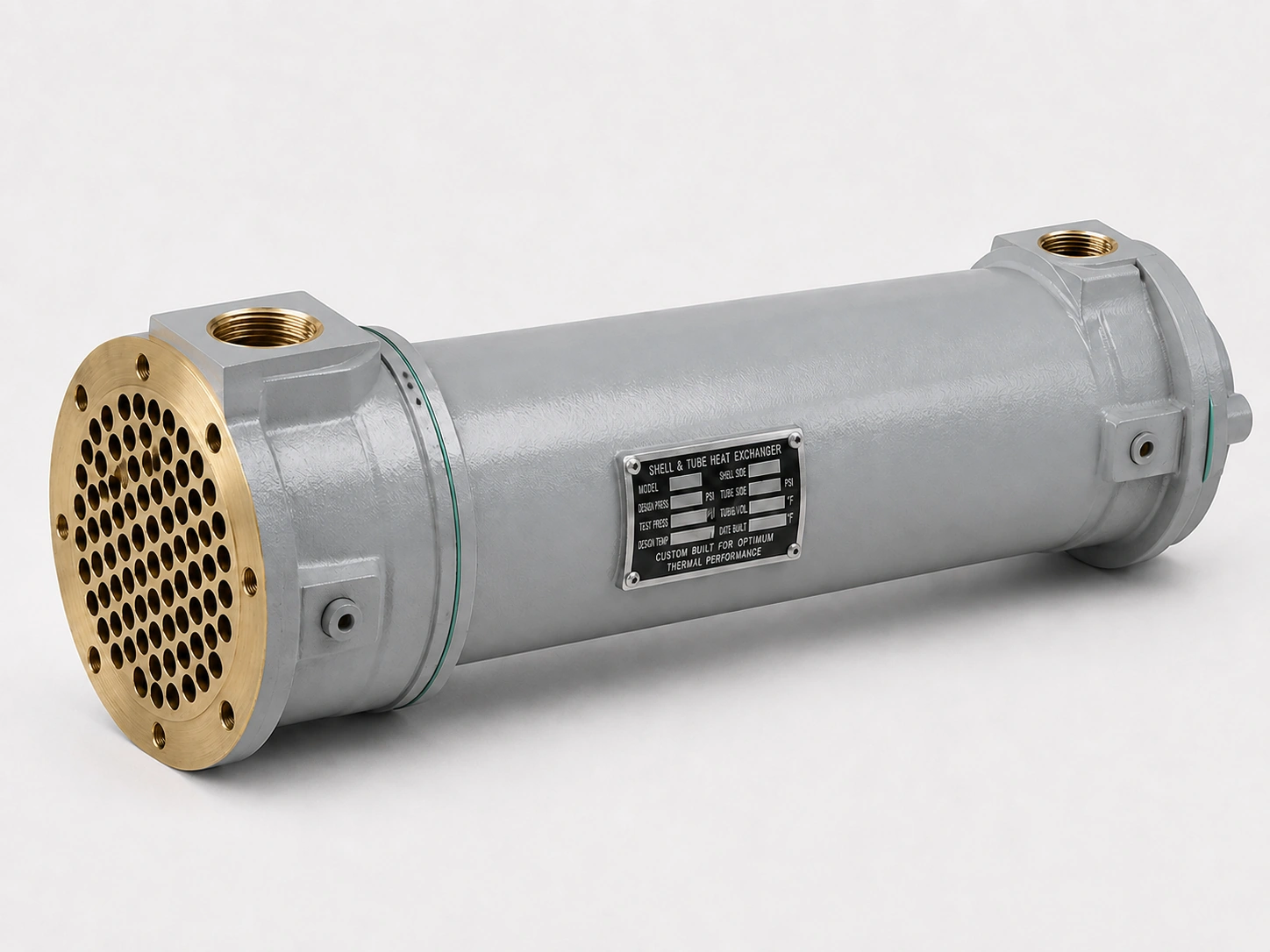
CHX Series
| PRODUCT | TYPE | STYLE | RATING |
|---|---|---|---|
| Heat Exchanger | Shell & Tube | Compact / Brass Shell | 300 PSI / 300°F |
Specifications
Configuration & Size
Shell Diameter:
2" to 8"
Shell Length:
8" to 72"
Tubes:
Copper
Passes:
1, 2 and 4 Pass
Brand:
Bell & Gossett
Materials
- Bonnets: Cast Iron
- Shell: Brass
- Tubes: Copper
- Tubesheet: Brass
CHX Series Compact Heat Exchangers
Brass Shell Construction for Small Duties at Higher Pressure
The CHX exists for duties too small to justify an SU or WU and too demanding for a simple coil. Shell diameters start at 2 inches, shell lengths at 8 inches, and the whole unit fits where a larger exchanger would not.
The brass shell is the defining feature. Where the SU and WU use a steel shell, the CHX shell is brass. That changes both the corrosion behaviour and the pressure rating: the CHX carries a 300 PSI shell rating against the 150 PSI of the larger ranges. On a small high-pressure loop that difference is often the whole reason for the selection.
Pass arrangements run 1, 2 and 4. A single pass gives the lowest pressure drop and the simplest flow path; two and four pass raise tube-side velocity where the flow is low. On the smallest shells the single-pass arrangement is frequently the right answer simply because there is not much flow to work with.
Where the CHX fits in the range. Think of it as the small-duty, higher-pressure member of the family. If the duty grows, the CHXS covers the same sizes with a steel shell, and above that the WU range begins at 4 inches and continues to 30.
Legacy designations. Alongside the 5-030 catalogue numbers, older CHX units carry designations such as CHX436-2L, where the digits encode shell diameter and length and the suffix records the pass and connection arrangement. Either form identifies the unit.
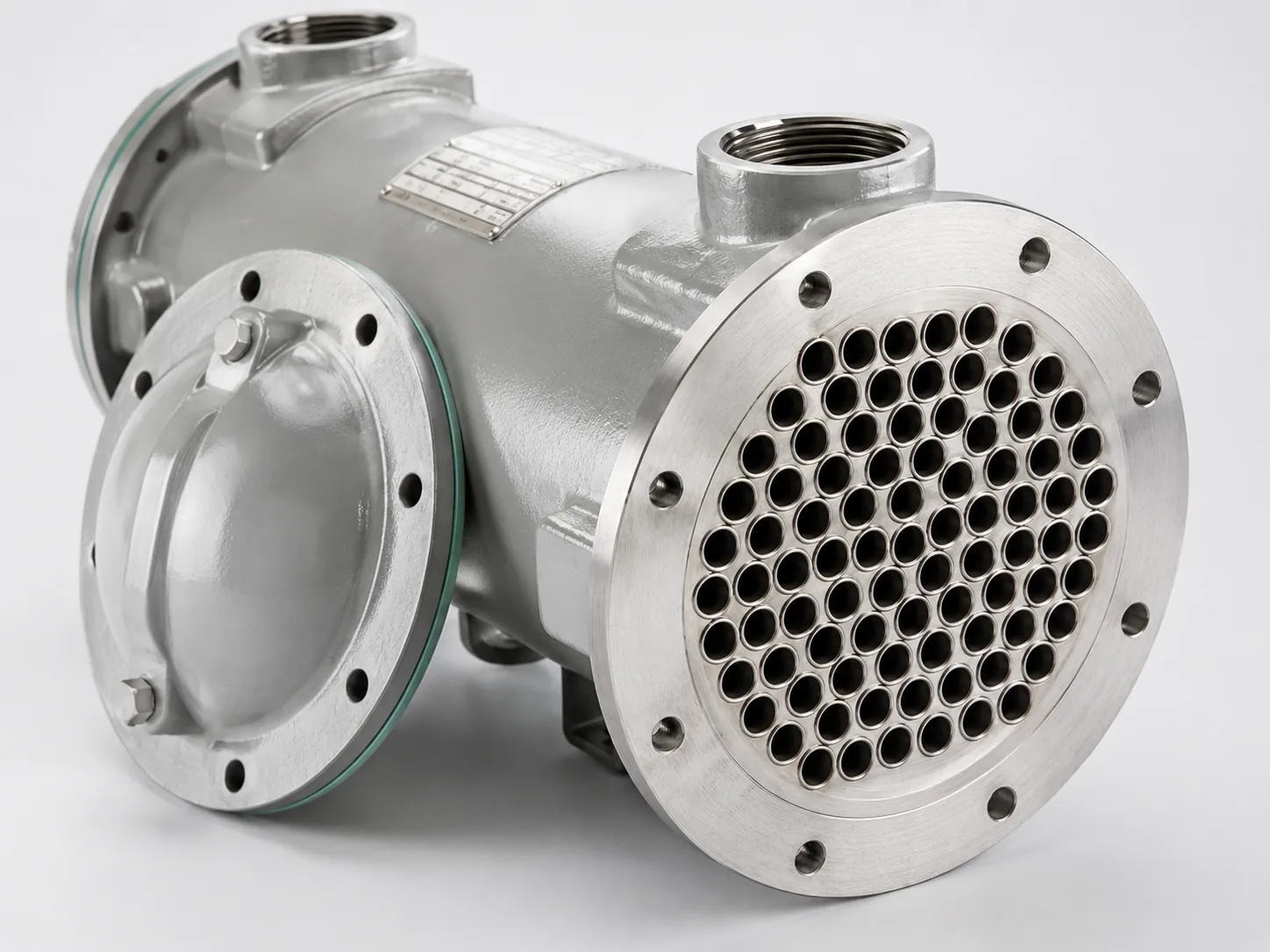
Brass shell construction with a 300 PSI shell rating, in diameters from 2 to 8 inches.
Request a QuoteCHX Series Applications




Where the 300 PSI Shell Rating Comes From
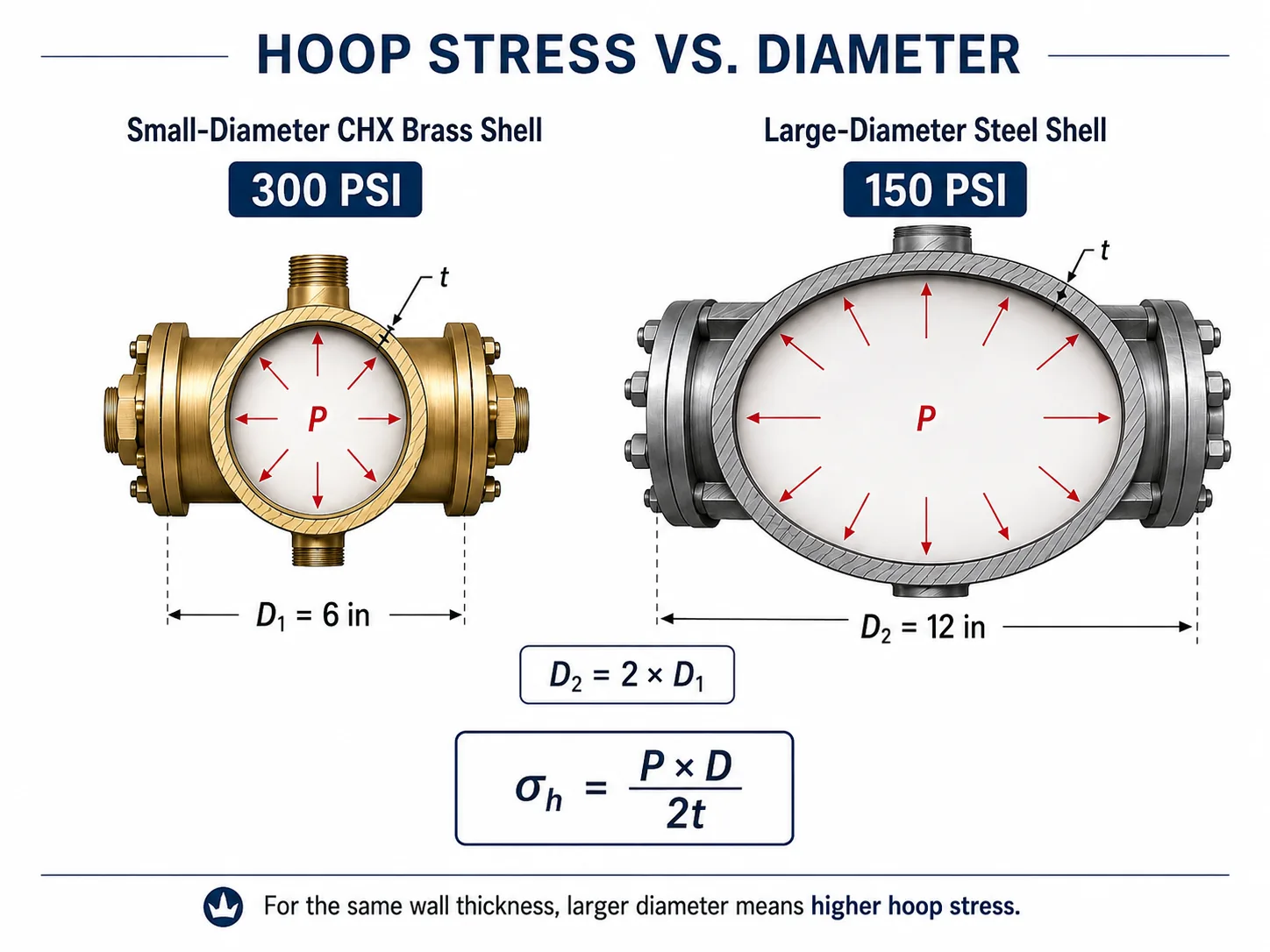
The CHX carries a 300 PSI shell rating where the larger SU and WU ranges sit at 150. That is not a different grade of construction so much as a consequence of size. Hoop stress in a cylindrical shell scales with its diameter, so holding 300 PSI across a 2 to 8 inch shell is straightforward, while holding the same pressure across a 30 inch shell would require substantially heavier construction throughout.
The CHX simply benefits from being small. On a compact high-pressure loop that difference is frequently the entire reason for the selection: the duty is modest, the pressure is not, and stepping up to a larger range would mean paying for surface area nobody needs in order to get a rating that range does not carry anyway.
The brass shell is the other half of the specification, and it is chosen against the shell-side fluid rather than against pressure. Where steel would suit the fluid, the CHXS covers the same size band and the same rating more economically. Tell us what is on each side and the choice between them usually makes itself. Call and talk it through with an engineer: 1-805-484-2992