
1-805-484-2992
Quotes - Engineering - Sales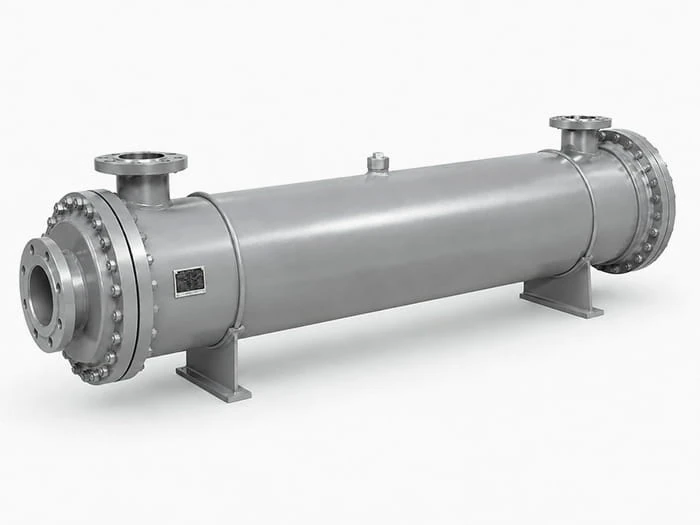
OC Series
| PRODUCT | TYPE | STYLE | RATING |
|---|---|---|---|
| Heat Exchanger | Shell & Tube | Oil Cooler | 150 PSI / 375°F |
Specifications
Configuration & Size
Shell Diameter:
8" to 20"
Shell Length:
84" to 144"
Tubes:
3/4" O.D. Copper
Passes:
1 and 2 Pass
Brand:
Bell & Gossett
Materials
- Bonnets: Cast Iron
- Shell: Steel
- Tubes: Copper
- Tubesheet: Steel
OC Series Shell and Tube Oil Coolers
Cooling a Fluid That Does Not Want to Transfer Heat
Oil is viscous, and viscosity is the enemy of heat transfer. A given flow of oil produces a far lower film coefficient than the same flow of water, and the coefficient falls further as the oil cools through the exchanger. That is why the OC range runs to larger shells and longer tube lengths than the general-purpose WU: the duty needs surface area.
Size against the cold end. Oil leaving the cooler is at its most viscous and the temperature difference is at its smallest, so the last few degrees cost disproportionate surface. If the required outlet temperature can be relaxed even slightly, the unit often gets noticeably smaller and cheaper.
Pressure drop is a real constraint on oil. Oil-side pressure drop climbs quickly, and a unit selected on thermal duty alone can be impossible to pump through at the flow the system actually delivers. Send the allowable pressure drop with the enquiry; it is the input most often omitted and the one that most often changes the selection.
One and two pass arrangements only. Adding passes on an oil circuit raises velocity and the coefficient, but pressure drop rises faster than the benefit. The OC range reflects that with one and two pass options rather than the four and six pass arrangements found on water duty.
Cyclic loads need saying. A quench tank load arrives in bursts as parts are dropped, not steadily. Sizing on the average produces a system that runs hot during the shift and cool overnight. Tell us the duty profile rather than a single number.
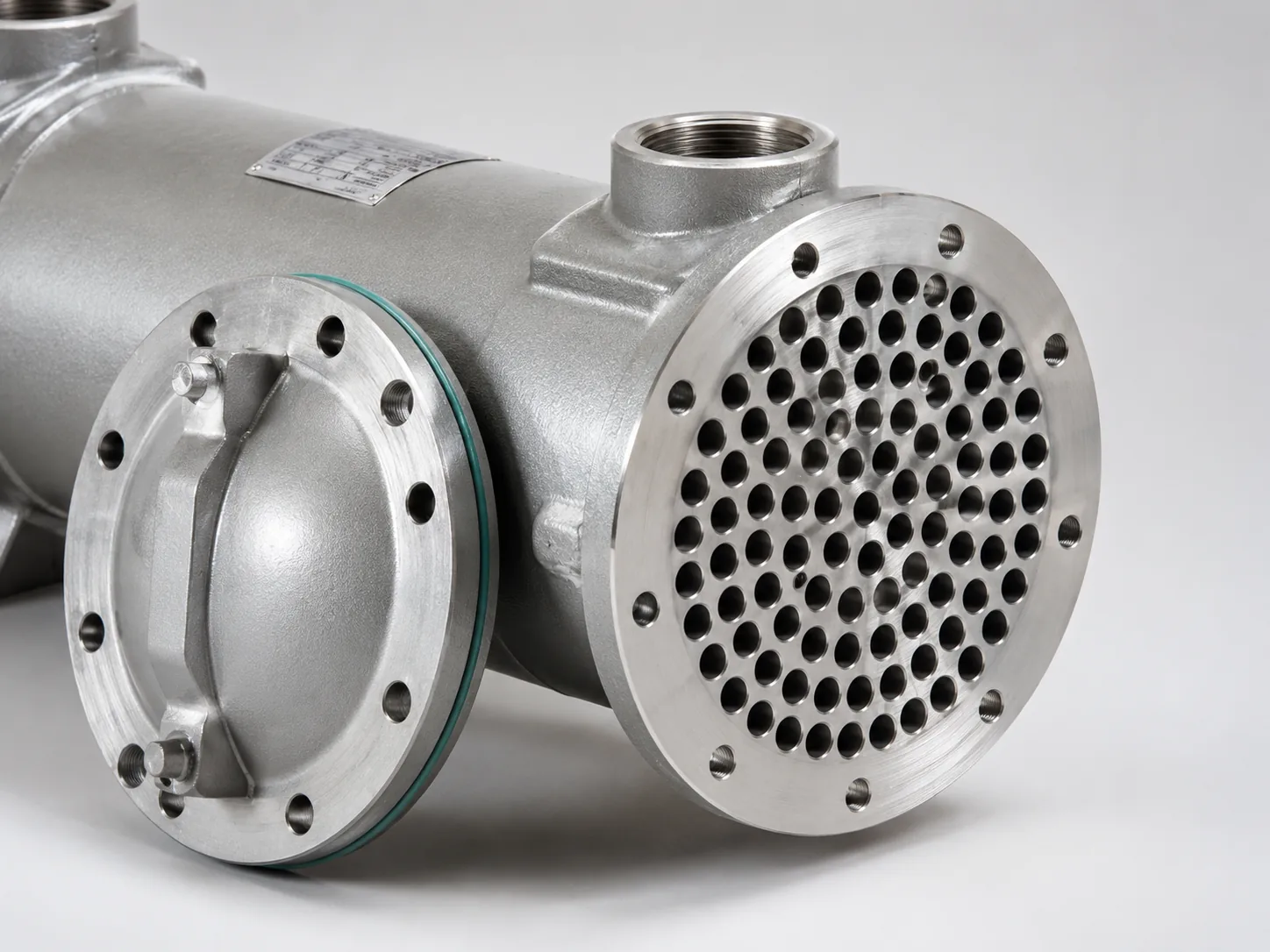
Larger shells and longer tube runs than the general-purpose ranges, because oil needs the surface area.
Request a QuoteOC Series Applications



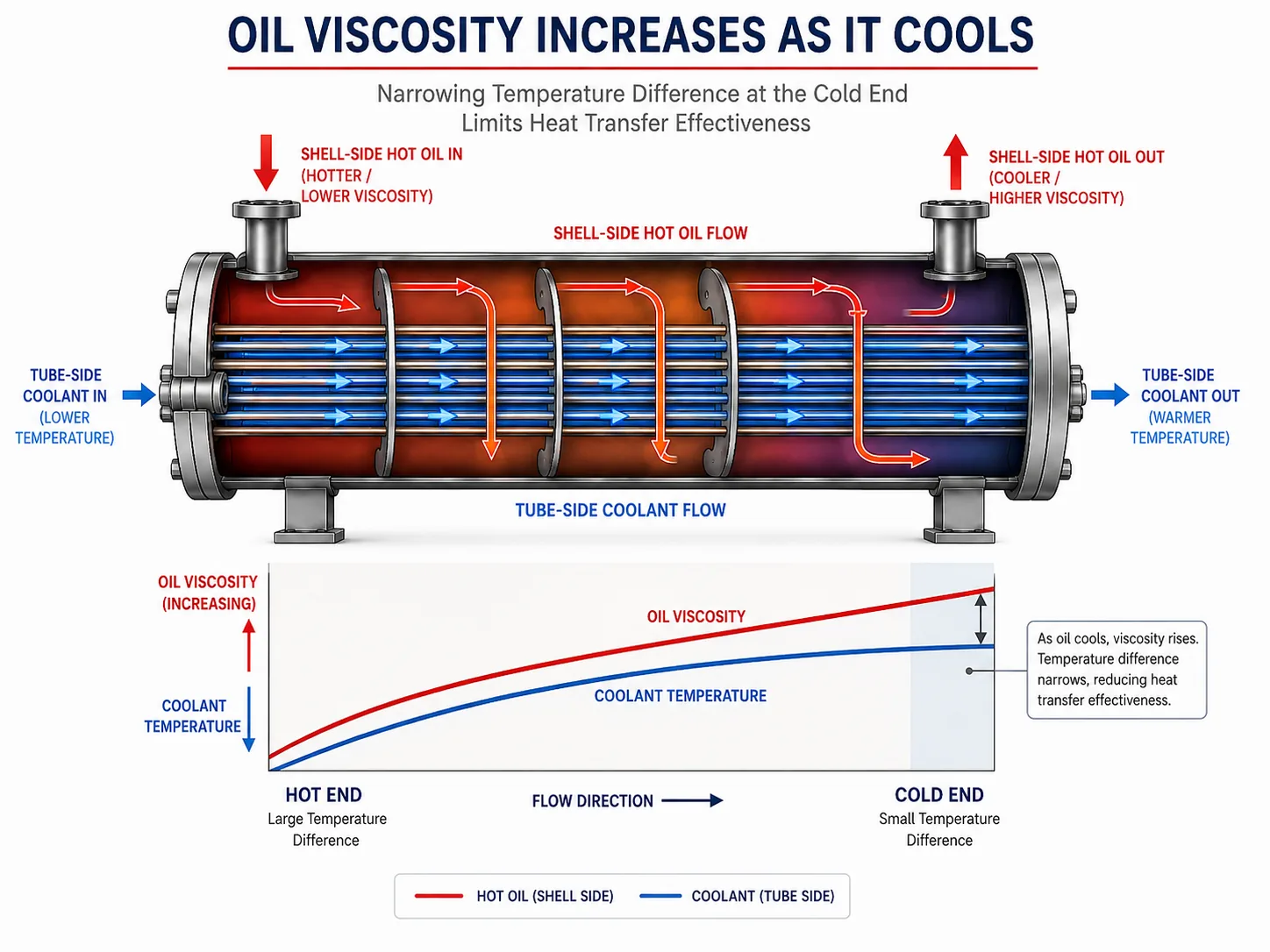
Why the Cold End Costs the Most Surface
Oil is viscous, and viscosity suppresses turbulence and thickens the boundary layer at the tube wall. That is why a given flow of oil produces a far lower film coefficient than the same flow of water, and why the OC range carries larger shells and longer tube runs than the general-purpose ranges for duties that sound comparable.
What catches people out is that it gets worse along the length of the exchanger. Oil leaving the cooler is at its coldest and therefore at its most viscous, exactly where the temperature difference driving heat transfer is at its smallest. Both terms move the wrong way at the same time, so the last few degrees of cooling cost disproportionate surface area. Relaxing the required outlet temperature by even a small margin frequently shrinks the unit noticeably.
Pressure drop deserves the same attention. Oil-side drop climbs steeply with both flow and viscosity, and a unit selected on thermal duty alone can be impossible to pump through at the flow the system actually delivers. Send the allowable drop and the viscosity grade with the enquiry. Call and talk it through with an engineer: 1-805-484-2992