
1-805-484-2992
Quotes - Engineering - SalesBoiler Isolation Heat Exchangers
Protecting the Boiler From the System
Boiler isolation puts a heat exchanger between the boiler circuit and the building distribution system. The boiler then operates in a small, clean, well-treated volume regardless of what the building side contains, and the two circuits can run at different pressures, different water chemistry and different flow rates.
The common reasons are specific. An old building system full of decades of debris that would foul a new condensing boiler. A high-rise where static head exceeds the boiler's rating. A system containing glycol that the boiler manufacturer will not warrant. A retrofit where the existing distribution cannot be flushed to the standard a new boiler requires.
Minimum flow and return temperature protection. Many boilers, particularly condensing types, have minimum flow requirements and return temperature limits. An isolation exchanger with a properly sized boiler-side pump lets those be satisfied independently of what the building side is doing, which is frequently the entire reason for the arrangement.
Approach temperature is the price. Isolation inserts a temperature step, and that step reduces the supply temperature the building actually receives. Keeping it small matters, because on a condensing boiler the whole efficiency case depends on operating at low return temperature.
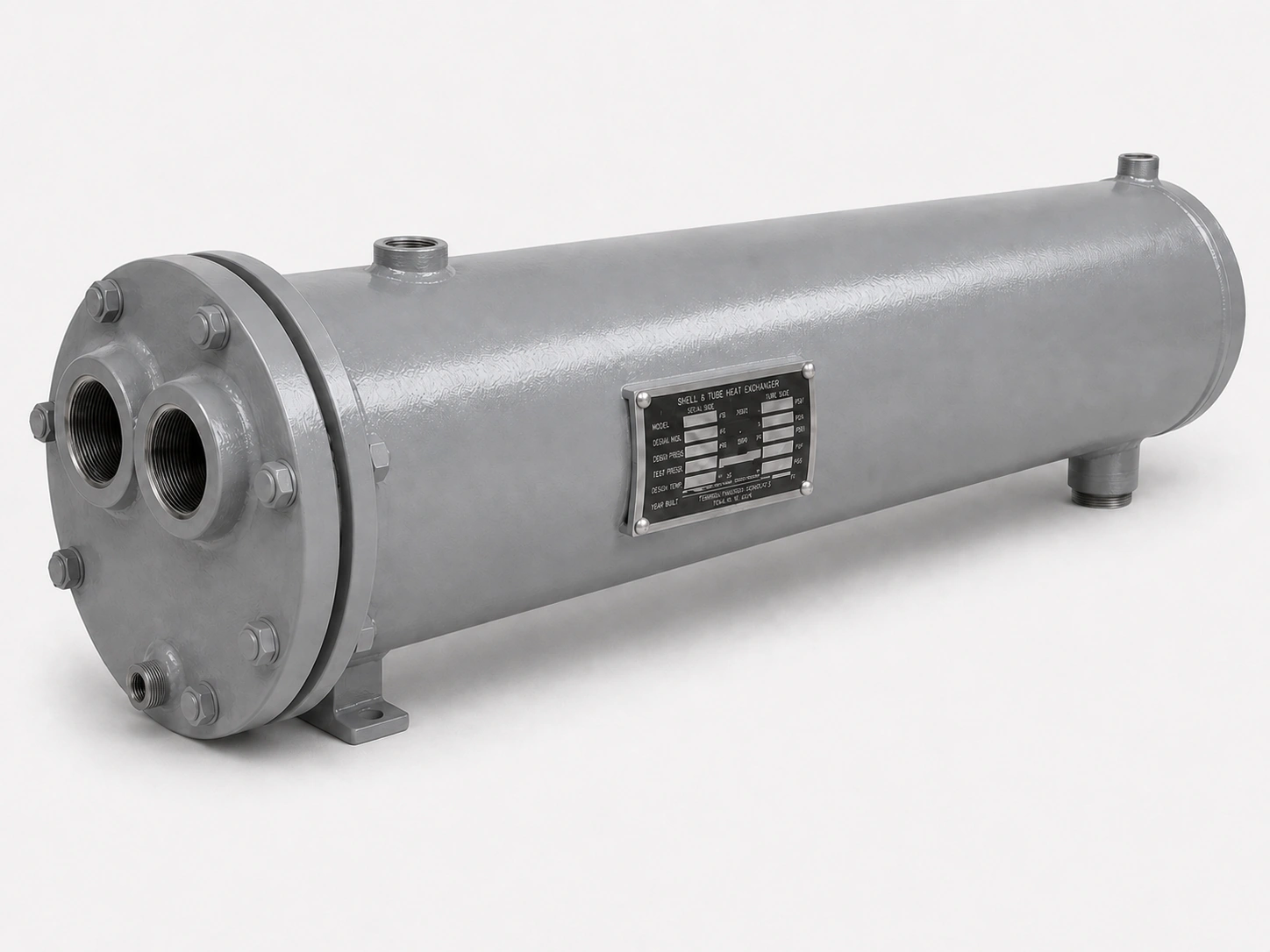
Static head is often the trigger. Where the building is tall enough that the boiler cannot be exposed to system pressure, the HTWU range carries a 400 PSI tube-side rating for the high-pressure side.
 Boiler Water
 Building Loop
 Glycol Circuits
 High Static Head
Boiler Isolation Selection
The boiler's requirements set one side. The building system sets the other. The exchanger reconciles them.
Duty Inputs
- Boiler output: BTU/hr and flow
- Boiler limits: Minimum flow, return temperature
- System pressure: Static head at the exchanger
- System fluid: Water or glycol
Series
- WU for standard isolation
- HTWU where static head is high
- CHXS for small boiler plant
- Sized on both circuits
- Removable bundle for service
Reasons to Isolate
- Old dirty distribution system
- Static head above boiler rating
- Glycol in the building loop
- Minimum flow protection
- Return temperature control
Isolation Buys Protection and Costs Approach
Decide What You Are Protecting Against
Isolation is worth the approach penalty when the boiler genuinely cannot tolerate the system: debris, pressure, glycol, or a return temperature the boiler manufacturer will not accept. It is worth much less on a clean new installation where the whole system was built to the same standard.
Where a new condensing boiler is being fitted to an old distribution system that cannot be properly flushed, isolation is usually the cheapest way to protect the investment.
Watch the Effect on Condensing Efficiency
A condensing boiler earns its efficiency by operating at low return water temperature. Inserting an isolation exchanger raises the boiler-side return temperature relative to the building-side return, which erodes some of that benefit.
A close approach keeps the erosion small. It is worth specifying deliberately rather than accepting whatever the cheapest unit delivers, because the penalty applies every hour the boiler runs.
Related
APPLICATION • DISTRICT
District Energy
The same principle applied at a network boundary.
+ Learn More