
1-805-484-2992
Quotes - Engineering - Sales
TCS Series
| PRODUCT | TYPE | STYLE | RATING |
|---|---|---|---|
| Heat Exchanger | Tank Heater | Tank Heater / Steam | 150 PSI / 375°F |
Specifications
Configuration & Size
Shell Diameter:
4" to 14"
Shell Length:
12" to 120"
Tubes:
Copper
Passes:
2 Pass
Brand:
Bell & Gossett
Materials
- Bonnets: Cast Iron or Cast Brass
- Shell: Steel
- Tubes: Copper
- Tubesheet: Steel or Brass
TCS Series Steam Tank Heaters
Steam in the Tubes, Tank Contents Outside
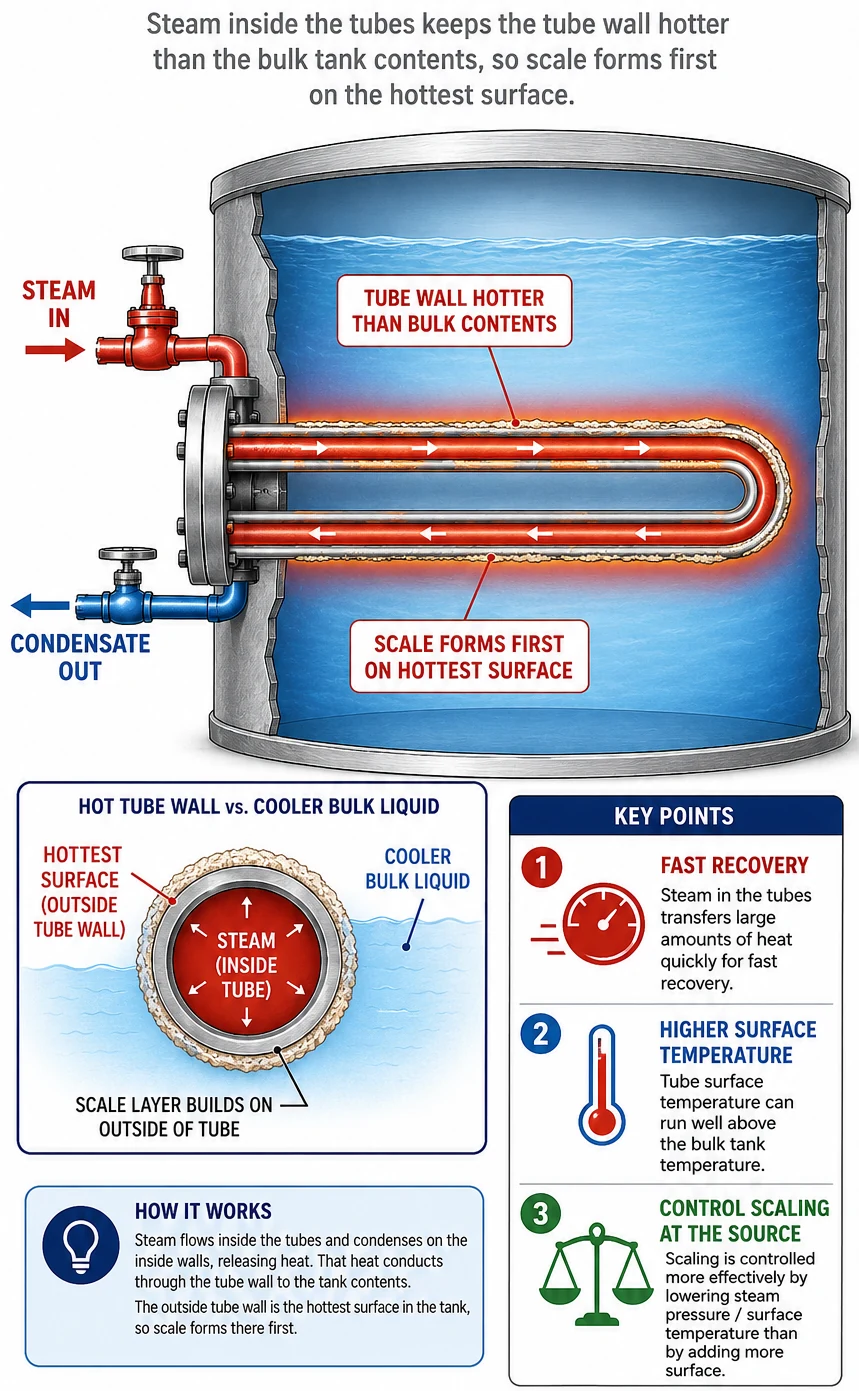
The TCS carries steam through the tubes of a bundle mounted inside the tank. Steam condenses at constant temperature and releases latent heat, which gives a considerably higher heat flux than pumped hot water at a practical supply temperature.
Recovery rate is usually why a TCS is chosen. Where a tank has to come back up to temperature quickly, steam delivers the heat far faster than a water loop of comparable size. On a duty that is mostly standby with occasional heavy draw, that recovery capability is the whole point.
Watch the surface temperature. Steam at pressure produces a tube surface temperature well above the tank contents. On water that is unremarkable; on any product that scales, scorches or degrades it matters, and lower-pressure steam or a controlled supply is the answer rather than more surface.
Condensate has to leave. A steam-heated bundle that cannot drain floods from the bottom up and loses surface progressively. The symptom looks exactly like a tank that has stopped heating properly. Check the trap and the drain arrangement before pulling the bundle.
Mounting and removal. The bundle enters through a tank nozzle on a mounting flange and withdraws the same way, so clearance outside the tank equal to the bundle length is required. Cast iron or cast brass bonnets are available across the 4 to 14 inch range.
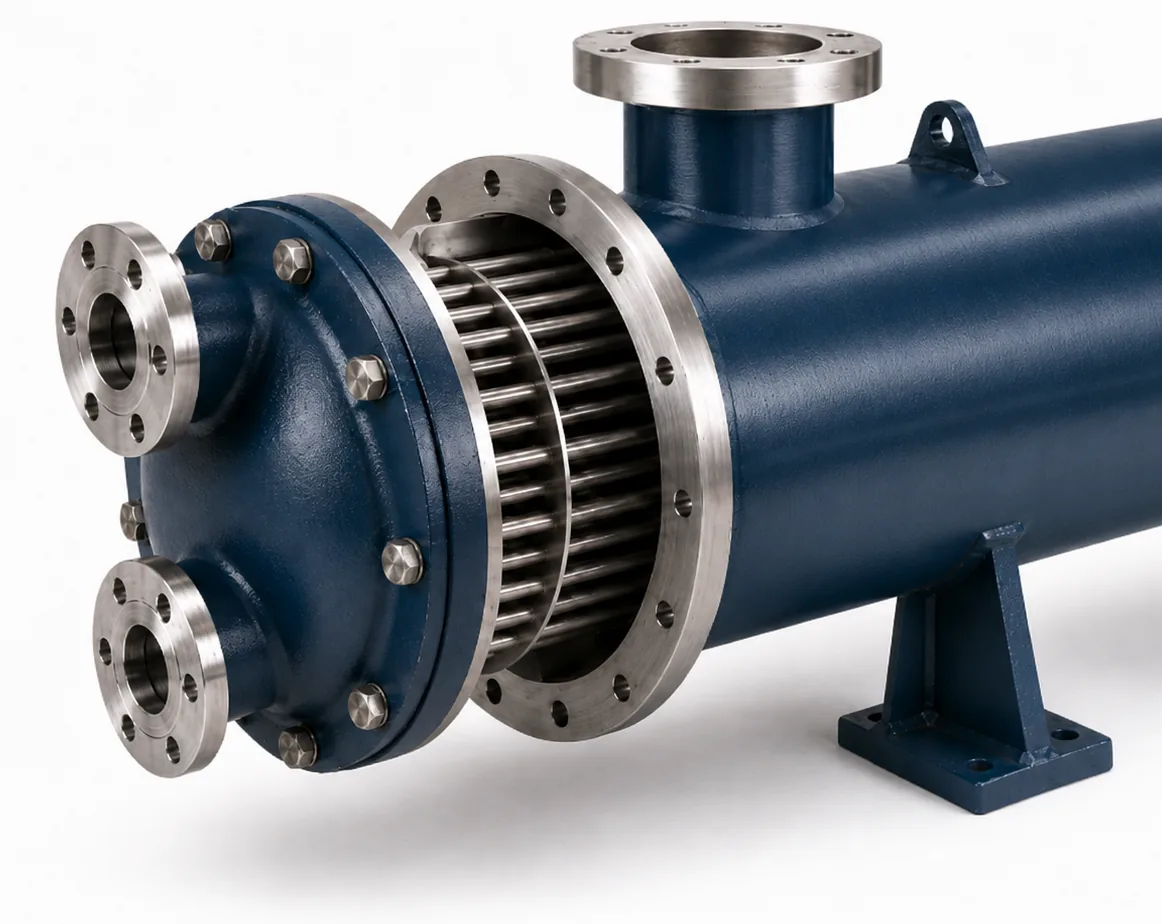
Steam through the tubes for fast tank recovery, in bundle diameters from 4 to 14 inches.
Request a QuoteTCS Series Applications



Watch the Tube Surface Temperature, Not the Tank Temperature
Steam condenses inside the tubes at constant temperature and releases latent heat, which is what gives a TCS its recovery rate: a steam bundle brings a large tank back up to temperature far faster than pumped hot water of comparable size. On a duty that sits mostly on standby and then sees a heavy draw, that is the entire reason for choosing it.
The cost is tube surface temperature. Steam at pressure holds the tube wall well above whatever the tank contents are sitting at, and both scale and product damage are governed by the surface temperature rather than the bulk temperature. On hard water, scale forms preferentially on the hottest surface in the system, which is exactly this one. On a product that scorches or denatures, the same applies for the same reason.
The remedy is usually lower steam pressure with more surface rather than more aggressive cleaning. It reduces the wall temperature directly, and it slows the mechanism instead of dealing with the result. Tell us what the tank holds as well as how fast it has to recover. Call and talk it through with an engineer: 1-805-484-2992