
1-805-484-2992
Quotes - Engineering - Sales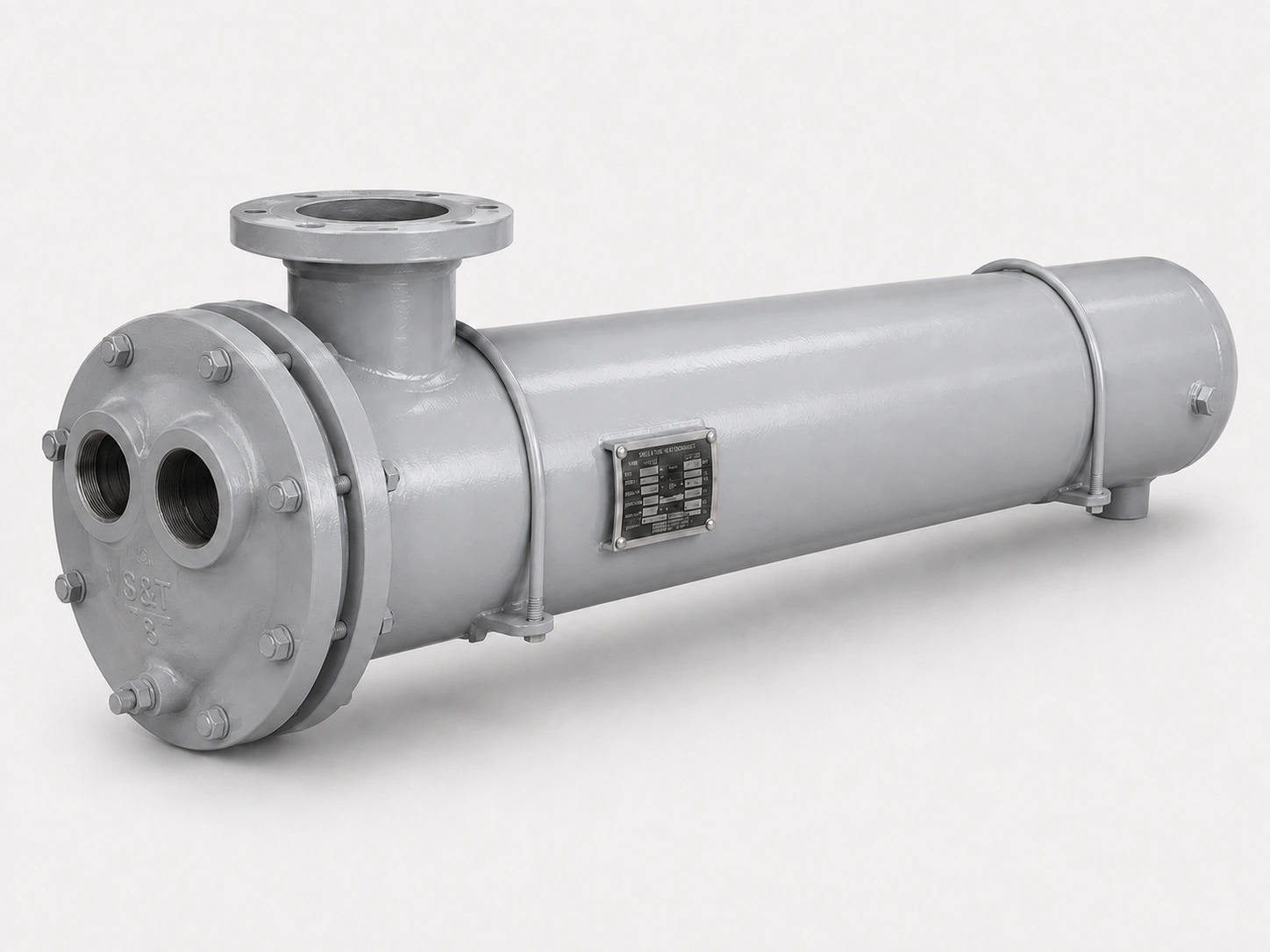
DSU Series
| PRODUCT | TYPE | STYLE | RATING |
|---|---|---|---|
| Heat Exchanger | Shell & Tube | Steam / Double Wall | 150 PSI / 375°F |
Specifications
Configuration & Size
Shell Diameter:
4" to 12"
Shell Length:
36" to 120"
Tubes:
3/4" O.D. Copper (Double Wall)
Passes:
2, 4 and 6 Pass
Brand:
Bell & Gossett
Materials
- Bonnets: Cast Iron
- Shell: Steel
- Tubes: Copper, Double Wall
- Tubesheet: Naval Brass
DSU Series Double-Wall Steam Heat Exchangers
Two Barriers Between Steam and Potable Water
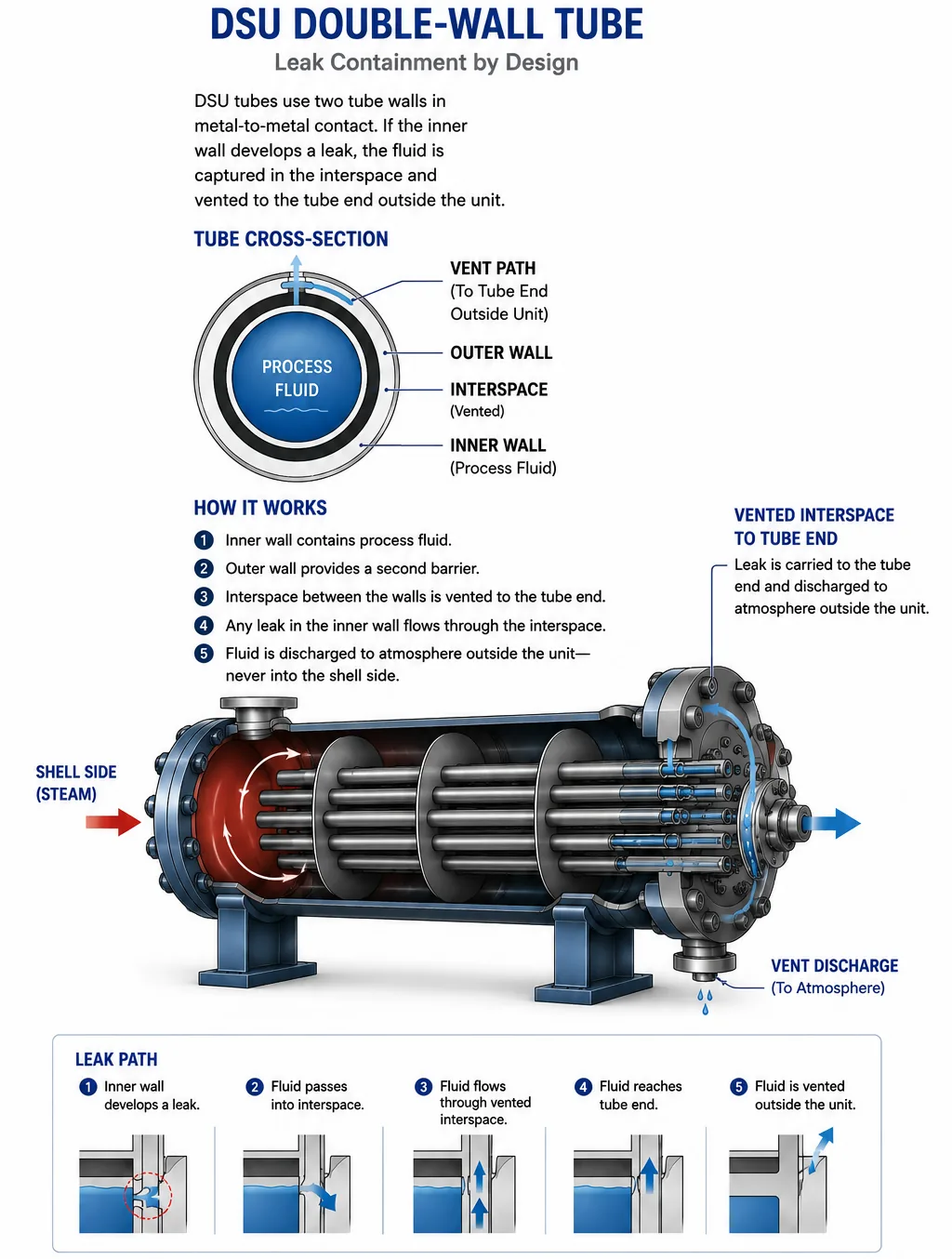
A double-wall tube is two tubes drawn together, with a deliberate vented path between them. If either wall develops a pinhole, the fluid travels along that path and appears outside the unit rather than crossing into the other stream. A failure that would otherwise be silent becomes something you can see on a walk-round.
Where it is required. Wherever a non-potable heating medium warms potable water. Codes vary by jurisdiction and by the authority having jurisdiction, so it is worth confirming rather than assuming, but the requirement is common enough that the DSU exists as a catalogued range rather than an engineered special.
What it costs thermally. The interface between the two tube walls is a real thermal resistance, so a DSU needs more surface than an SU for the same duty. The catalogued range accounts for this and the unit is correspondingly larger. Substituting an SU part number for a DSU because the dimensions look similar is a mistake worth avoiding.
Naval brass tubesheets. The DSU range uses naval brass rather than the steel or brass tubesheets found on the standard SU. That reflects the potable-water service the unit is built for, and it is one of the details that distinguishes a genuine DSU from a visually similar SU.
Everything else is familiar. Removable U-tube bundle, cast iron bonnets, steel shell, 2, 4 and 6 pass tube-side arrangements, and the same 5-262 catalogue number structure encoding shell diameter, length and pass count.
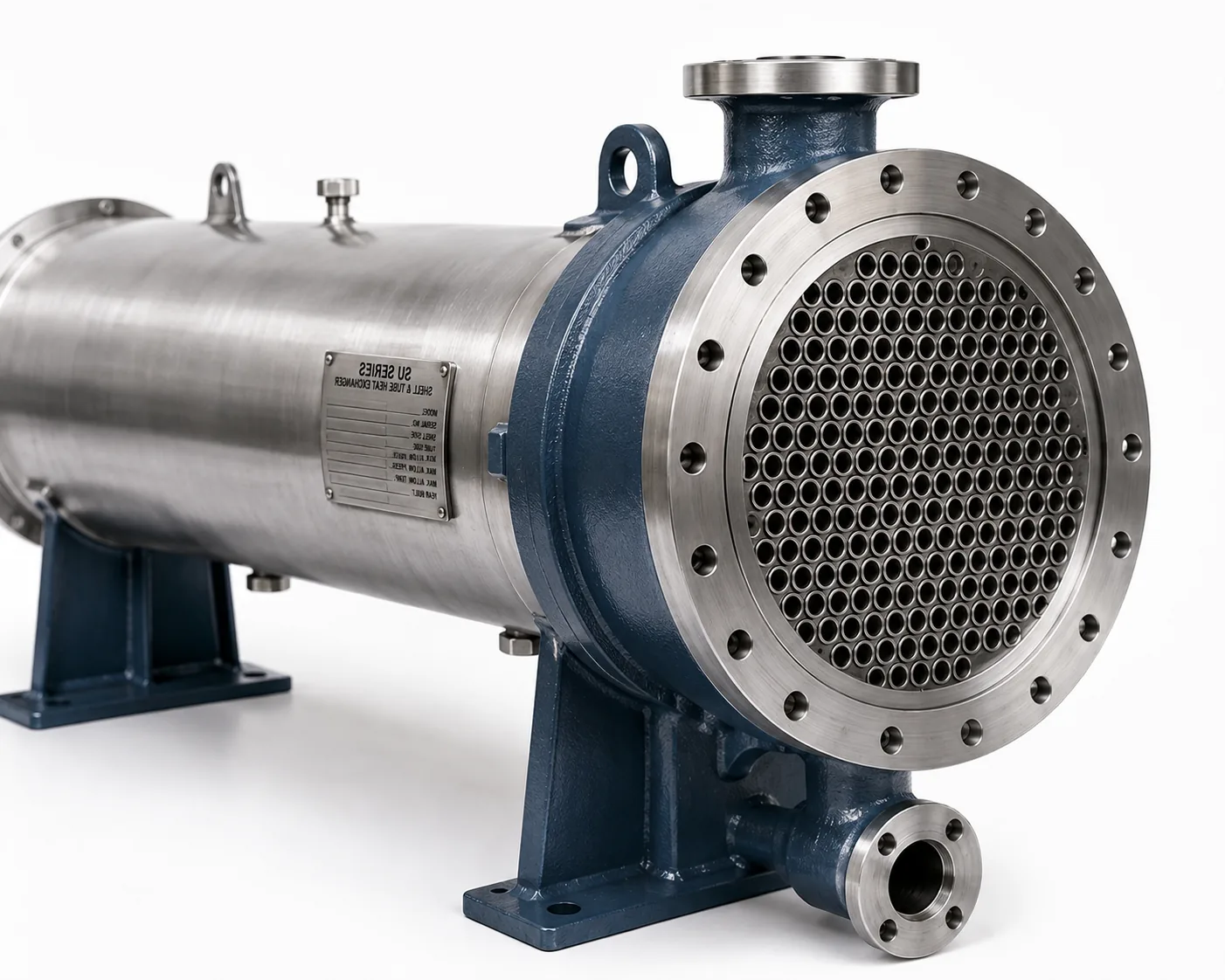
Double-wall tube construction with naval brass tubesheets, for heating potable water from a steam or boiler circuit.
Request a QuoteDSU Series Applications




What the Vented Gap Actually Does
A double-wall tube is two tubes drawn together so their walls sit in intimate mechanical contact, with a deliberate vented path running between them to the tube end. Heat passes through both walls. A leak through either one enters that path and discharges outside the pressure boundary of both fluids, where somebody can see it on a normal walk-round.
That is the whole proposition, and it is worth being precise about what it buys. It does not make a tube failure less likely. It changes a silent failure into a visible one, which matters enormously when the fluid on the other side is drinking water and the alternative is discovering the problem through a water quality test days later.
It costs surface area, because the interface between the two walls is a genuine thermal resistance. A DSU is physically larger than an SU of equivalent duty, and the catalogued range tops out at a smaller shell diameter as a result. Where a duty sits near that limit the answer is sometimes two units rather than one, which is worth knowing before a plant room is laid out. Call and talk it through with an engineer: 1-805-484-2992