
1-805-484-2992
Quotes - Engineering - Sales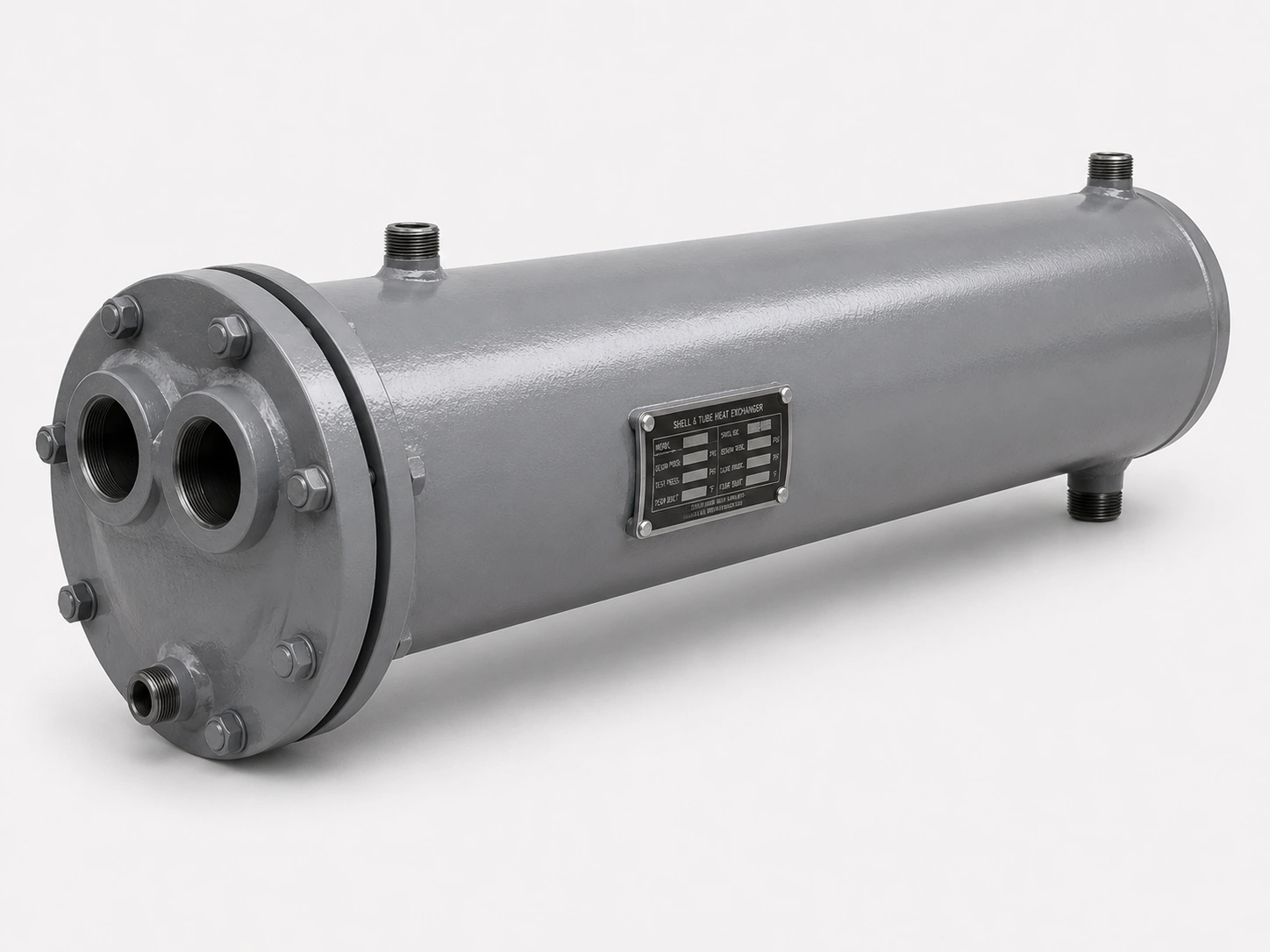
DWU Series
| PRODUCT | TYPE | STYLE | RATING |
|---|---|---|---|
| Heat Exchanger | Shell & Tube | Liquid / Double Wall | 150 PSI / 375°F |
Specifications
Configuration & Size
Shell Diameter:
4" to 12"
Shell Length:
48" to 120"
Tubes:
3/4" O.D. Copper (Double Wall)
Passes:
2, 4 and 6 Pass
Brand:
Bell & Gossett
Materials
- Bonnets: Cast Iron
- Shell: Steel
- Tubes: Copper, Double Wall
- Tubesheet: Naval Brass
DWU Series Double-Wall Liquid Heat Exchangers
Double-Wall Protection on a Pumped Water Circuit
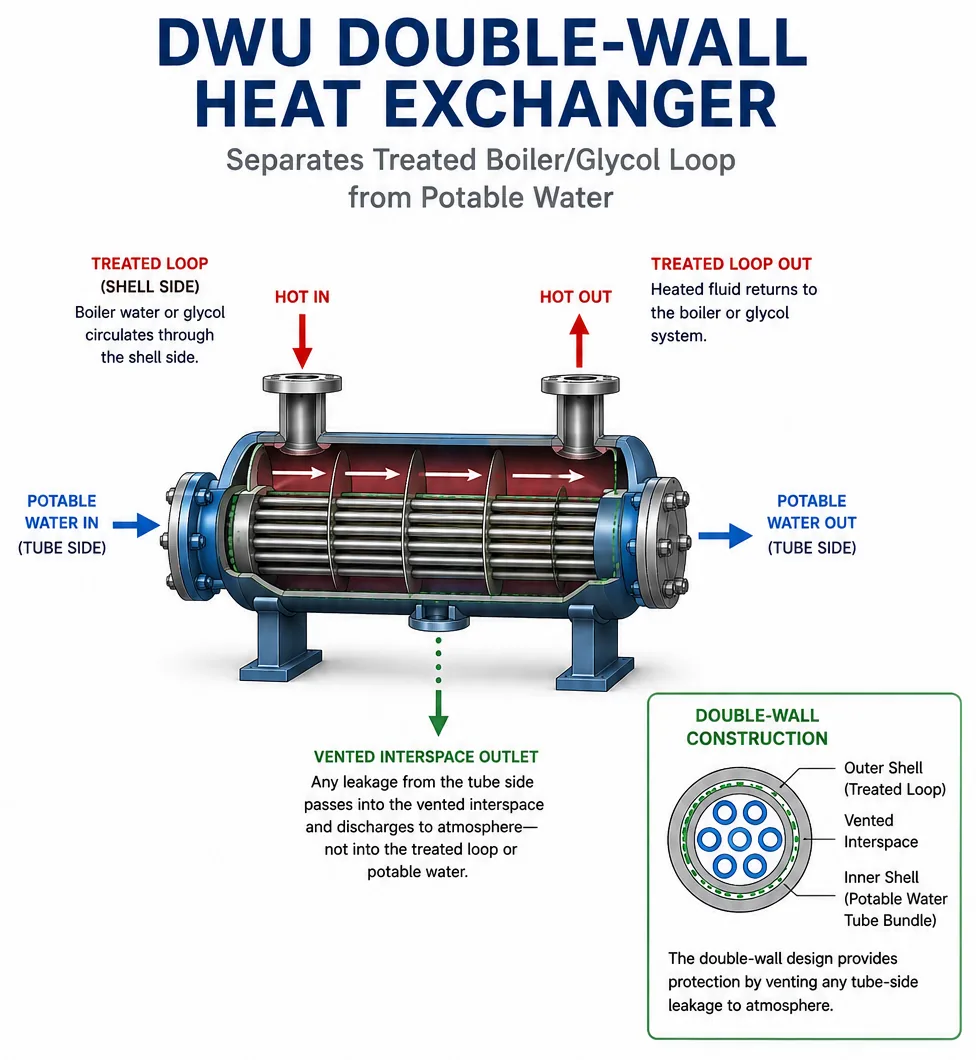
The DWU pairs the WU's pumped shell-side arrangement with double-wall tube construction. Two tube walls in intimate contact carry the heat; the vented path between them carries any leak to the outside of the unit where it can be seen.
The most common application is a boiler loop heating domestic water. The boiler circuit carries treatment chemicals and is not potable. The domestic circuit is. Where those two meet across a single tube wall, many jurisdictions require a second barrier, and the DWU is the catalogued way to provide one without moving to engineered construction.
Glycol circuits raise the same question. Even propylene glycol systems carry inhibitor packages, and a heat transfer fluid crossing into potable water is a contamination event regardless of how benign the base fluid is. Double-wall construction removes the question rather than arguing about it.
Sizing allows for the extra resistance. The double-wall interface is a real thermal barrier, so a DWU carries more surface than a WU of equivalent duty. The 5-267 catalogue range reflects that, and the shell diameters run to 12 inches rather than the WU's 30.
Naval brass tubesheets and cast iron bonnets are standard across the range, with the same removable U-tube bundle and 2, 4 and 6 pass tube-side options as the rest of the family.
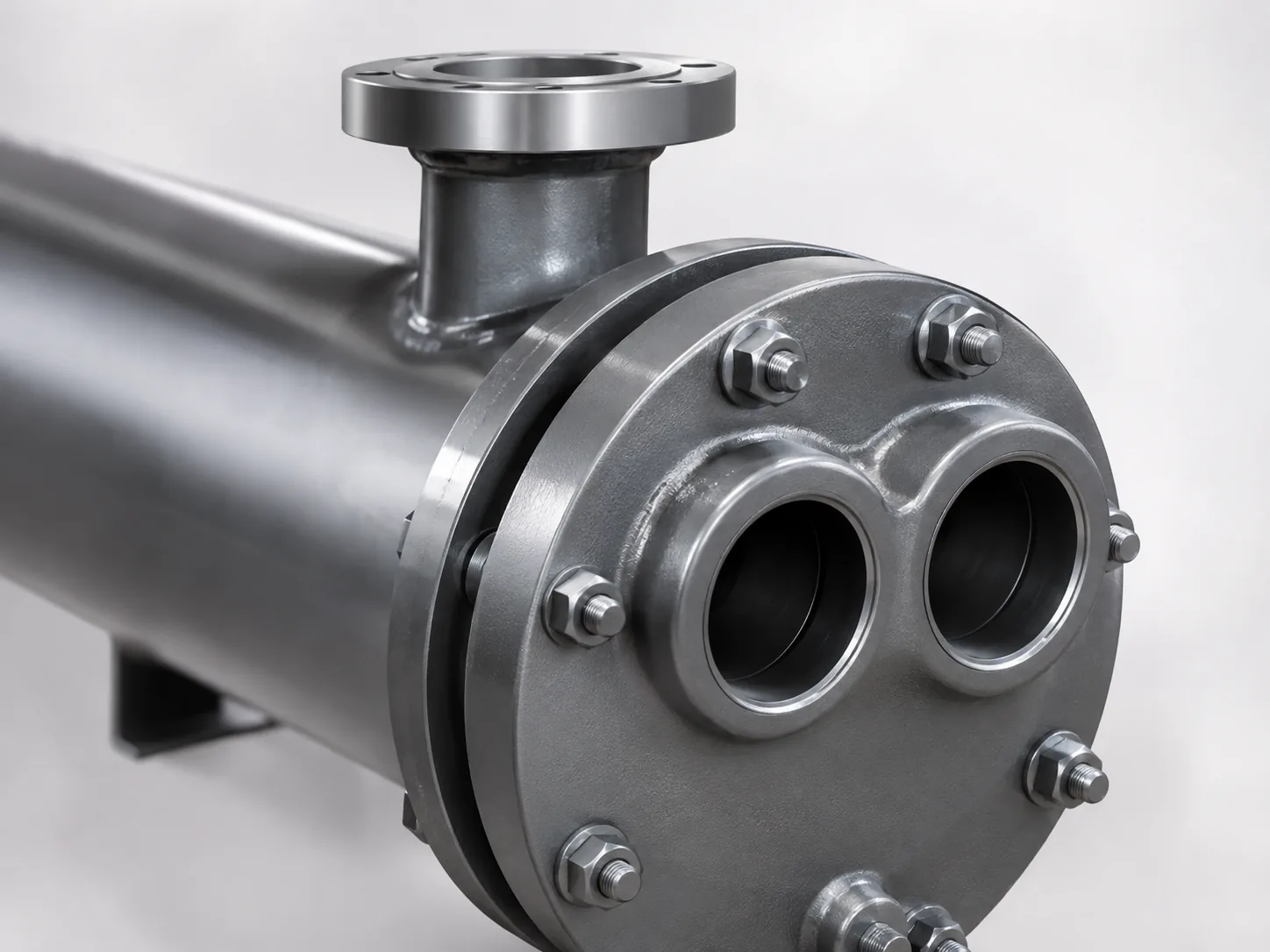
Double-wall construction on a pumped water circuit, where a boiler or glycol loop heats potable water.
Request a QuoteDWU Series Applications


Where the Requirement Comes From
A boiler circuit carries treatment chemicals. A glycol loop carries an inhibitor package. Neither is potable, and neither becomes potable because the fluid it is heating is. Where those two meet across a single tube wall, that wall is the only thing preventing a contamination event, and a great many jurisdictions will not accept a single barrier in that position.
The DWU is the catalogued answer on a pumped water circuit. It does the same liquid-to-liquid job as a WU with a second barrier and a vented path between the walls, so a leak through either one discharges outside the unit rather than crossing between streams. Naval brass tubesheets are standard across the range, which is also one of the more reliable ways to tell a genuine DWU from a visually similar WU when a nameplate has faded.
The requirement varies by jurisdiction and by the authority having jurisdiction, so it is worth settling before an order rather than at inspection. The two ranges are not interchangeable and a single-wall unit cannot be converted. Call and talk it through with an engineer: 1-805-484-2992