
1-805-484-2992
Quotes - Engineering - SalesHeavy-Duty U-Tube Construction
400 PSI on the Tube Side, 150 on the Shell
Heavy-duty construction is the standard U-tube arrangement with the tube-side pressure boundary uprated. The tubes, tubesheet and bonnet are built for 400 PSI; the shell remains at 150. That asymmetry is deliberate and it is what makes the construction affordable.
Why the asymmetry works. A shell is a large-diameter pressure boundary and raising its rating requires substantially heavier construction throughout. Tubes and tubesheets are small pressure boundaries by comparison. Putting the high-pressure fluid in the tubes and leaving the shell at standard rating costs a fraction of what uprating both sides would.
Tall buildings are the common case. Static head alone puts the bottom of a high-rise hydronic riser well above 150 PSI, and pump head adds to that. The temperatures involved are often unremarkable; it is purely the pressure that takes the duty outside the standard range.
High head pumping circuits are the other. Long distribution runs, significant elevation change and deep well systems all raise tube-side pressure beyond standard limits without any unusual thermal requirement.
Everything else is standard. Removable U-tube bundle, cast iron bonnets, steel shell and tubesheet, and 2, 4 and 6 pass tube-side arrangements. The HTWU series carries this construction across a 4 to 12 inch shell range.
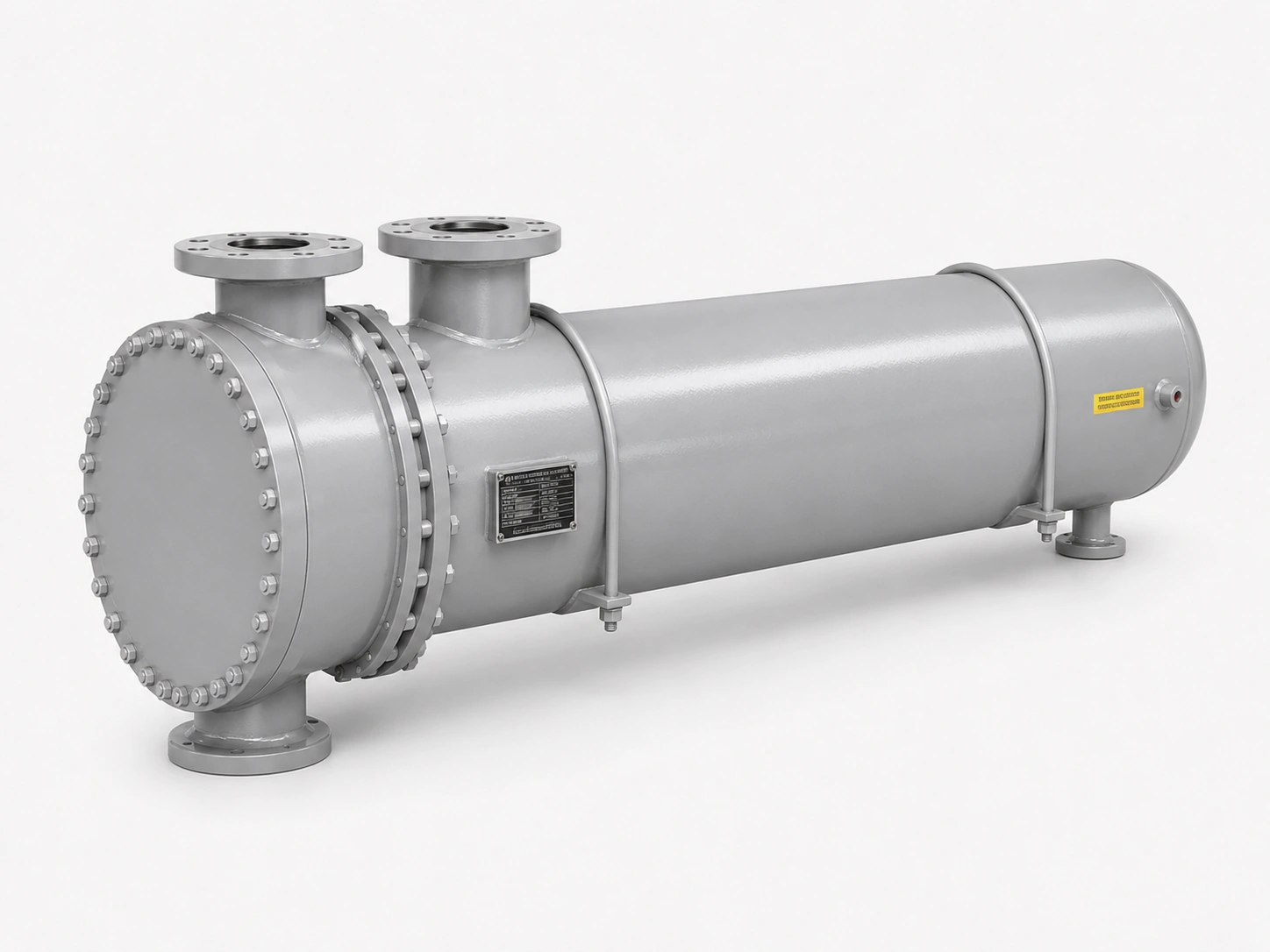
Heavy-Duty Configuration
The tube-side pressure boundary is uprated while the shell stays at standard rating, which is what keeps the construction economical.
Configuration
- Shell rating: 150 PSI
- Tube rating: 400 PSI
- Max temperature: 375°F
- Bundle: Removable U-tube
Features
- High tube-side pressure
- Standard shell rating
- 2, 4 and 6 pass
- Removable bundle
- Catalogued rather than engineered
Typical Duty
- High-rise hydronic risers
- High head pumping circuits
- Deep well systems
- Pressurised process water
- Long distribution runs
| CONSTRUCTION | SHELL RATING | TUBE RATING | BUNDLE |
| Heavy-Duty U-Tube | 150 PSI | 400 PSI | Removable |
Working Out Whether You Need It
Calculate the Pressure at the Exchanger
The number that matters is the pressure at the unit, not at the top of the system. In a tall building that means static head from the highest point down to the plant room, plus pump head, plus any expansion tank pressurisation.
It is common for a riser to be well within a standard rating at the top and comfortably outside it at the bottom, which is exactly where the exchanger usually sits.
Check Temperature Separately
Pressure and temperature limits are set independently. The heavy-duty construction is rated to 375°F, which is higher than the standard WU's 300°F but the same as the SU and DSU.
A duty can be inside the pressure rating and outside the temperature rating, or the reverse. Both need checking against the actual operating envelope rather than the design point alone.
Common FAQs
400 PSI, against the 125 or 150 PSI of the standard ranges. The shell stays at 150 PSI. Both figures need checking against the duty because they are set independently.
Because a shell is a much larger pressure boundary and uprating it costs disproportionately more. Putting the high-pressure fluid in the tubes and leaving the shell standard is what makes the construction economical.
Frequently, on the lower floors. Static head alone can exceed 150 PSI in a tall stack before pump head is added. Calculate the pressure at the exchanger location rather than at the top of the riser.
Catalogued. The HTWU series covers heavy-duty construction across a 4 to 12 inch shell range with standard part numbers, which means normal lead times rather than an engineered build.
Related
SERIES • HIGH PRESSURE
HTWU Series
The catalogued heavy-duty range, 4 to 12 inch shells.
+ Learn More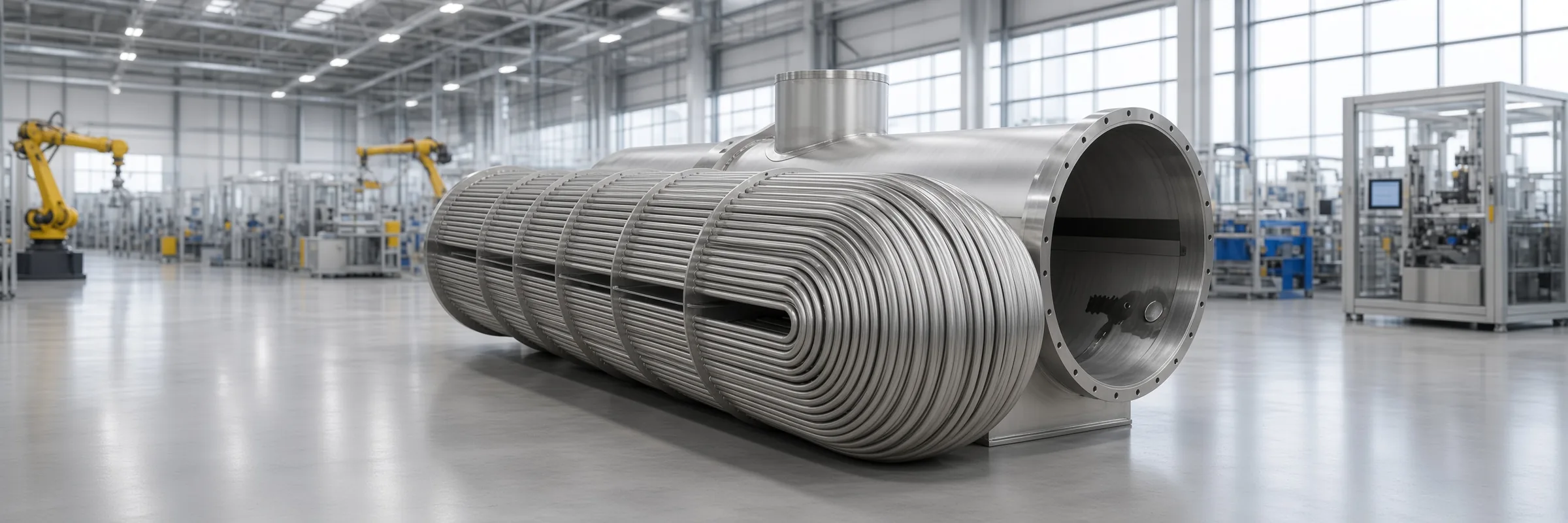
RATINGS • CODE
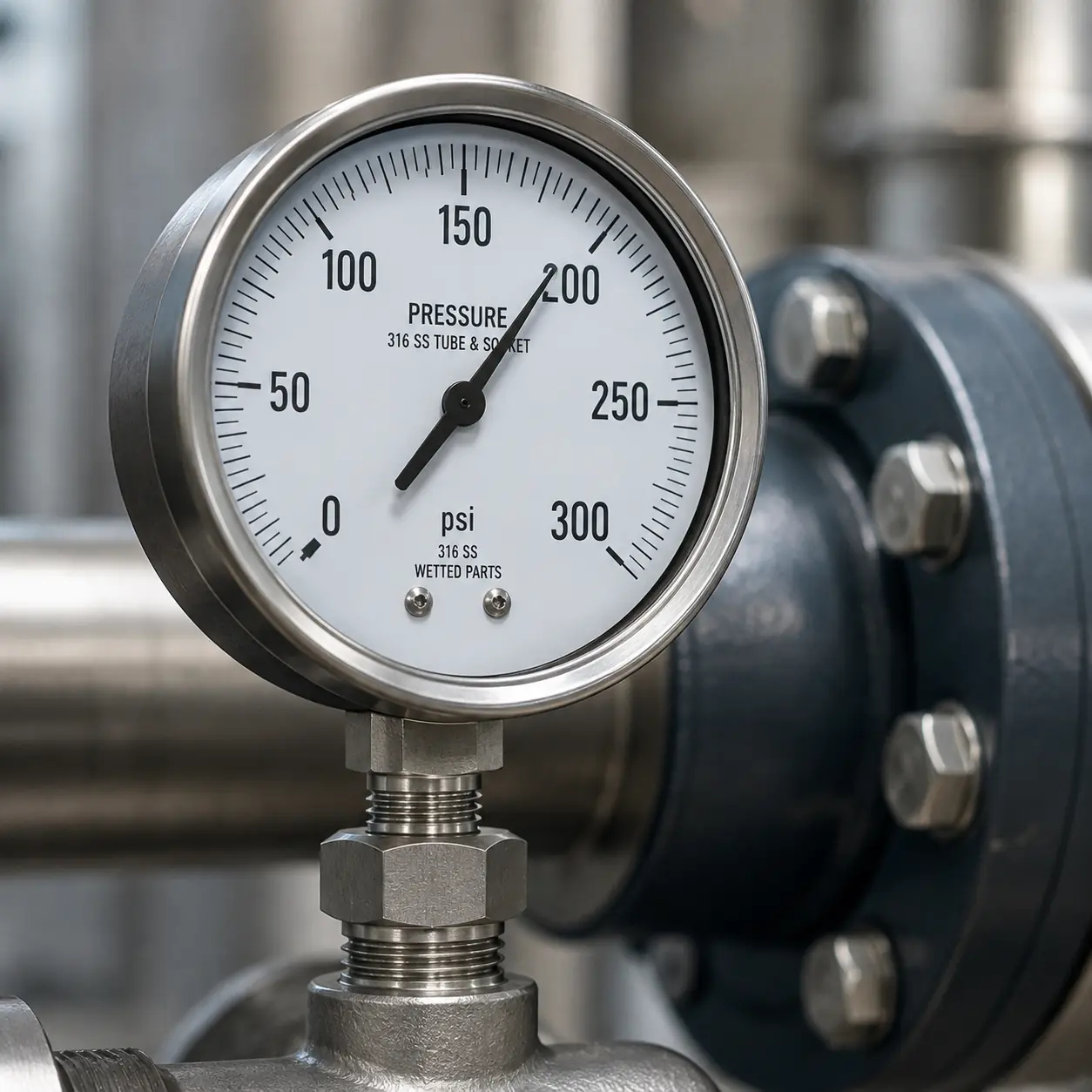
Pressure & Temperature
How the catalogued ratings are set and what they mean.
+ Learn More