
1-805-484-2992
Quotes - Engineering - SalesTWO QUESTIONS DECIDE IT
U-Tube Against
Straight-Tube
Construction
A U-tube bundle has one tubesheet with tubes bent through 180 degrees. A straight tube bundle has a tubesheet at each end. That single difference cascades into everything else about how the exchanger behaves, and two questions settle the choice: which stream fouls, and how large is the temperature difference. Answer both and the construction chooses itself.
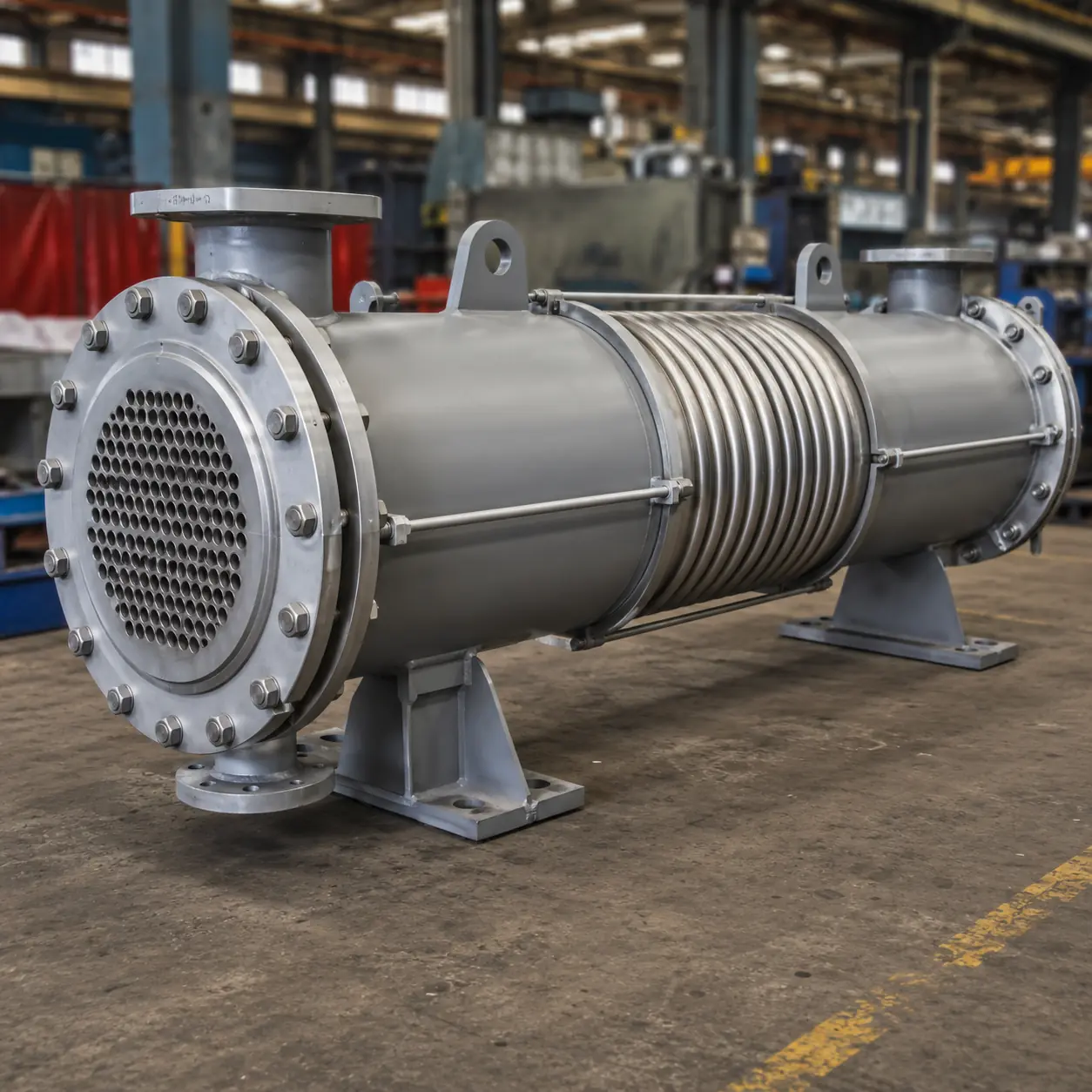
On thermal expansion the U-tube is unambiguous. Each tube is anchored at one end and free at the bend, so it expands independently and no differential load reaches the shell. Straight tubes are constrained at both ends, so a large or cycling temperature difference needs an expansion joint or a different construction altogether.
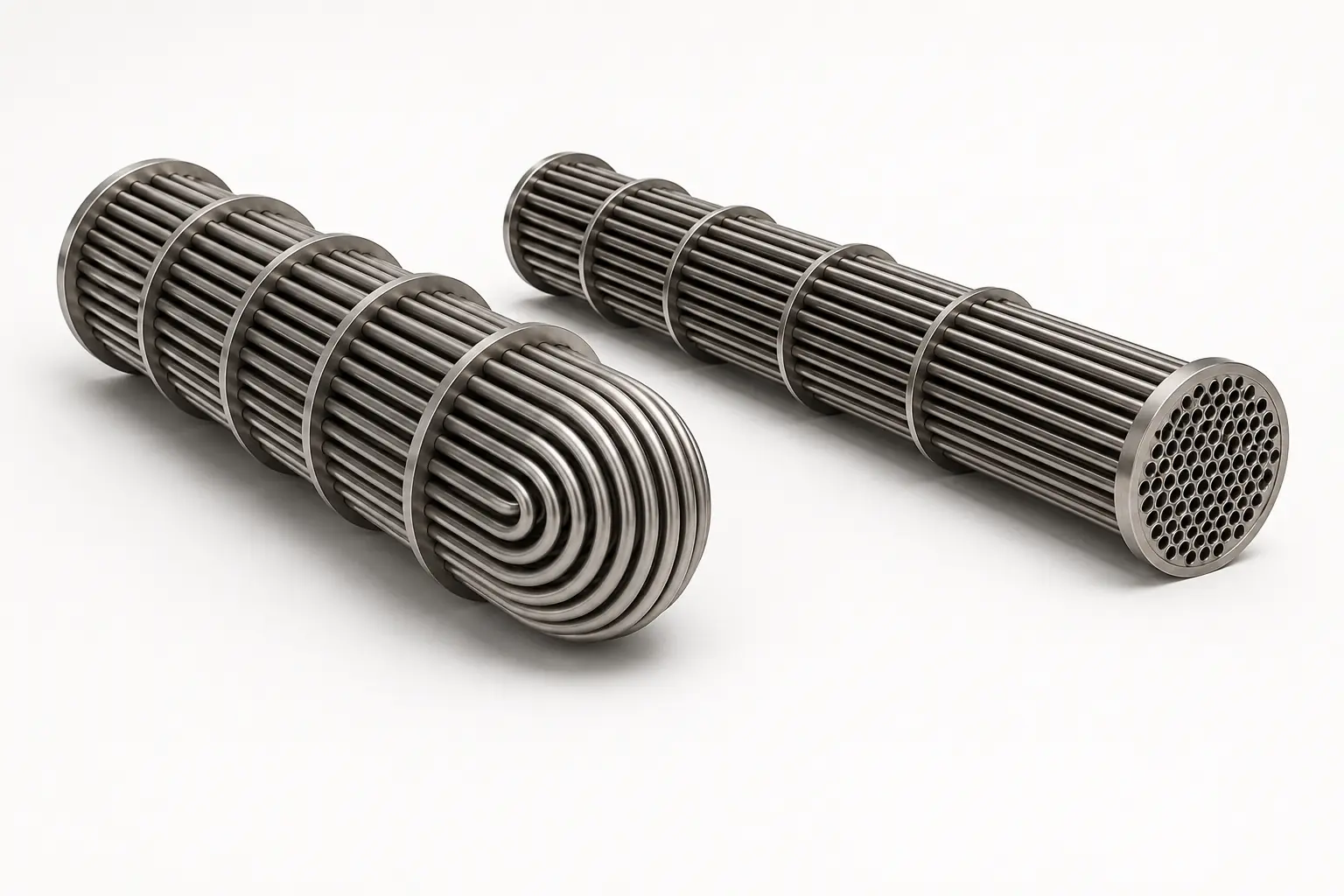
Cleaning access runs the other way. A U-tube bundle withdraws, so the shell side and the outside of every tube are reachable, but nothing rigid passes the bend and tube interiors cannot be rodded. Straight tubes clean end to end but the bundle does not come out, so the shell side is chemical-clean only. Straight tubes can also be pulled and replaced individually, where U-tubes are plugged and every plug removes surface area permanently.
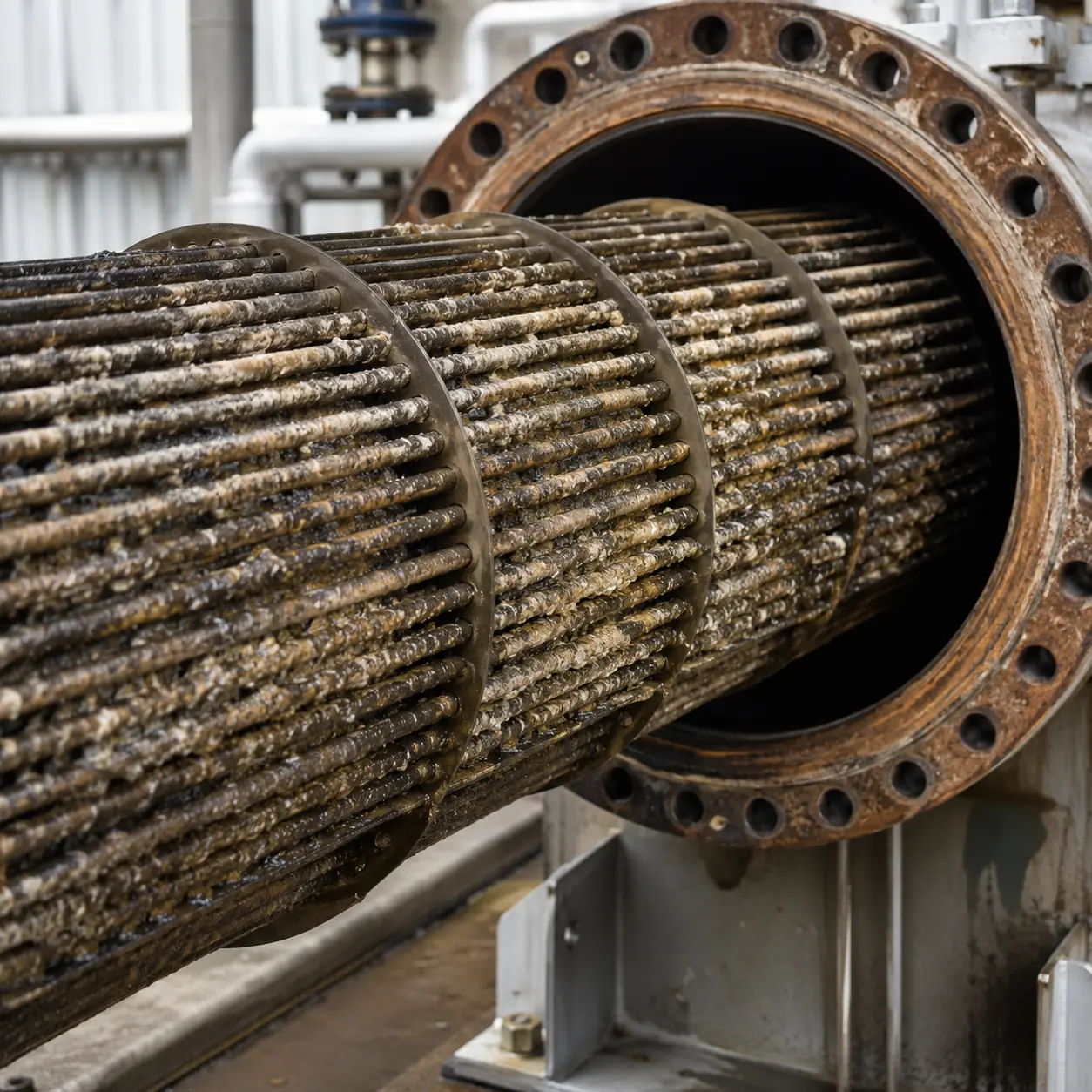
Request a QuoteEstablish which stream fouls and whether it needs mechanical cleaning. If the fouling stream must run through the tubes and be rodded, that is a straight-tube requirement regardless of anything else.
Product Side Fouling
Which Stream Needs the Access
- Fouling Stream Placed for Cleaning Access
- Straight Path Where Rodding Is Required
- Clean Fluid in the Tubes on U-Tube Units
Large Temperature Difference
Expansion and Cycling Duty
- Free Expansion at the Bend End
- Expansion Joint Where Both Ends Are Fixed
- Startup and Cycling Included in the Assessment
Construction Comparison
The same duty can suit either construction. What differs is which side you can clean and how much expansion the arrangement has to absorb.
- One tubesheet on U-tube construction, two on straight tube
- Free expansion at the bend against constrained expansion at both ends
- Shell side mechanically cleanable where the bundle withdraws
- Tube interiors rodded end to end only on straight tube construction
- Even pass counts only on U-tube, odd or even on straight tube
- Individual tube replacement possible only on straight tube construction
Cost Is the Third Question
Fixed tube construction is cheaper to buy. Starting there produces exchangers that are cheap to purchase and expensive to own. Let cleaning and expansion eliminate the unsuitable option, then compare price between whatever survives.
- Identify the fouling stream before anything else
- Establish whether that stream needs mechanical cleaning or chemical only
- Size the temperature difference including startup and upset
- Check whether the duty genuinely requires a single pass
- Estimate the expected tube failure rate over the design life
Common FAQs
Neither. They suit different duties. U-tube handles expansion and gives shell-side access; straight tube gives tube-side rodding and individual tube replacement. The fouling stream and the temperature difference decide.
Because the fluid enters one leg of the U and returns through the other, which is two passes by definition. Catalogued arrangements are 2, 4 and 6 pass.
Chemically yes, mechanically only partly. Nothing rigid passes a 180 degree bend. This is why the clean fluid belongs in the tubes on a U-tube exchanger.
That favours straight tube construction, where tubes are accessible from both ends. On a U-tube bundle the practical repair is plugging, and every plug removes surface area permanently.
Related
CONFIGURATION • BUNDLES
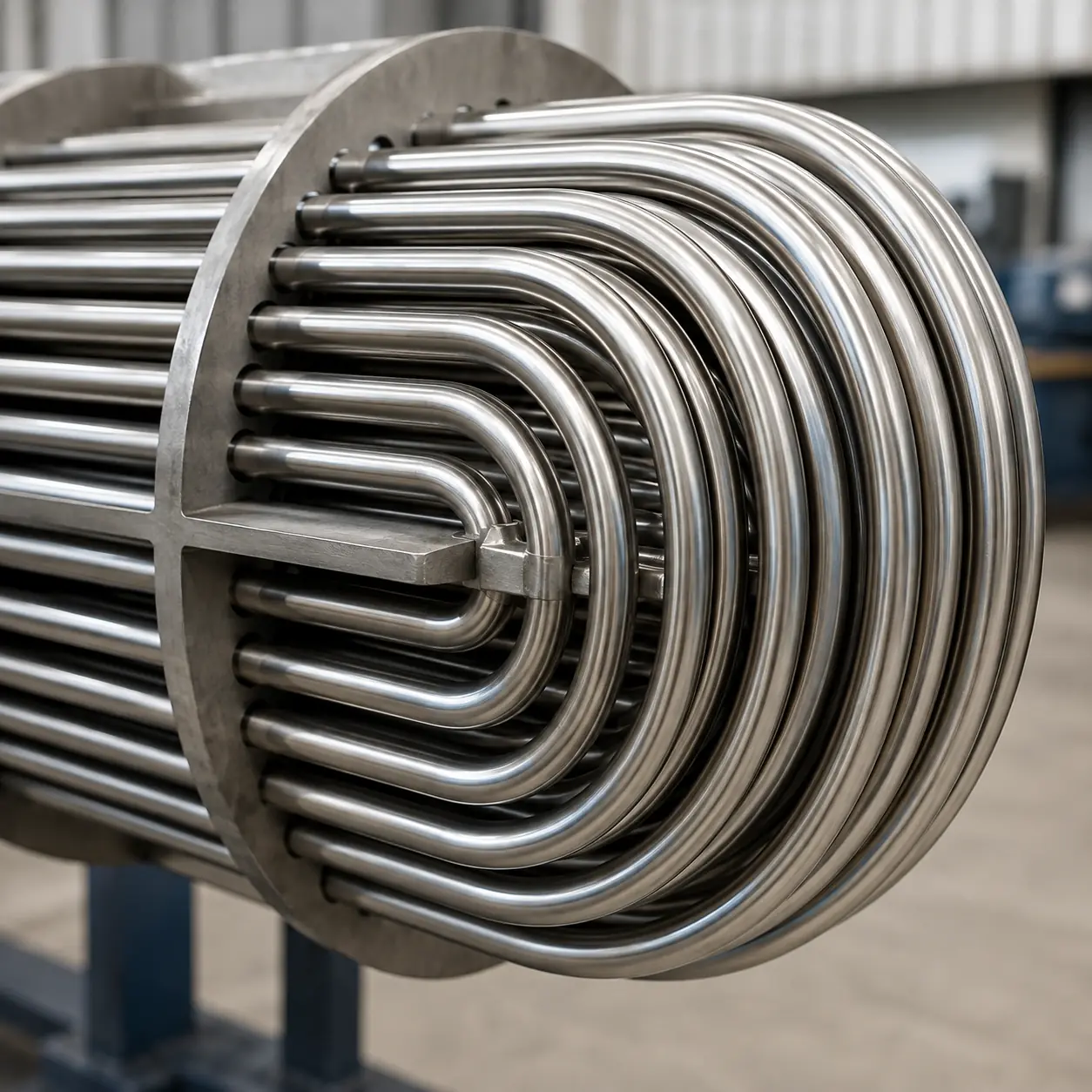
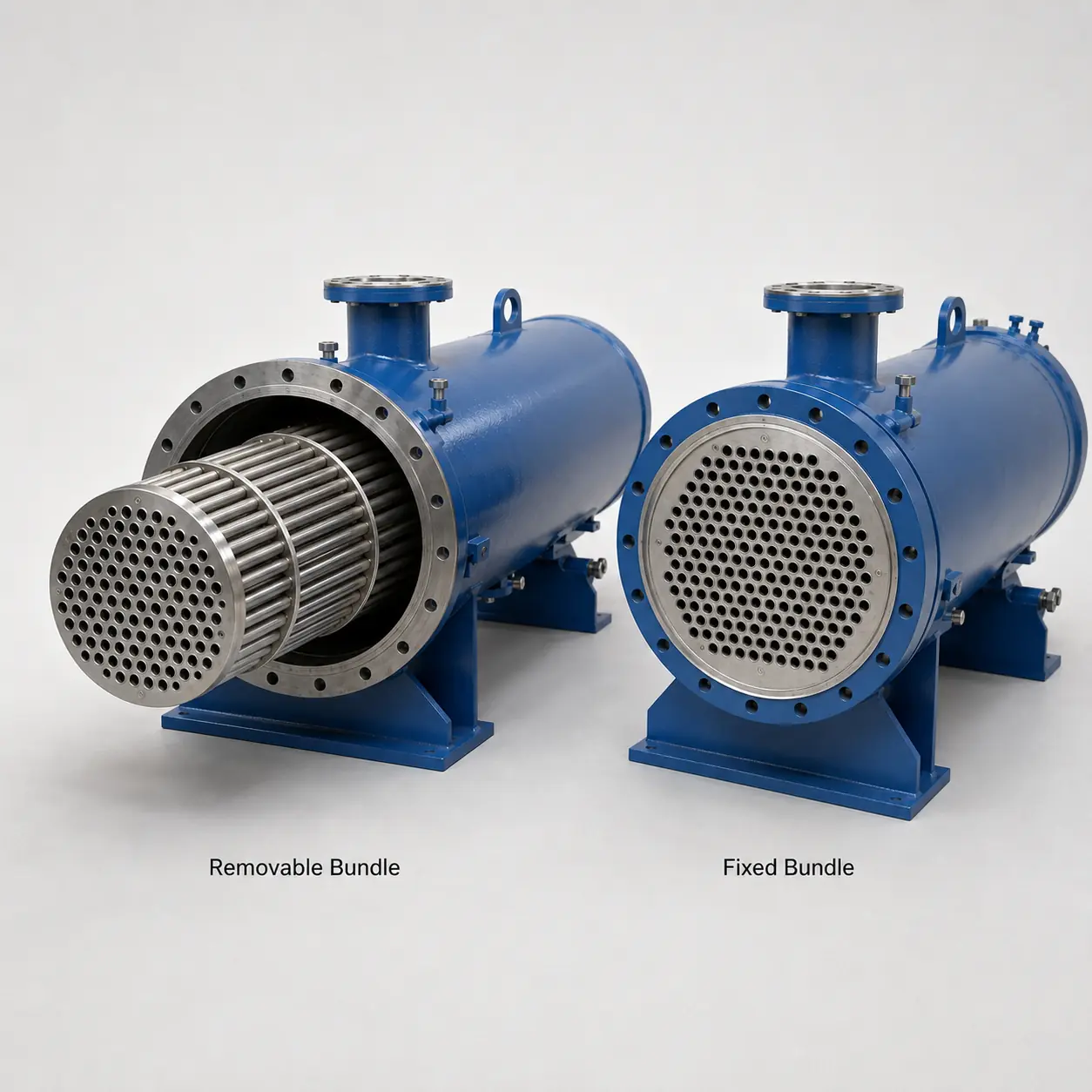
Removable vs Fixed
The maintenance consequence of the same choice.
+ Learn More