1-805-484-2992
Quotes - Engineering - SalesShell and Tube Heat Exchangers for Domestic Hot Water
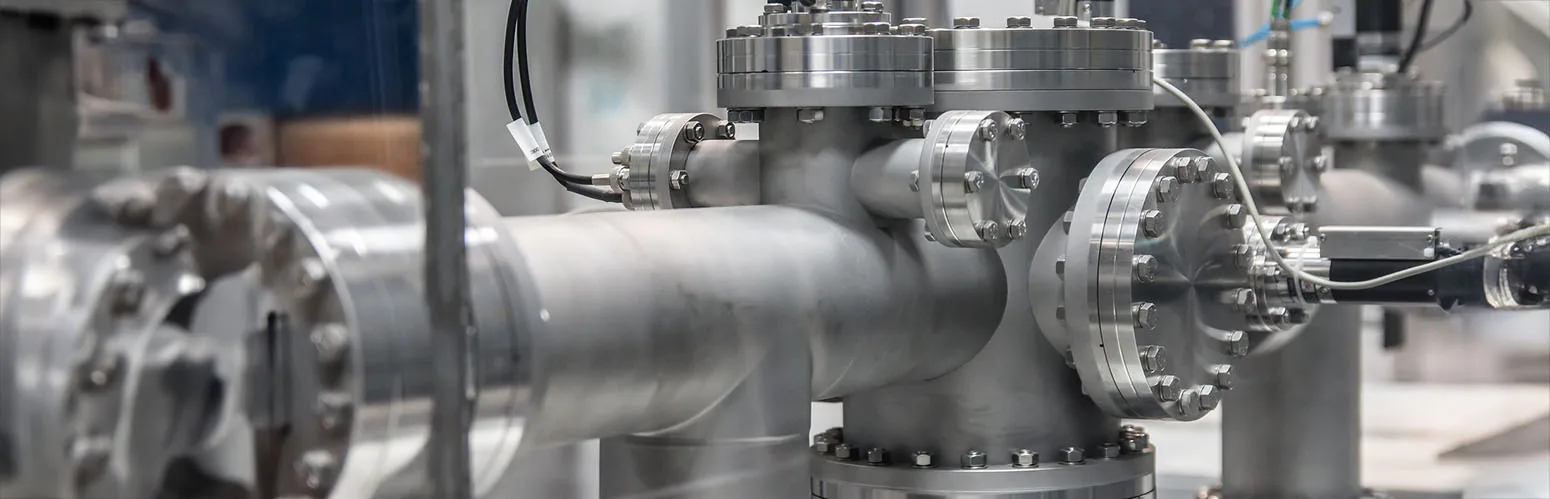
Domestic hot water duty is thermally undemanding and administratively exacting. The load is spiky, the temperatures are modest, and the water being heated is drinking water. That last fact drives the selection: where a boiler, steam or glycol circuit heats potable water, many jurisdictions require double-wall construction, and the DSU, DWU, DTCS and DTCW ranges exist to provide it.
A hotel at seven in the morning, a school at lunchtime, a stadium at half time. Domestic hot water load arrives in short heavy peaks separated by long quiet periods, and the system has to be designed for the peak while behaving sensibly between them. Send the peak flow in GPM and how long it lasts, not an average.
Instantaneous heating sizes the exchanger for the peak flow and eliminates stored volume. Storage sizes the tank for the peak and the heater for recovery between peaks. Instantaneous is compact and demands good control; storage is forgiving and takes floor space. Most commercial buildings end up with some storage because the peaks are too sharp to follow.
A boiler circuit carries treatment chemicals, a glycol loop carries an inhibitor package, and steam carries whatever the boiler feed carries. None of them is potable. Where those meet drinking water across a single tube wall, that wall is the only thing preventing a contamination event, and a great many jurisdictions will not accept a single barrier in that position.
A double-wall tube is two tubes drawn together with a vented path between them leading to the tube end. A leak through either wall discharges outside the unit where it can be seen, rather than crossing between streams. It does not make failure less likely; it turns a silent failure into a visible one. Decide on consequence rather than probability.
Three numbers size a tank heater: tank volume, the temperature rise required, and the time available to achieve it. Standing heat loss is negligible by comparison, and sizing against it produces a heater that holds temperature perfectly and cannot recover the tank after a draw. Clearance outside the nozzle to withdraw the bundle is frequently the binding constraint.
A recirculation loop keeps hot water at the tap, and it adds a continuous small load the heater sees even overnight. That widens the turndown ratio a single control valve has to cover, and a valve sized only for the morning peak will hunt at the recirculation load. Legionella control requirements set the loop temperature and the acceptable drop around the circuit.
Hard water scales preferentially on the hottest surface, which is the tube wall rather than the bulk water. Using steam at high pressure produces a wall temperature far above the outlet target and accelerates scaling considerably. Lowering the medium temperature and adding surface reduces the scaling rate more effectively than any amount of treatment on the same system.
The peak draw and its duration, whether there is storage and how much, the heating medium and its temperature, and the local double-wall requirement. Those four settle most selections. Where the requirement is unclear, confirm with the authority having jurisdiction before ordering, because the single-wall and double-wall ranges are not interchangeable. Call and talk it through with an engineer: 1-805-484-2992
Heating drinking water with a non-potable medium raises a question no thermal calculation answers: what happens if the barrier fails. That question, more than the duty, shapes the equipment.

Domestic Hot Water Systems

Domestic Hot Water Applications
Domestic hot water covers potable heating, double-wall protection, storage tank heating and recirculation loops. The thermal duty is modest; the code requirements and the demand profile are what make the selection.
Storage and Recovery Are One Decision
A larger tank with a smaller heater and a smaller tank with a faster heater can serve the same building. Which is better depends on the floor space available, the medium available and how sharp the draw profile is. Where the peak is very short and very heavy, storage does most of the work; where demand is more sustained, recovery rate matters more and the heater gets larger.
Double-Wall Is a Consequence Decision
Tube failures are uncommon. The question is what happens if one occurs and nobody notices for a week. Where the answer involves drinking water in an occupied building, the arithmetic favours double-wall construction regardless of how reliable a single tube is.
It costs surface area and therefore money, because the interface between the two tube walls is a real thermal resistance.
Scaling Follows Surface Temperature
Hard water scales preferentially on the hottest surface, which is the tube wall. Using steam at high pressure produces a wall temperature far above the water target and accelerates scaling considerably.
Lowering the medium temperature and adding surface reduces the scaling rate more effectively than any amount of water treatment on the same system.
Common Applications

APPLICATION • POTABLE
Potable Water Heating
The construction requirement on the domestic side.
+ Learn More
APPLICATION • STORAGE
Storage Tank Heating
Storage absorbs the peak so the heater handles recovery.
+ Learn More