
1-805-484-2992
Quotes - Engineering - Sales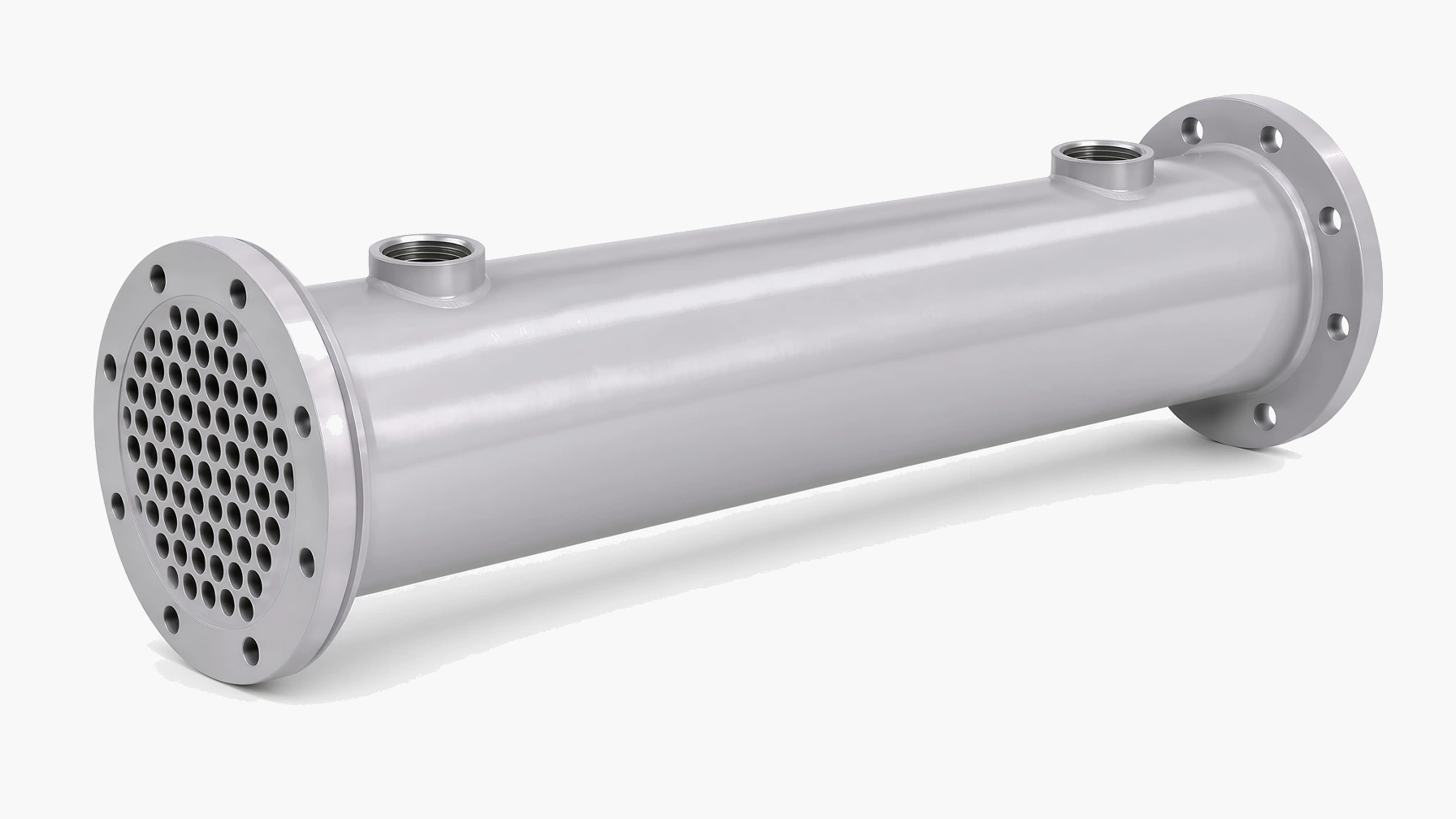
ACA Series
| PRODUCT | TYPE | STYLE | RATING |
|---|---|---|---|
| Heat Exchanger | Shell & Tube | Aftercooler | 300°F |
Specifications
Configuration & Size
Shell Diameter:
3" to 10"
Shell Length:
48" to 108"
Tubes:
Copper
Passes:
Single Pass
Brand:
Bell & Gossett
Materials
- Bonnets: Cast Iron
- Shell: Steel
- Tubes: Copper
- Tubesheet: Steel
ACA Series Compressed Air Aftercoolers
Getting the Moisture Out Before the Dryer Sees It
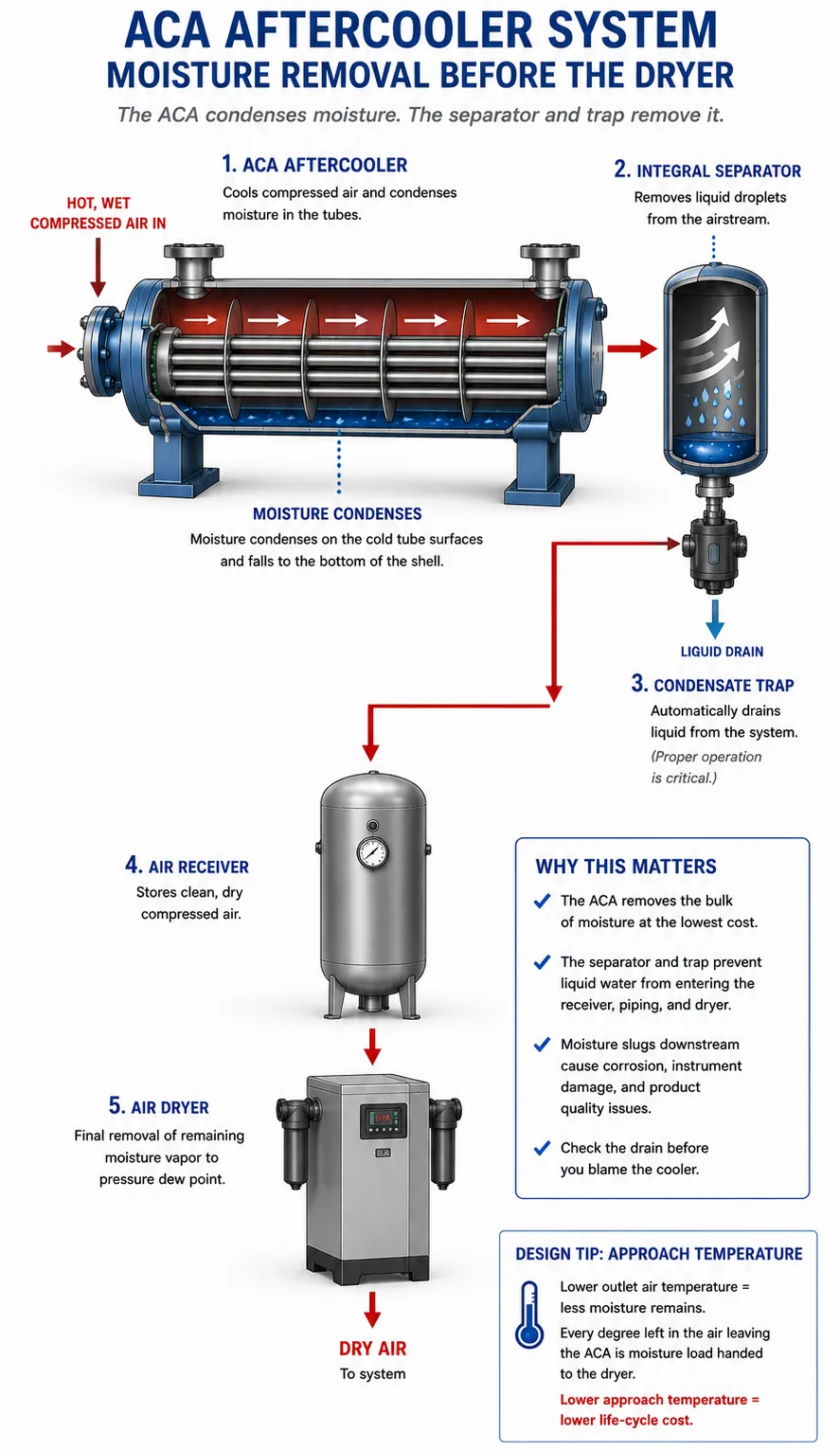
Compression heats air and concentrates the moisture in it. An aftercooler drops the temperature so that moisture condenses out where it can be separated and drained, rather than travelling downstream into the dryer, the receiver, the distribution piping and eventually the tools.
Approach temperature decides how much water you remove. The colder the air leaves the aftercooler, the more moisture drops out. Every degree of approach the exchanger consumes is moisture the dryer has to handle instead, and dryer capacity is considerably more expensive than aftercooler surface.
A separator is part of the system. The aftercooler condenses the moisture; something downstream has to collect and drain it. An aftercooler without an effective separator and trap simply moves liquid water into the distribution system in slugs, which is worse than not cooling at all.
Single pass on the air side. Compressed air has pressure drop that was paid for at the compressor, and every psi lost across the aftercooler is energy wasted for the life of the installation. The single-pass arrangement in the ACA range keeps that loss to a minimum.
Cooling water quality matters more than people expect. Aftercoolers frequently run on whatever water is available, and the tube side fouls accordingly. A removable-bundle arrangement and access for cleaning are worth having on a unit that will see untreated water.
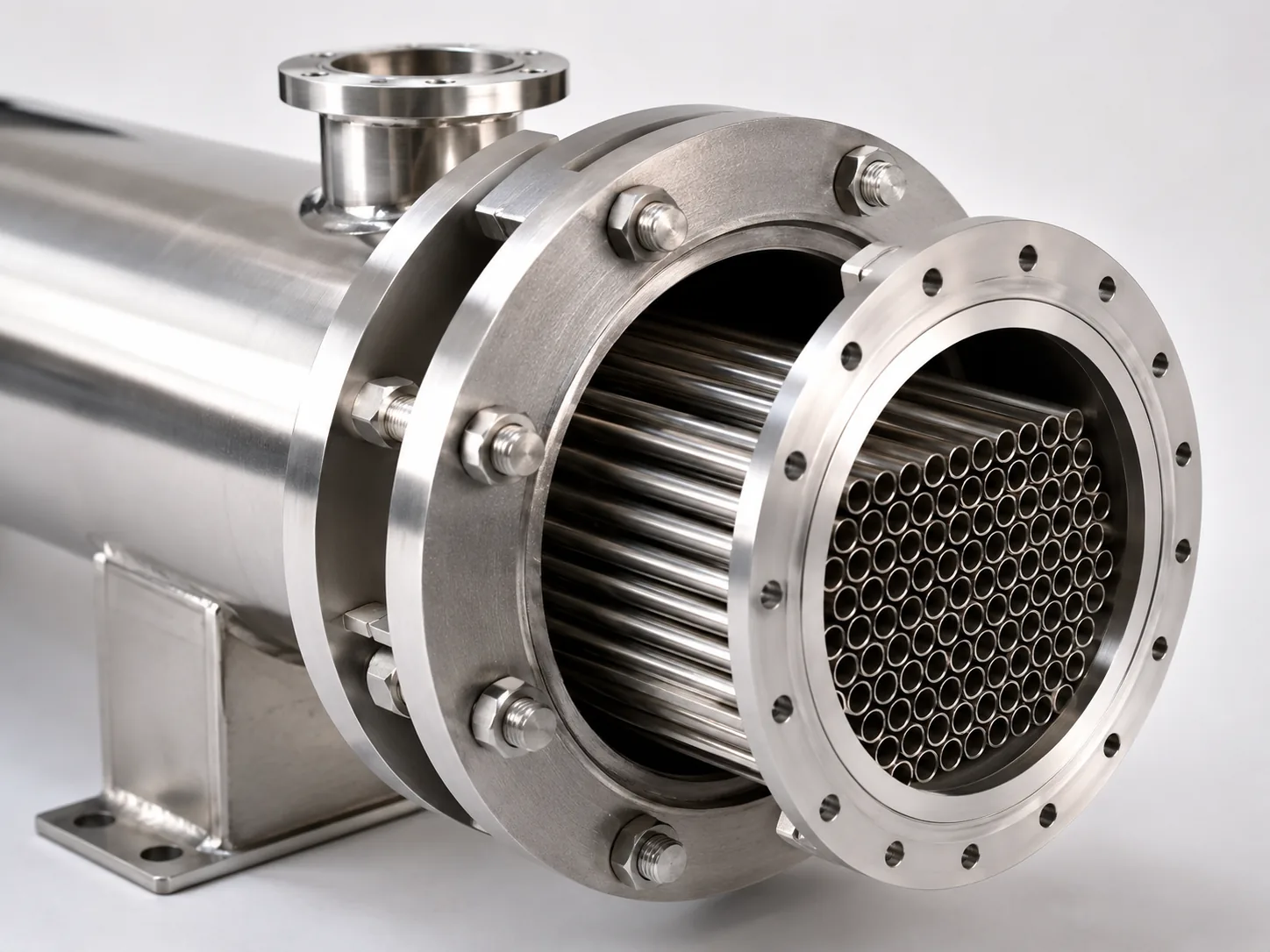
Single-pass air flow to keep pressure drop down, in shell diameters from 3 to 10 inches.
Request a QuoteACA Series Applications


The Separator Is Part of the Aftercooler
An ACA condenses moisture out of compressed air by design. It does not remove it. Something downstream has to collect that liquid and drain it away, and where the separator is missing, undersized, or fitted with a trap that has quietly failed, the aftercooler delivers water into the distribution system in slugs. Slugs of liquid water do considerably more damage to tools and instruments than warm saturated air would have.
This is worth stating plainly because it is the most common fault on compressed air installations, and the exchanger almost always gets blamed for it. If there is water downstream of an aftercooler, check the drain before questioning the cooler.
The other number worth buying is approach temperature. Every degree left in the air leaving the ACA is moisture load handed to the dryer instead, and dryer capacity costs far more per unit of moisture removed than aftercooler surface does. Where there is scope to size the air side a little generously, the payback continues for as long as the compressor runs. Call and talk it through with an engineer: 1-805-484-2992