1-805-484-2992
Quotes - Engineering - SalesCOPPER AS STANDARD
Tube Materials
and the Tube-Side
Fluid
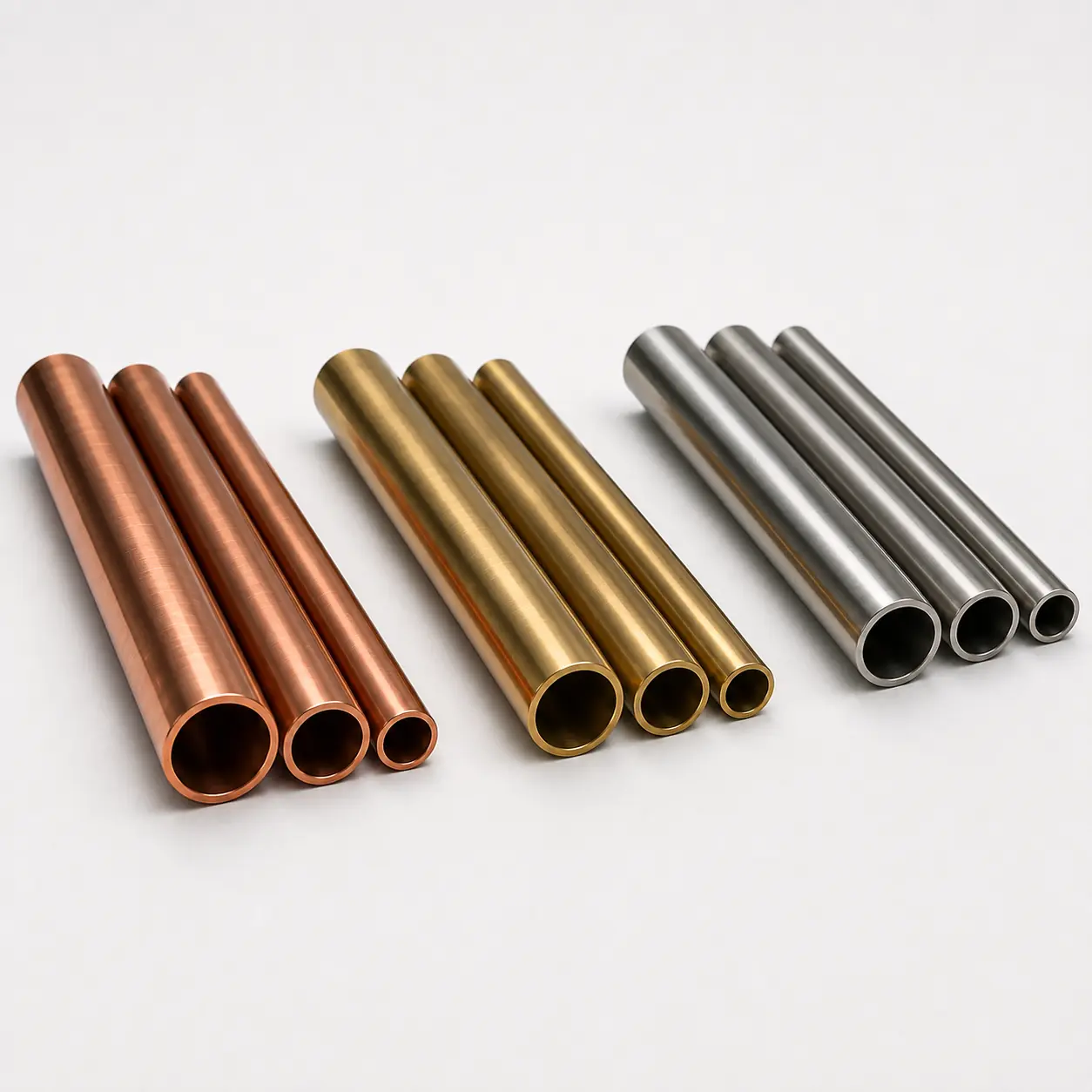
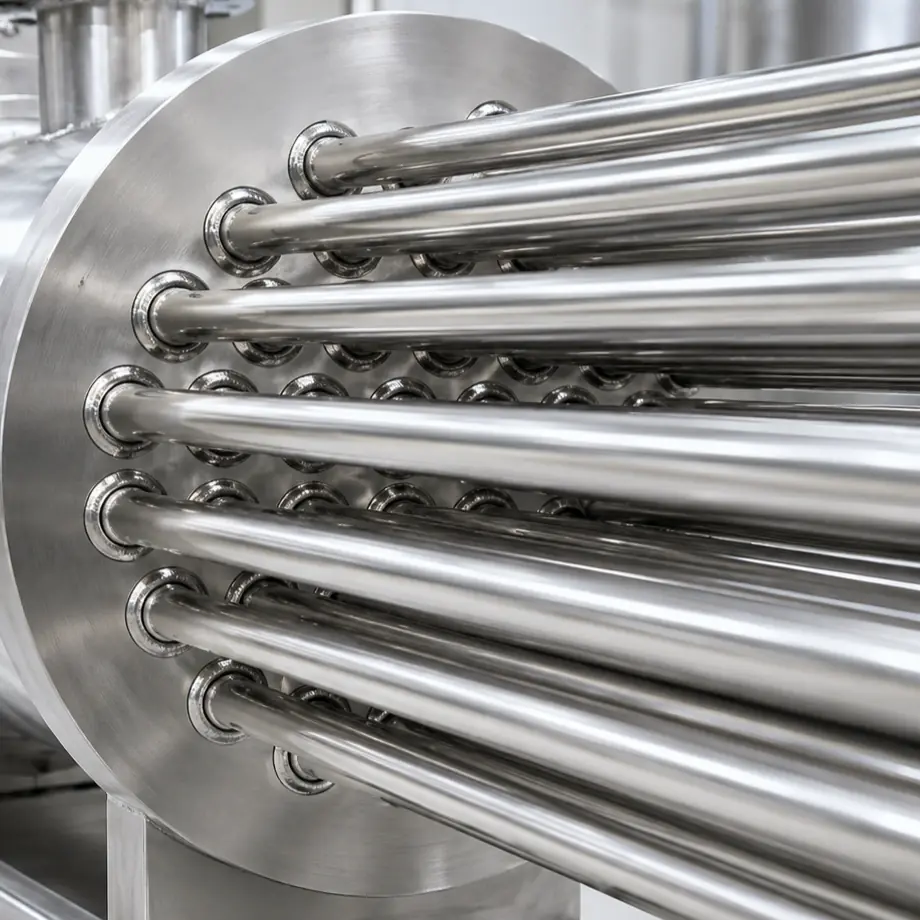
Tubes carry the heat and they are the only component in contact with both fluids. Across the catalogued range the standard tube material is copper, typically in three-quarter inch outside diameter. Copper is the default for good reasons: excellent thermal conductivity, decades of established service in water and steam, readily formed into the U-bend the ranges are built around, and economical against every alternative.
Steel appears on the gas cooler range, where copper or steel can be specified and steel is generally the answer at the upper end of a 1000°F rating. Steel also resists some gas chemistries that attack copper, at the cost of lower conductivity and therefore more surface for the same duty. The double-wall ranges use two copper tubes drawn together with a vented path between them.
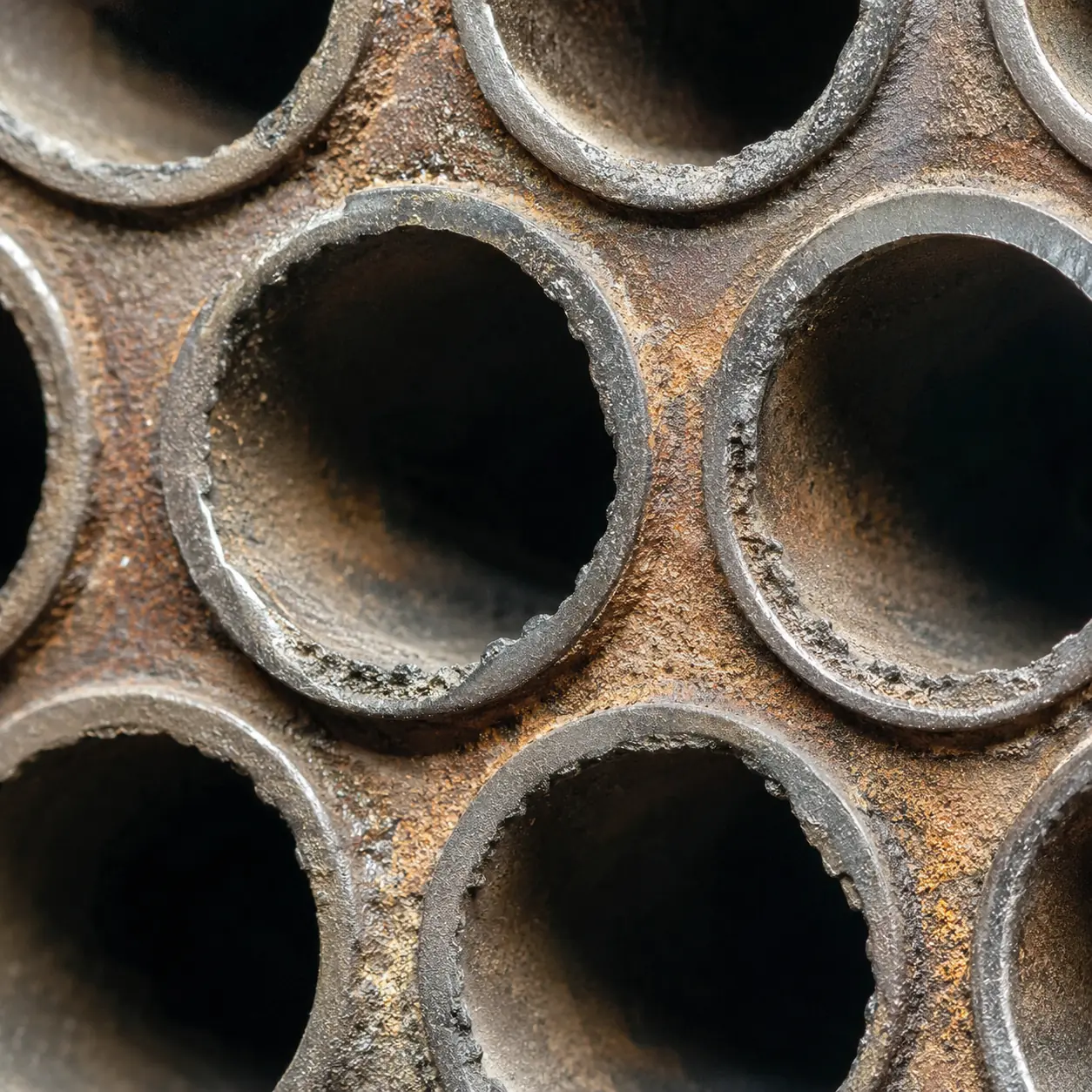
Copper has a practical erosion velocity limit, and exceeding it thins the tube wall at the inlet where turbulence is highest. Because pass count is how velocity is set, the arrangement and the tube material are related decisions rather than independent ones. A bundle showing inlet-end erosion is running too fast rather than simply wearing out, and an identical replacement will produce the same result in the same time.
Request a QuoteA bundle that failed by corrosion rather than by mechanical damage is telling you the material was marginal for the service. Replacing like for like repeats the experiment with a known outcome.
High Purity Tubes
Where Copper Is Not the Answer
- Stainless Tubes for Aggressive Purified Water
- Electropolished Product Contact Surfaces
- Crevice-Free Tube to Tubesheet Joints
Viscous and Particulate
Where Tube Geometry Changes
- Velocity Set Below the Erosion Limit
- Larger Bore Where Solids Are Carried
- Straight-Through Path for Cleaning
Material by Range
The part number establishes tube material and diameter for a given unit, and both matter when a replacement bundle is specified years after the original order.
- Copper tubes across almost the whole catalogued range
- Three-quarter inch outside diameter as the typical size
- Copper or steel available on the gas cooler range
- Double-wall copper with a vented gap on the potable ranges
- Steel preferred at the upper end of high gas temperature duty
- Tube material recorded in the catalogue part number
Replacement Is the Moment to Reconsider
Because shell and nozzle geometry stay the same, a material change on a replacement bundle costs only the material difference. It is the cheapest opportunity you will get to correct an original selection that has not worn well.
- Establish whether the bundle failed by corrosion or by mechanical damage
- Check tube-side water chemistry against copper's tolerance
- Look for inlet-end thinning as evidence of excessive velocity
- Consider a pass arrangement that lowers velocity rather than a like-for-like bundle
- Confirm whether double-wall construction is now required
Common FAQs
Copper across almost the whole catalogued range, typically 3/4 inch outside diameter. The GC gas cooler offers copper or steel, and the double-wall ranges use double-wall copper.
On the GC gas cooler, particularly at the upper end of its 1000°F rating, and where the gas chemistry attacks copper. Steel tolerates higher temperature at the cost of lower conductivity.
Two tubes drawn together so their walls touch for heat transfer, with a vented path between them leading to the tube end. A leak through either wall discharges outside the unit rather than crossing between fluids.
Almost certainly erosion from excessive velocity, which concentrates where turbulence is highest. The remedy is a pass arrangement that lowers velocity, not simply another identical bundle.
Related