
1-805-484-2992
Quotes - Engineering - Sales
DTCW Series
| PRODUCT | TYPE | STYLE | RATING |
|---|---|---|---|
| Heat Exchanger | Tank Heater | Tank Heater / Double Wall Water | 150 PSI / 375°F |
Specifications
Configuration & Size
Shell Diameter:
4" to 14"
Shell Length:
12" to 120"
Tubes:
Copper (Double Wall)
Passes:
2 Pass
Brand:
Bell & Gossett
Materials
- Bonnets: Cast Iron
- Shell: Steel
- Tubes: Copper, Double Wall
- Tubesheet: Application specific
DTCW Series Double-Wall Water Tank Heaters
Double-Wall Protection Inside a Potable Storage Tank
A tank heater sits inside the tank, which means a tube failure discharges the heating medium directly into stored contents. Where those contents are potable water, that is exactly the event a code requirement is written to prevent.
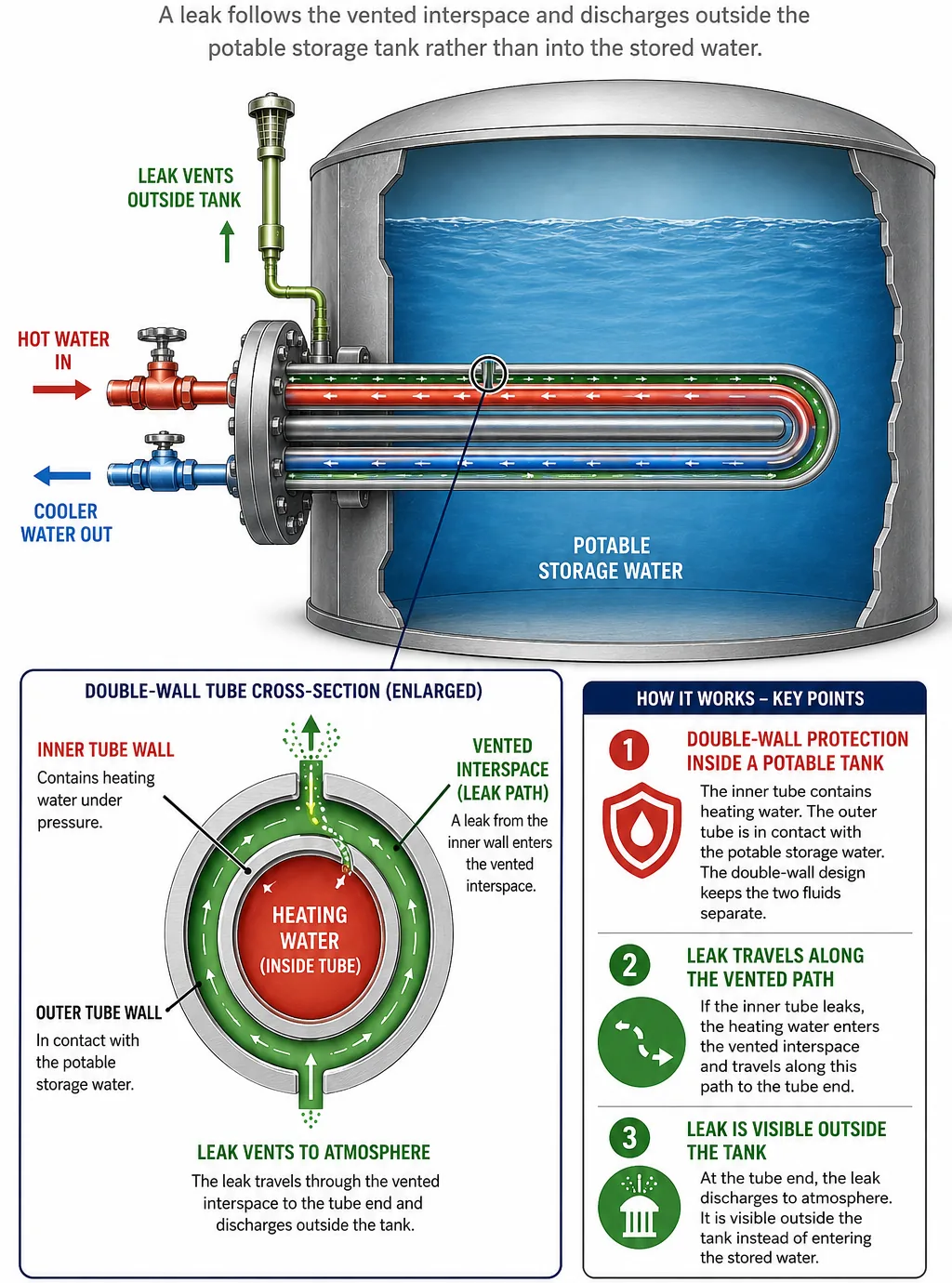
Double-wall tubes put a vented path in that route. Two tube walls carry the heat in intimate contact, and any leak through either travels along the vented space to the tube end where it discharges outside the tank rather than into it.
The application is almost always domestic hot water storage. A boiler loop heating a potable storage tank is one of the most common commercial building arrangements there is, and it is precisely the case where a single tube wall between treated and potable water is not acceptable.
Sizing allows for the extra resistance. The double-wall interface is a genuine thermal barrier, so a DTCW needs more surface than a TCW for the same recovery rate. Combined with the low natural-convection coefficient on the tank side, that makes these units long for their duty.
Confirm the local requirement. Double-wall requirements vary by jurisdiction and by the authority having jurisdiction. It is a short conversation before the order and an expensive one at inspection.
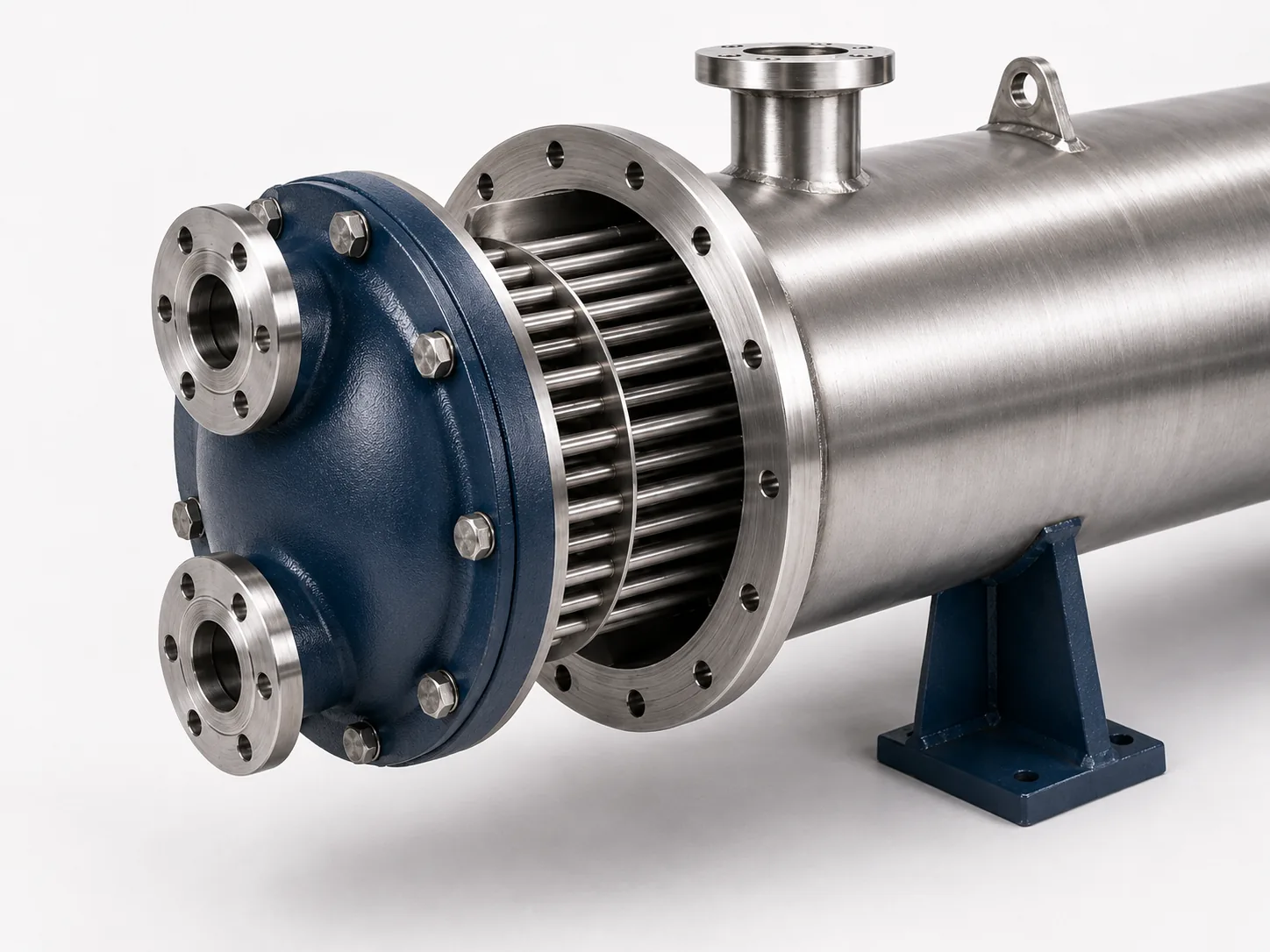
Double-wall tank bundles for potable storage, where a leak vents outside the tank rather than into it.
Request a QuoteDTCW Series Applications




A Leak Inside a Tank Has Nowhere Good to Go
This is the argument for double-wall construction in its starkest form. A tank heater sits inside the vessel, so a tube failure discharges the heating medium directly into whatever the tank is storing. There is no interspace, no drain and no external symptom. Where the tank holds potable water and the heating medium is treated boiler water, that is precisely the event a code requirement exists to prevent.
The DTCW puts a vented path into that route. Two tube walls in intimate contact carry the heat, and any leak through either one travels along the space between them to the tube end and discharges outside the tank, where it can be seen. The failure becomes something noticed on a walk-round instead of something discovered by a water quality test.
It costs surface, as double-wall construction always does, and it compounds with the low natural-convection coefficient on the tank side. These bundles are long for their output for both reasons at once. Confirm what your jurisdiction requires before ordering, because the single-wall and double-wall ranges are not interchangeable. Call and talk it through with an engineer: 1-805-484-2992