
1-805-484-2992
Quotes - Engineering - Sales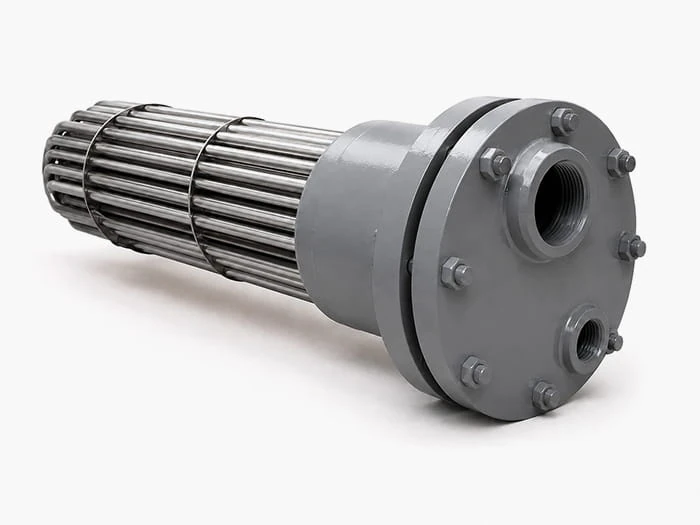
DTCS Series
| PRODUCT | TYPE | STYLE | RATING |
|---|---|---|---|
| Heat Exchanger | Tank Heater | Tank Heater / Double Wall Steam | 150 PSI / 375°F |
Specifications
Configuration & Size
Shell Diameter:
4" to 14"
Shell Length:
12" to 120"
Tubes:
Copper (Double Wall)
Passes:
2 Pass
Brand:
Bell & Gossett
Materials
- Bonnets: Cast Iron
- Shell: Steel
- Tubes: Copper, Double Wall
- Tubesheet: Application specific
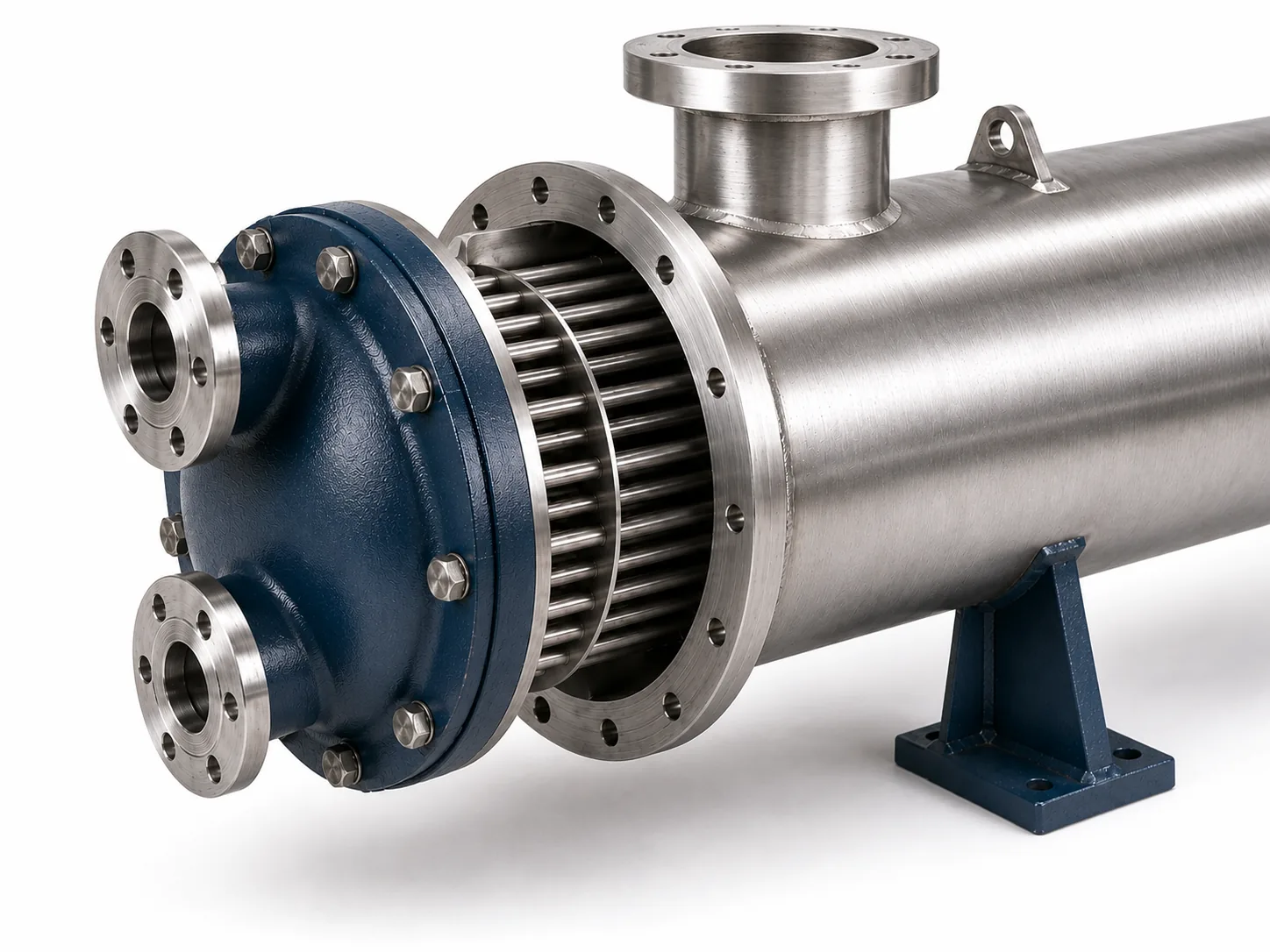
DTCS Series Double-Wall Steam Tank Heaters
Steam Recovery Rate With a Second Barrier
The DTCS combines two things that would otherwise pull against each other: the recovery rate of a steam-heated bundle and the containment of double-wall construction. It exists because potable storage tanks frequently need both.
Steam gives the recovery rate. Condensing steam delivers latent heat at a rate no practical hot water supply matches, which is what brings a large storage tank back to temperature quickly after a heavy draw.
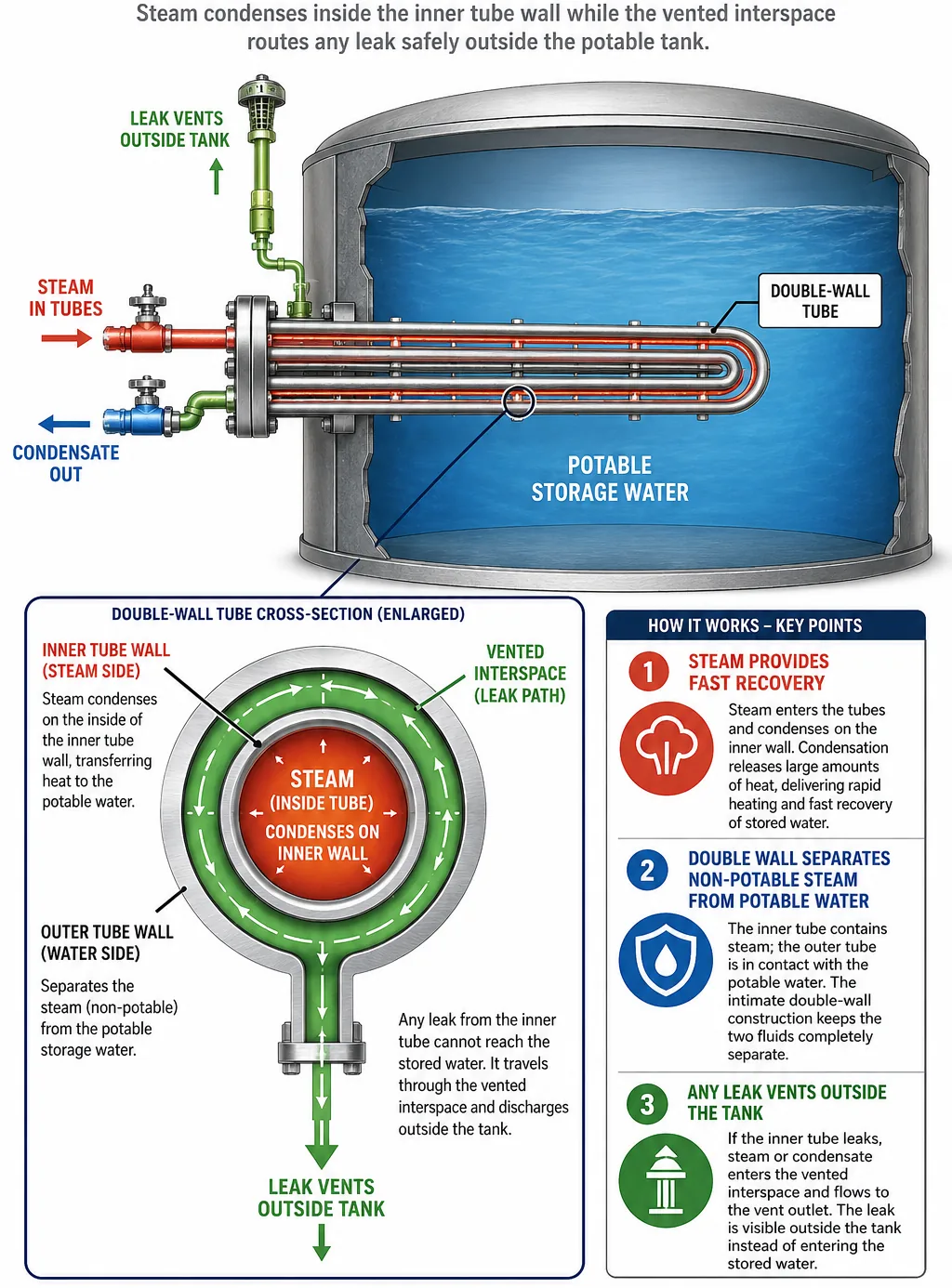
The double wall gives the separation. Boiler steam carries treatment chemicals and is not potable. Inside a potable storage tank, a single tube wall between the two is exactly what double-wall requirements exist to prevent, and the vented path between the walls routes any leak outside the tank.
Surface temperature deserves attention. Steam produces a high tube surface temperature, and in a potable tank that promotes scaling on hard water. Lower steam pressure reduces the surface temperature and slows scaling, generally more effectively than adding surface does.
Condensate drainage remains critical. A flooded bundle loses surface progressively and the symptom presents as a tank that will not recover. Check the trap and drainage before assuming the bundle has failed.
DTCS Series Applications



Recovery Rate and Containment at the Same Time
These two requirements normally pull against each other. Steam gives the fastest recovery available, because condensing latent heat delivers energy at a rate no practical hot water supply matches. Double-wall construction gives containment, because a vented interspace routes any leak outside the tank instead of into the stored contents. The DTCS exists because potable storage frequently needs both at once.
Boiler steam is not potable; it carries whatever the boiler feed treatment carries. Inside a potable storage tank, separated from drinking water by a single tube wall, it is exactly the arrangement that double-wall requirements are written to prevent. The vented path is what makes the combination acceptable rather than merely fast.
Two things still need designing rather than assuming. Condensate has to drain, because a flooded bundle loses surface progressively and presents as a tank that will not recover. And steam produces a high tube surface temperature, which accelerates scaling on hard water, so lower steam pressure with more surface usually serves better than a higher pressure and a descaling schedule. Call and talk it through with an engineer: 1-805-484-2992