1-805-484-2992
Quotes - Engineering - SalesSanitary Shell and Tube Heat Exchangers for Food and Beverage
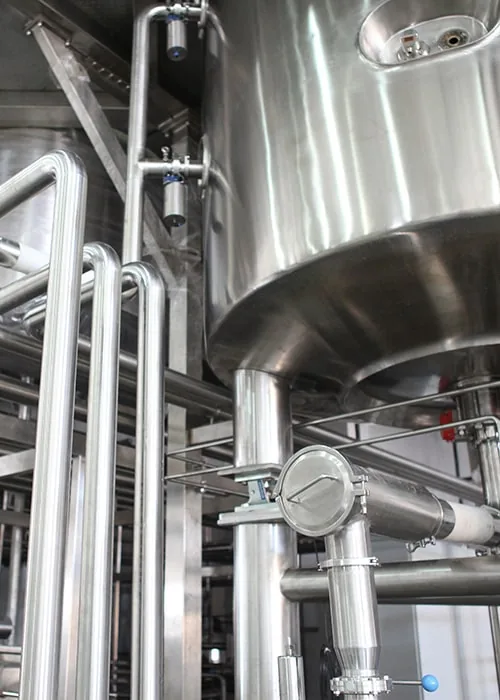
Food plants use shell and tube exchangers on utility duty far more than on direct product contact: CIP solution heating, process water, brewery liquor and general plant heating. What differs from ordinary industrial work is the cleaning regime and the consequence of a cross-leak. Both push toward double-wall construction on anything touching potable or product water, and toward equipment that can be opened and inspected.
Direct product contact is usually sanitary plate or tubular equipment. The shell and tube ranges serve the duties that support it. That distinction matters when specifying: a CIP heater does not need 3-A construction, it needs to survive the chemistry and be cleanable itself.
A CIP circuit heats caustic, acid, sanitizer and rinse water and holds them at setpoint while solution recirculates through the equipment being cleaned. The heater sits in that circuit and sees every chemical the plant uses, hot, over and over again. It is sized on ramp rate rather than hold duty, because the cost is changeover time.
A surprising number of material problems in food plants trace to the cleaning cycle rather than the process. Caustic at temperature is straightforward in 316 and acid cycles are manageable. What catches austenitic stainless is chlorinated sanitizer, because chlorides at temperature attack it. Send the complete cleaning sequence, not just the product conditions.
Process water goes into product, washes equipment, makes up solutions and rinses lines. Heating it is a continuous duty following the production schedule, and the water quality requirement follows whatever it eventually contacts. Where the water will touch product, a steam or boiler circuit heating it across a single tube wall is exactly the cross-contamination case double-wall construction prevents.
Dairy processing is characterised by frequent, thorough and aggressive cleaning. The CIP system runs constantly and its heater is one of the harder-worked exchangers in the plant. Dairy quality systems frequently apply the same expectations to utility equipment touching water that goes into product as they do to process equipment.
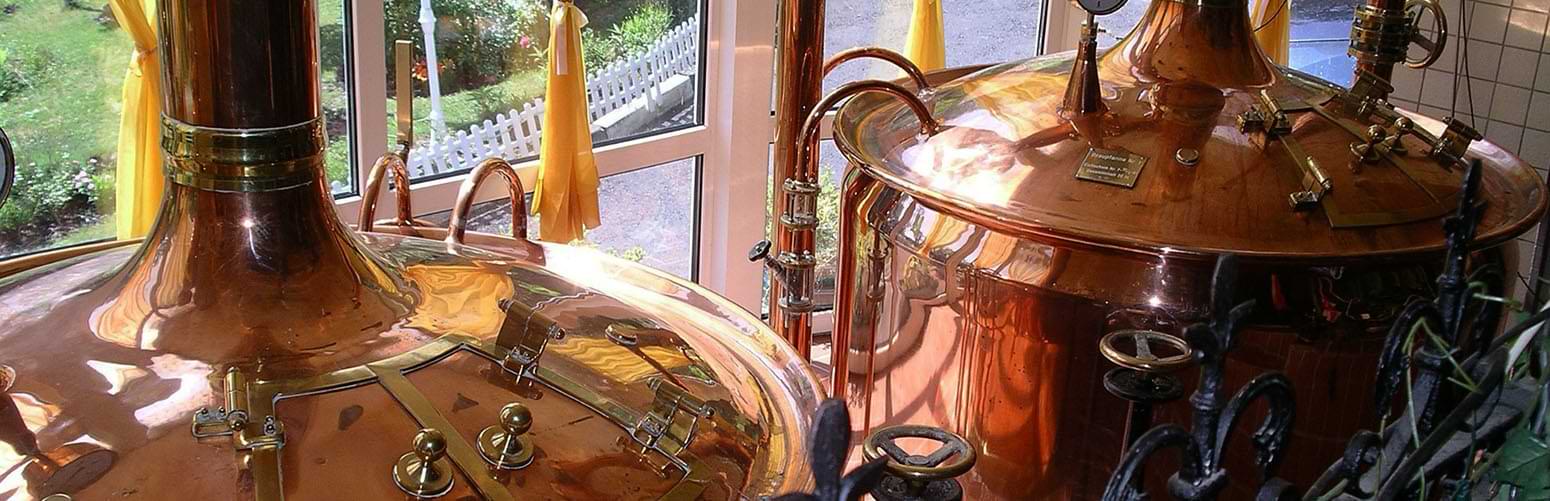
A brewery's utility heat goes into hot liquor for mashing and sparging, and into cleaning between brews. Both are batch duties with sharp demand peaks and quiet periods, and both cycle the heater from no load to full load several times a day. A U-tube bundle absorbs that cycling with no expansion joint to fatigue.
On CIP duty the commercial cost is changeover time. Once solution is at setpoint the standing load is small; what matters is how quickly the tank gets there, because that time is production the line is not making. CIP heaters are therefore sized on heat-up rate, which frequently makes them larger than a steady-state calculation suggests.
The full cleaning cycle with concentrations and temperatures, not just the process conditions. For CIP duty, the tank volume, temperature rise and the changeover time you want. For process water, the flow, the temperatures and whether that water contacts product. And the shift pattern, because a single-shift plant cycles its heater daily. Call and talk it through with an engineer: 1-805-484-2992
In industries with stringent sanitary standards, such as food, beverages and dairy, utility heat exchangers are held to the same expectations as the process equipment they support.
Food and Beverage Processing


Food and Beverage Applications
Food and beverage duty asks two things at once: hit the thermal target, and be able to demonstrate afterwards that the equipment can be cleaned. The second requirement shapes the specification more than the first.
Applications & Customization
Applications vary widely, including pasteurization support, sterilization, temperature regulation of fermentation processes, and cooling of products prior to packaging. Rather than a one-size-fits-all solution, these heat exchangers are selected for specific duties, taking into account flow rate, viscosity of the fluids, cleaning chemistry and temperature profiles.
Related Applications
Cleaning Chemistry Counts as Service
A surprising number of material problems in food plants trace to the cleaning cycle rather than the process. Hot caustic, acid descaling and chlorinated sanitizers are all more aggressive than the product they clean up after.
Tell us the cleaning regime along with the process conditions. Selecting against the product and failing on the sanitizer is a common and avoidable outcome.
Double-Wall on Potable and Product Water
Where a steam or boiler circuit heats water that will contact product, double-wall construction removes the cross-contamination question rather than arguing about it. The DSU and DWU ranges cover it.
The requirement varies by jurisdiction and by the plant's own quality system, and it is worth settling before the order.
Common Applications

APPLICATION • DAIRY
Dairy Applications
Utility heating in a plant that cleans constantly.
+ Learn More